
Volume 1, Issue 1
Editorial
Perspective
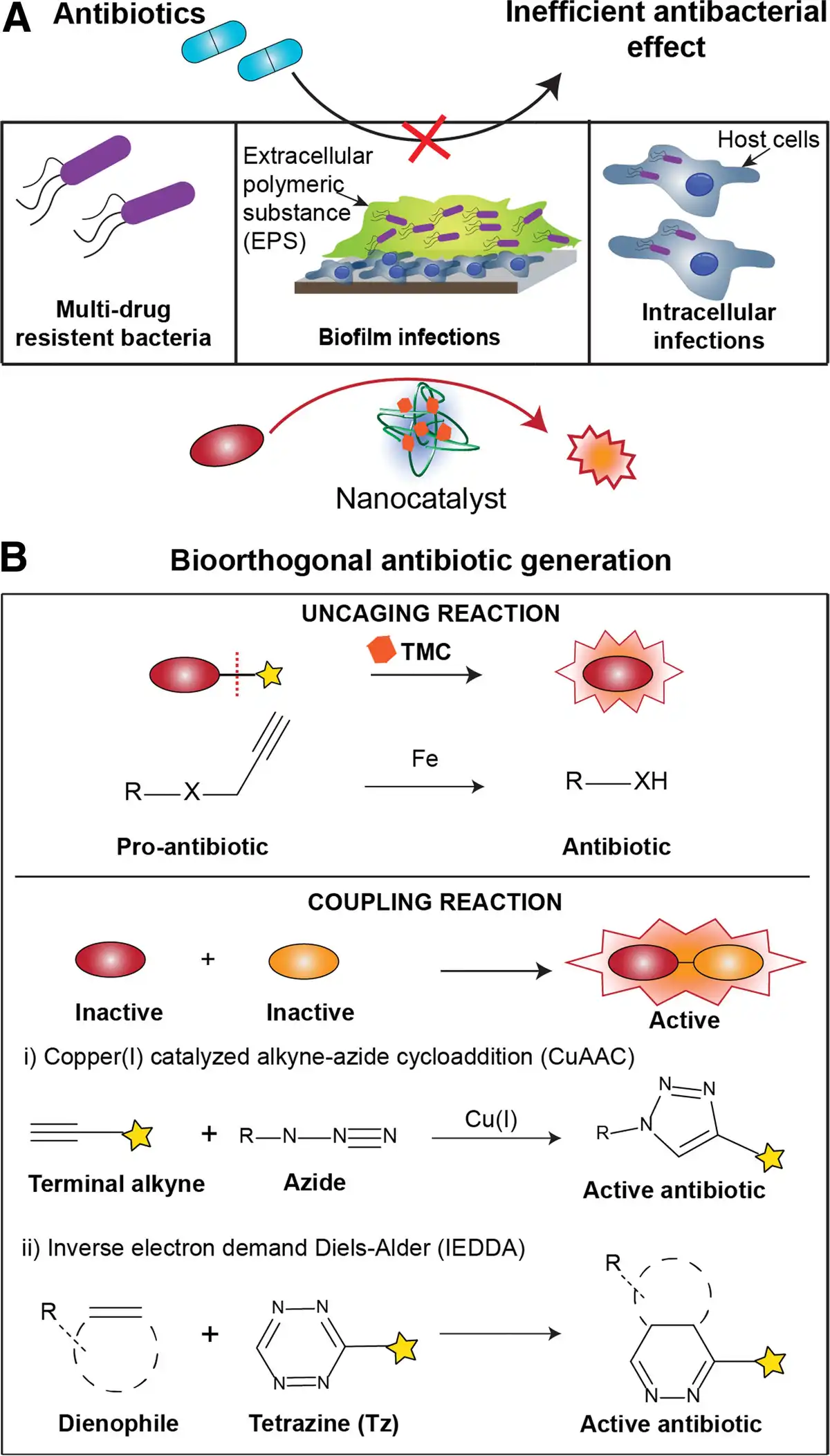
Bioorthogonal catalysis for antimicrobial therapy
Review Article
Metalloptosis: metal ions-induced programmed cell death based on nanomaterials for cancer therapy
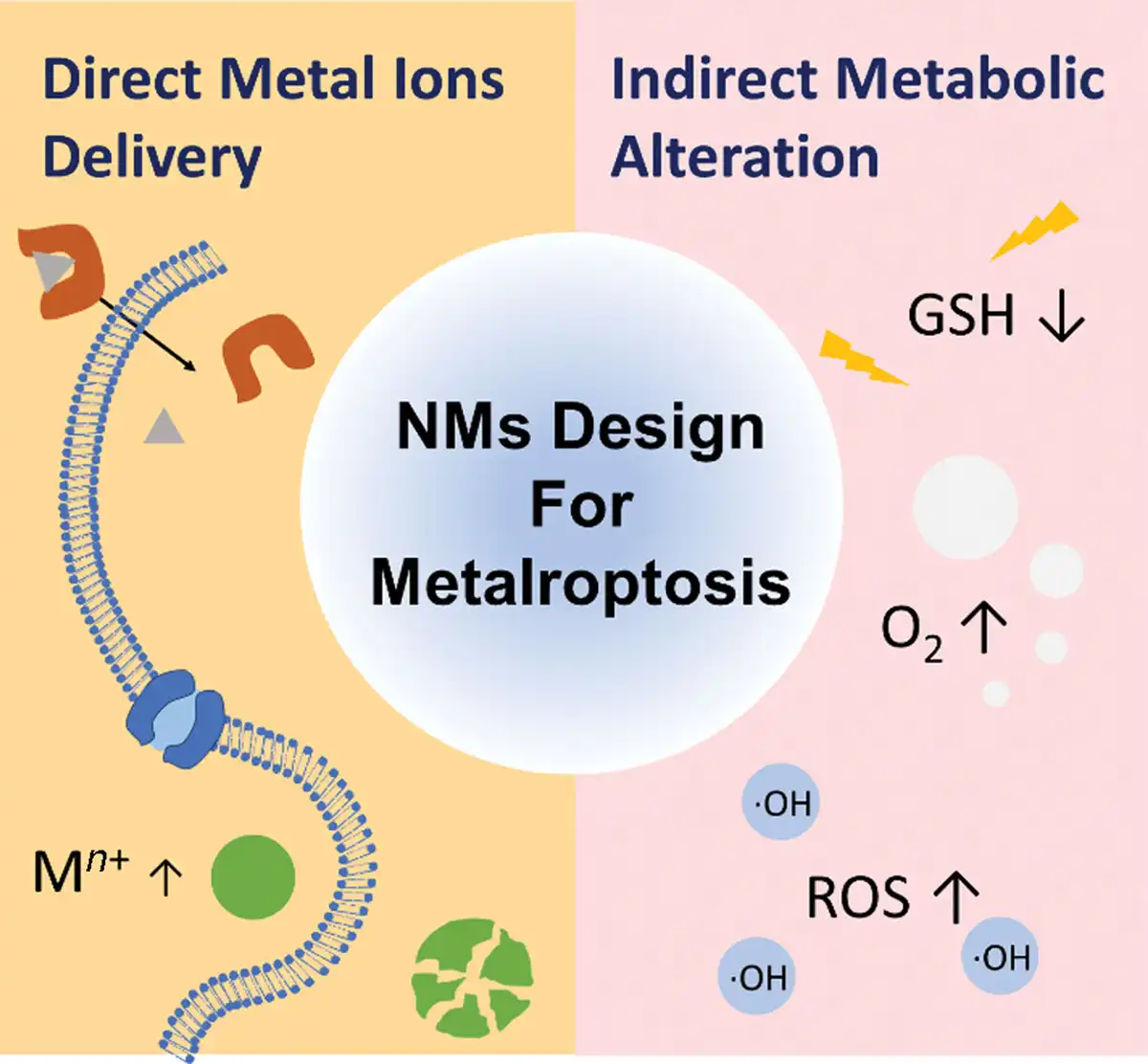
Programmed cell death (PCD) is defined as regulated cell death controlled by an intracellular program. While apoptosis was once thought to be the only kind of PCD, current understanding has expanded to include other forms such as pyroptosis, autophagy, and necroptosis. These processes, especially apoptosis and necroptosis, serve as natural defenses that restrict cancer cells from surviving and disseminating. However, cancer cells have evolved various strategies to evade PCD, including genetic mutations and epigenetic modifications in key modulators of PCD pathways. With the continuous development of nanotechnology, emerging nanomaterials (NMs) are considered to break through this bottleneck due to their intrinsic physicochemical properties. Especially, new kinds of cell death induced by NMs, such as ferroptosis, cuproptosis, and calcium overload, show gratifying potential in cancer therapy, which is closely linked to the role of metal ions. Additionally, other metal ions-induced cell death such as sodium and zinc have also emerged in an endless stream. Hence, we propose the term “metalloptosis” to describe cell death induced by metal ions and summarize its application in cancer therapy through NMs. This review will delve into the critical design principles for engineering NMs involved in metalloptosis and provide a comprehensive summary of current metal ions-mediated cancer therapies, focusing on nanoplatforms and their mechanisms of action. We hope that this review will provide a new perspective on metal ions-mediated cancer therapy based on nanotechnology.
Mechanism and design of organic afterglow luminescent probes for cancer theranostics
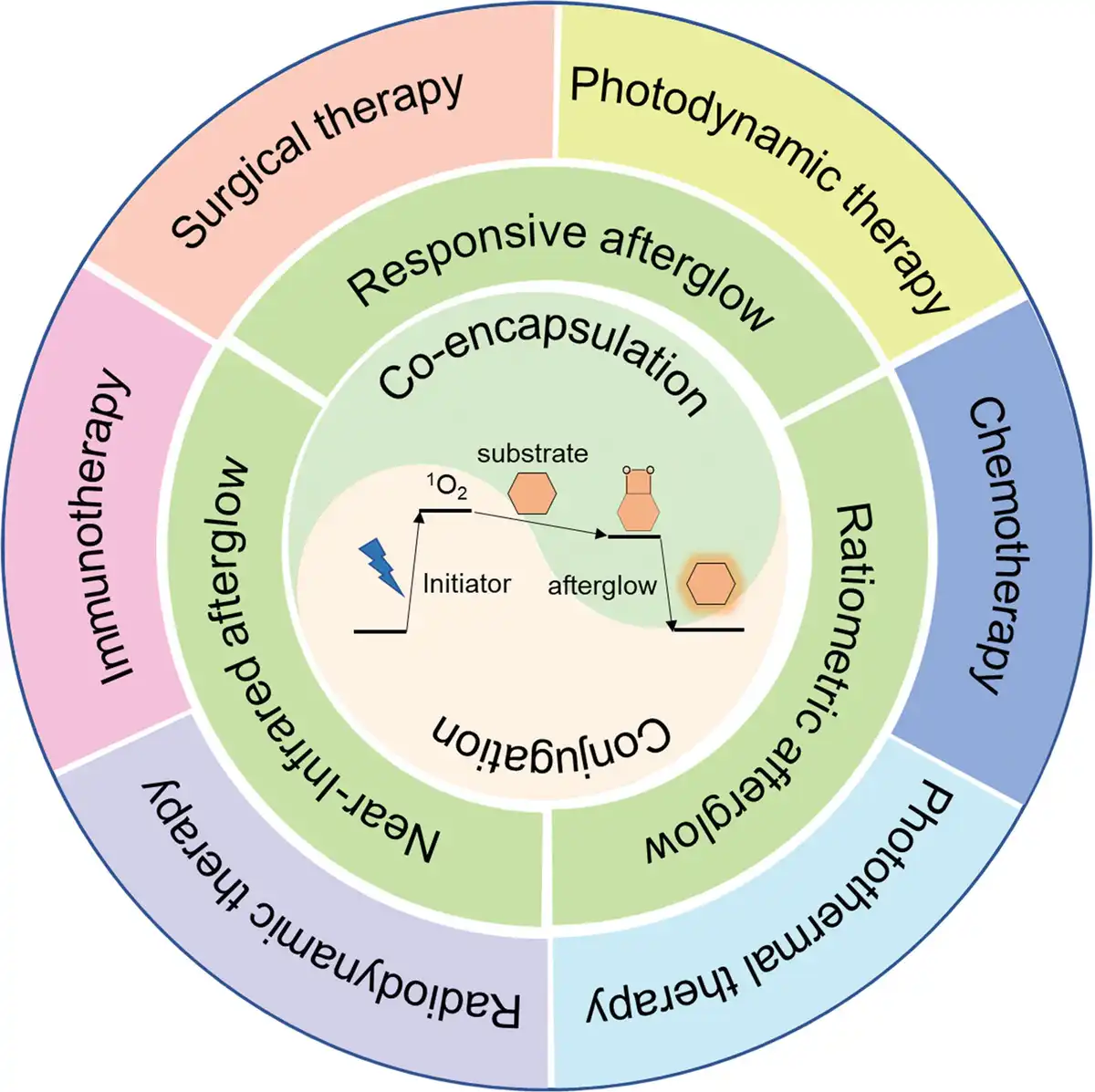
Organic afterglow luminescent probes (OALPs), characterized by their long-lasting luminescence after irradiation (by light, ultrasound, or X-rays) cessation, are pivotal tools in autofluorescence-free optical imaging. They exhibit ultra-low background noise interference, enhancing imaging sensitivity and ensuring clearer, more reliable imaging results. Moreover, they offer deeper tissue penetration compared to traditional optical imaging modalities, providing various information from deep tissues. Recently developed sonoafterglow and radioafterglow further enhance tissue penetration depth. This review outlines 2 design approaches for OALPs: coencapsulation and conjugation, which are derived from their luminescent mechanism. Guided by these strategies, researchers have designed 3 types of OALPs: near-infrared OALPs, responsive OALPs, and ratiometric OALPs. Additionally, we also provided examples of how OALPs are integrated with therapy and applied in the field of cancer theranostics. Finally, we discuss certain challenges encountered in the advancement of the next generation of OALPs, aiming to broaden their scope of applications.
Degradable piezoelectric biomaterials for medical applications
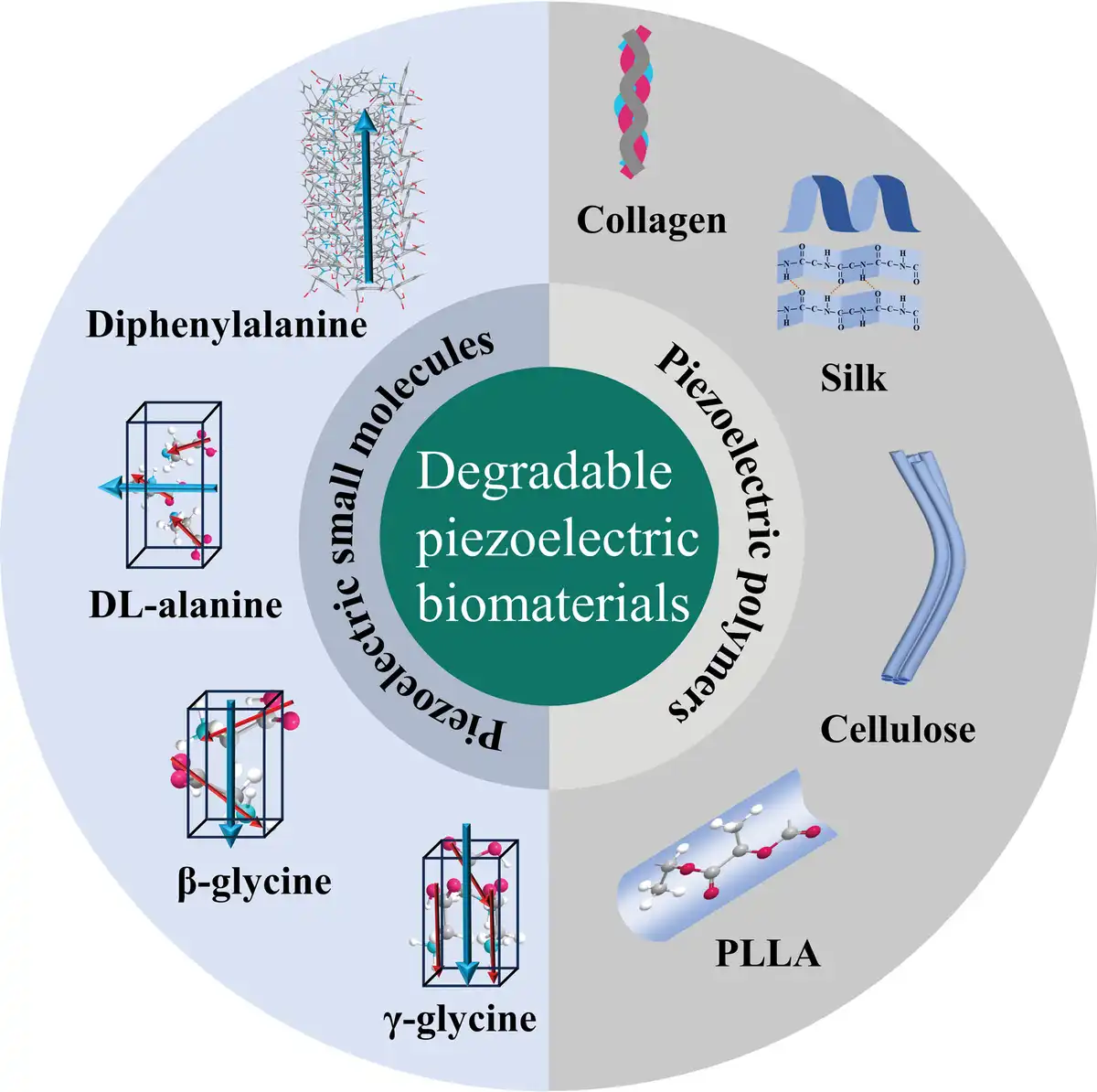
The energy harvesting technology based on piezoelectricity promises to achieve a self-powered mode for portable medical electronic devices. Piezoelectric materials, as crucial components in electromechanical applications, have extensively been utilized in portable medical electronic devices. Especially, degradable piezoelectric biomaterials have received much attention in the medical field due to their excellent biocompatibility and biosafety. This mini-review mainly summarizes the types and structural characteristics of degradable piezoelectric biomaterials from degradable piezoelectric small-molecule crystals to piezoelectric polymers. Afterward, medical applications are briefly introduced, including energy harvester and sensor, actuator and transducer, and tissue engineering scaffold. Finally, from a material perspective, some challenges currently faced by degradable piezoelectric biomaterials are proposed.