Shining light on immunotherapy in metastatic urothelial carcinoma: trends and prospects
Authors
Basit Ali Shah, Asma Sardar, Yunyi Li*, Bin Yang*
- aSchool of Biomedical Engineering, Guangzhou Medical University, Guangzhou, b China
- bDepartment of Chemistry, Fatima Jinnah Women University, Rawalpindi, t Pakistan
- cDepartment of Nephrology, First Affiliated Hospital of Jinan University, Guangzhou, China. c p
* Correspondence: Address: Yunyi Li, Department of Nephrology, First Affiliated Hospital of Jinan University, No. 613, West Huangpu Avenue, Tianhe t District, Guangzhou 510630, China. Email: liyy_jnu@163.com (Y. Li); n Bin Yang, School of Biomedical Engineering, Guangzhou Medical University, No. h 1, Xinzao Road, Xinzao Town, Panyu District, Guangzhou 511436, China. E-mail ( address: bin.yang@gzhmu.edu.cn (B. Yang). c
MedMat · 2025 · Vol. 2 · No. 4 · pp. 240-252
Abstract
Urothelial carcinoma (UC), particularly in its advanced and metastatic stages, poses major treatment challenges. Platinum-based chemotherapy remains the standard front-line treatment due to its superior initial disease control. However, its long-term efficacy has frequently hampered by chemoresistance. Immune checkpoint inhibitors (ICIs) have transformed the treatment of UC, offering durable responses, particularly in the metastatic urothelial carcinoma (mUC) setting. The strategic integration of ICIs, like avelumab in the first-line maintenance setting following chemotherapy, has significantly improved overall survival, representing a key shift in treatment sequencing. Concurrently, advancements in tumor molecular profile have enabled the development of novel targeted therapies for mUC, including fibroblast growth factor receptor inhibitors, Poly (ADP-ribose) polymerase (PARP) inhibitors, anti-HER2 agents, and antibody–drug conjugates specifically targeting Nectin-4. Furthermore, numerous ongoing clinical trials are actively exploring additional molecular targets and pathways to further enhance treatment options for mUC. This review outlines the evolving therapeutic landscape of mUC, emphasizing the limitations of ICI monotherapy, the promise of maintenance strategies, and the emergence of rational combination regimens for improved patient outcomes. Advances in biomarker-guided approaches, including circulating tumor DNA, tumor mutational burden, and ligand programmed death-1 expression, along with emerging biomarkers, such as T-effector gene signatures, ApolipoproteinB mRNA editing enzyme catalytic (APOBEC) mutagenesis patterns, and tumor microenvironment, are also discussed as essential tools for optimizing personalized treatment in the era of precision immunotherapy.
Translations
Long abstracts in additional languages. The English article is the version of record.
中文zh-Hans
尿路上皮癌(UC),尤其是其晚期和转移性阶段,构成了重大的治疗挑战。尽管以铂类为基础的化疗因其卓越的初始疾病控制能力而成为一线标准治疗方案,但其长期疗效常因获得性耐药而受到严重阻碍。免疫检查点抑制剂(ICIs)的出现彻底改变了这一领域的治疗格局,特别是在转移性尿路上皮癌(mUC)的治疗中展现出持久的缓解效果。本综述旨在系统梳理当前 mUC 的演变中的治疗景观,重点分析 ICI 单疗法的局限性、维持治疗的潜力以及理性联合方案的兴起,以期为优化患者预后提供科学依据和理论框架。
本文采用系统性文献回顾与综合分析的方法,深入探讨了肿瘤分子图谱的最新进展及其在新型靶向疗法开发中的应用。研究框架涵盖了从传统的铂类化疗到免疫治疗策略的演变过程,特别关注了如阿维鲁单抗(avelumab)等药物在一线维持治疗中的战略整合。此外,文章详细梳理了包括成纤维细胞生长因子受体抑制剂、PARP 抑制剂、抗 HER2 制剂以及针对 Nectin-4 的特异性抗体偶联药物在内的多种新型分子靶向疗法的发展现状与机制特点,并评估了当前正在进行的临床试验对拓展治疗选项的潜在贡献。
分析表明,ICIs 的战略整合显著改善了患者的总生存期,标志着 mUC 治疗序贯策略的关键转变。尽管 ICI 单药存在局限性,但维持治疗策略展现出巨大的临床前景,而针对特定分子靶点的联合方案则进一步提升了治疗效果。研究特别指出,循环肿瘤 DNA、肿瘤突变负荷(TMB)、配体程序性死亡-1(PD-L1)表达等生物标志物指导的方法对于优化个性化治疗至关重要;同时,效应 T 细胞基因特征、载脂蛋白 B mRNA 编辑酶催化(APOBEC)诱变模式以及肿瘤微环境等新兴生物标志物的发现,为精准免疫治疗时代的患者分层提供了关键工具。
本综述强调了在精准免疫治疗时代优化个性化治疗的必要性,并指出了当前 ICI 单药疗效的局限性及联合策略开发的紧迫性。尽管现有数据支持维持治疗和新型靶向药物的应用,但如何更有效地利用生物标志物指导临床决策仍面临挑战。未来的工作应聚焦于更多正在进行中的临床试验结果,以探索额外的分子靶点和通路,从而进一步丰富 mUC 的治疗选择。通过整合新兴的生物标志物和联合治疗策略,有望克服耐药性瓶颈,最终实现转移性尿路上皮癌患者生存获益的最大化。
Françaisfr
Le carcinome urothélial (CU), en particulier à ses stades avancés et métastatiques, pose des défis majeurs pour le traitement. Bien que la chimothérapie basée sur les sels de platine reste le standard de première ligne grâce à son contrôle initial supérieur de la maladie, son efficacité à long terme est fréquemment entravée par l'acquisition d'une résistance aux médicaments. Les inhibiteurs de points de contrôle immunitaires (ICIs) ont transformé le traitement du CU, offrant des réponses durables, particulièrement dans le contexte du carcinome urothélial métastatique (CUM). Cette revue vise à décrire le paysage thérapeutique en évolution du CUM, en mettant l'accent sur les limites de la monothérapie par ICI, le potentiel des stratégies d'entretien et l'émergence de schémas combinatoires rationnels pour améliorer les résultats chez les patients.
L'approche adoptée consiste en une synthèse critique de la littérature existante concernant les avancées récentes dans la compréhension du profil moléculaire tumoral et son application au développement de nouvelles thérapies ciblées. Le cadre d'analyse intègre l'évaluation des stratégies thérapeutiques actuelles, notamment l'intégration stratégique d'inhibiteurs comme l'avélumab en entretien de première ligne après chimothérapie, qui a significativement amélioré la survie globale. L'étude examine également les mécanismes et le statut clinique de nouvelles classes thérapeutiques incluant des inhibiteurs du récepteur au facteur de croissance des fibroblastes (FGFR), des inhibiteurs de PARP, des agents anti-HER2 et des conjugués anticorps-médicament ciblant spécifiquement la Nectine-4.
Les résultats principaux indiquent que l'intégration stratégique des ICIs représente un changement clé dans le séquençage du traitement, avec une amélioration significative de la survie globale. L'analyse interprète ces données comme une preuve de la promesse des stratégies d'entretien et de la nécessité de dépasser les limites de la monothérapie par ICI. De plus, l'examen met en lumière l'émergence de biomarqueurs essentiels pour optimiser le traitement personnalisé : l'ADN tumoral circulant, la charge mutationnelle tumorale (TMB) et l'expression du ligand PD-L1 sont des outils établis, tandis que les signatures géniques effectrices T, les motifs mutagéniques APOBEC et le microenvironnement tumoral se profilent comme des marqueurs émergents cruciaux pour la stratification des patients.
La signification de cette revue réside dans sa mise en évidence des opportunités futures pour l'amélioration des options thérapeutiques du CUM, tout en reconnaissant les limitations actuelles. Bien que les essais cliniques actifs explorent activement d'autres cibles moléculaires et voies biologiques, la traduction clinique de ces découvertes nécessite une validation continue. Les travaux futurs doivent se concentrer sur l'optimisation des approches guidées par biomarqueurs pour sélectionner le traitement le plus approprié à chaque patient. En conclusion, cette synthèse souligne que l'alliance entre thérapies ciblées et immunothérapie personnalisée constitue la voie prometteuse pour surmonter les défis posés par la résistance aux traitements dans le carcinome urothélial métastatique.
Españoles
El carcinoma urotelial (CU), especialmente en sus etapas avanzadas y metastásicas, plantea desafíos terapéuticos mayores. Aunque la quimioterapia basada en platino sigue siendo el tratamiento estándar de primera línea debido a su superior control inicial de la enfermedad, su eficacia a largo plazo se ve frecuentemente obstaculizada por la resistencia a los fármacos. Los inhibidores de puntos de control inmunitarios (ICIs) han transformado el tratamiento del CU, ofreciendo respuestas duraderas, particularmente en el contexto del carcinoma urotelial metastásico (CUM). Esta revisión tiene como objetivo describir el panorama terapéutico evolutivo del CUM, haciendo hincapié en las limitaciones de la monoterapia con ICIs, la promesa de las estrategias de mantenimiento y la aparición de regímenes combinados racionales para mejorar los resultados clínicos.
El enfoque adoptado consiste en una síntesis crítica de la literatura existente que examina cómo los avances en el perfil molecular tumoral han permitido el desarrollo de nuevas terapias dirigidas. El marco analítico integra la evaluación del cambio estratégico hacia la integración de ICIs, como el avelumab, en el mantenimiento de primera línea tras la quimioterapia, lo cual ha mejorado significativamente la supervivencia global y representa un punto clave en la secuencia terapéutica. Además, se analizan detalladamente los avances recientes que incluyen inhibidores del receptor del factor de crecimiento de fibroblastos, inhibidores de PARP, agentes anti-HER2 y conjugados anticuerpo-fármaco dirigidos específicamente a Nectin-4 como opciones emergentes para el tratamiento.
Los hallazgos principales indican que la integración estratégica de los ICIs ha mejorado significativamente la supervivencia global, marcando un cambio clave en la secuencia del tratamiento. La interpretación científica destaca las limitaciones inherentes a la monoterapia con ICIs y subraya el potencial prometedor de las estrategias de mantenimiento junto con regímenes combinados racionales. Asimismo, se discuten herramientas esenciales para optimizar el tratamiento personalizado: los biomarcadores establecidos como el ADN tumoral circulante, la carga mutacional del tumor (TMB) y la expresión del ligando PD-L1; así como marcadores emergentes como las firmas génicas de células T efectoras, los patrones de mutagénesis APOBEC y el microambiente tumoral.
La importancia de esta revisión radica en su énfasis sobre la necesidad de optimizar el tratamiento personalizado en la era de la inmunoterapia de precisión, reconociendo al mismo tiempo las limitaciones actuales. Aunque existen ensayos clínicos activos explorando objetivos moleculares adicionales y vías para mejorar las opciones terapéuticas, persisten desafíos relacionados con la resistencia a los tratamientos convencionales. El trabajo futuro debe centrarse en validar el uso de biomarcadores emergentes y desarrollar combinaciones racionales que superen estas barreras. En conclusión, esta síntesis subraya cómo la integración de nuevas terapias dirigidas e inmunoterapia personalizada puede transformar significativamente el pronóstico de los pacientes con carcinoma urotelial metastásico.
日本語ja
尿路上皮癌(UC)、特に進行期および転移性ステージは、治療において重大な課題を提示しています。白金製剤に基づく化学療法が優れた初期疾患コントロールにより第一選択の標準治療となっていますが、その長期有効性はしばしば薬剤耐性の獲得によって阻害されています。免疫チェックポイント阻害薬(ICIs)は尿路上皮癌の治療を変革し、特に転移性尿路上皮癌(mUC)において持続的な反応をもたらしています。本総説では、mUC の治療環境の進化を概観し、ICI 単独療法の限界、維持戦略の可能性、および患者予後の改善に向けた合理的な併用レジメンの台頭について重点的に論じることを目的としています。
本研究は、既存文献に基づく包括的なレビューと分析アプローチを採用しており、腫瘍分子プロファイルの進展が mUC の新規標的療法の開発にどのように寄与しているかを体系的に検討しています。枠組みには、化学療法後の第一選択維持設定におけるアベマブ(avelumab)などの ICI の戦略的統合が含まれており、これが全生存率を著しく改善し治療シーケンスの重要な転換点となったことを示唆しています。さらに、線維芽細胞増殖因子受容体阻害薬、PARP 阻害薬、抗 HER2 剤、およびネクチン-4(Nectin-4)に特異的に標的となる抗体医薬複合体など、mUC のための新規分子標的療法の開発動向とメカニズムについて詳細な検討が行われています。
主要な知見として、ICI の戦略的統合が全生存率を著しく改善し、治療シーケンスにおける重要な転換点を示していることが確認されました。ICI 単独療法の限界は認識されつつも、維持戦略の有望性が強調されており、合理的な併用レジメンの開発が進んでいます。また、循環腫瘍 DNA(ctDNA)、腫瘍変異負荷(TMB)、リガンド型 PD-L1 発現といったバイオマーカーに基づくアプローチが個別化治療を最適化する上で不可欠であることが示されました。さらに、エフェクター T 細胞遺伝子シグネチャやアポロプロテイン B mRNA 編集酵素触媒(APOBEC)変異パターン、腫瘍微小環境などの新興バイオマーカーも、精密免疫療法の時代における患者層別化の重要なツールとして議論されています。
本総説は、mUC の治療選択肢をさらに強化するために多数の臨床試験が進行中であることを示し、その意義と限界について考察しています。ICI 単独療法の限界や耐性の問題に対し、バイオマーカーガイド型の個別化医療への移行が不可欠であるという結論に至っています。今後の研究では、追加的な分子標的および経路を探求する継続中の臨床試験の結果を注視し、治療オプションの拡大を図る必要があります。精密免疫療法時代において、これらの新興バイオマーカーと併用療法の統合を通じて患者アウトカムを最適化することが、転移性尿路上皮癌の治療における重要な課題であり、今後の展望として提示されています。
العربيةar
يُعد سرطان الخلايا البولية (UC)، وخاصة في مراحله المتقدمة والانتشارية، تحديًا علاجيًا كبيرًا. ورغم أن العلاج الكيميائي القائم على البلاتين يظل المعيار الأول للعلاج نظرًا لسيطرته الفعالة المبدئية على المرض، فإن فعاليته طويلة الأمد غالبًا ما تُعيقها مقاومة الأدوية. لقد أحدثت مثبطات نقاط التفتيش المناعية (ICIs) تحولاً في علاج سرطان الخلايا البولية، حيث تقدم استجابات دائمة، لا سيما في سياق سرطان الخلايا البولية الانتشاري (mUC). يهدف هذا الاستعراض إلى رسم صورة للمشهد العلاجي المتطور لسرطان الخلايا البولية الانتشاري، مع التركيز على قيود العلاج الأحادي بمثبطات نقاط التفتيش المناعية، ووعد استراتيجيات الصيانة، وظهور أنظمة الجمع العقلانية لتحسين نتائج المرضى.
تعتمد منهجية هذا العمل على مراجعة وتحليل نقدي للأدبيات العلمية الحالية لاستكشاف كيف مكّنت التطورات في الملف الجزيئي للورم من تطوير علاجات مستهدفة جديدة. يغطي الإطار التحليلي تقييم التكامل الاستراتيجي لمثبطات نقاط التفتيش المناعية، مثل الأفيروماب (avelumab)، كعلاج صيانة خط أول بعد العلاج الكيميائي، والذي حسّن بشكل كبير البقاء الإجمالي وشكّل تحولًا رئيسيًا في تسلسل العلاجات. كما يناقش الاستعراض بالتفصيل التقدم المحرز في تطوير مثبطات مستقبل عامل النمو الليفي، ومثبطات PARP، والعوامل المضادة لـ HER2، والأجسام المضادة المقترنة بالأدوية التي تستهدف النكتين-4 (Nectin-4) بشكل محدد.
تُظهر النتائج الرئيسية أن التكامل الاستراتيجي لمثبطات نقاط التفتيش المناعية قد حسّن البقاء الإجمالي بشكل كبير، ممثّلًا تحولاً رئيسيًا في تسلسل العلاج. وتفسر الدراسة هذه البيانات على أنها دليل على وعود استراتيجيات الصيانة وأهمية تجاوز قيود العلاج الأحادي من خلال أنظمة الجمع العقلانية. كما تُناقش أدوات أساسية لتحسين العلاج الشخصي، مثل الحمض النووي الورمي الدائر (ctDNA)، والعبء الطفرات الورمية (TMB)، وتعبير ليجاند PD-L1؛ بالإضافة إلى مؤشرات حيوية ناشئة مثل التوقيعات الجينية للخلايا الليمفاوية التائية الفعالة، وأنماط التحور APOBEC، وبيئة الورم الدقيقة.
تكمن أهمية هذا الاستعراض في تسليط الضوء على ضرورة تحسين العلاج الشخصي في عصر المناعة الدقة، مع الاعتراف بالقيود الحالية للعلاج الأحادي. ورغم وجود العديد من التجارب السريرية النشطة التي تستكشف أهدافًا ومسارات جزيئية إضافية لتعزيز خيارات العلاج، إلا أن هناك حاجة ماسة لدمج المؤشرات الحيوية الناشئة لتجاوز مقاومة الأدوية. يجب أن يركز العمل المستقبلي على التحقق من صحة استخدام هذه الأدوات الجديدة وتطوير أنظمة علاجية مركبة أكثر فعالية. وفي الختام، يؤكد هذا التحليل كيف يمكن للجمع بين العلاجات الموجهة والمناعة الشخصية تحسين النتائج السريرية بشكل كبير لمرضى سرطان الخلايا البولية الانتشاري.
Keywords
Full Text
1. Introduction
Urothelial carcinoma (UC) arises from the urothelial epithelium, a specialized lining that extends throughout the urinary tract, beginning in the renal calyces and renal pelvis, coursing down the ureters, and continuing through the urinary bladder, urethra, and prostatic urethra.[1] Although UC covers a spectrum of tumors originating from these various anatomical sites, the bladder is far the most commonly affected organ, accounting for over 90% of all urothelial malignancies. As such, UC represents the predominant histopathological subtype of bladder cancer, which is currently ranked as the tenth most frequently diagnosed malignancy globally.[2] The increasing incidence of UC over time highlights its growing impact on public health concerns, with a significant socioeconomic burden.[1–2–3] Nevertheless, despite progress in systematic medical oncology, outcomes in advanced or metastatic UC (mUC) remain discouraging, with median overall survival (OS) still hovering around 15 months from diagnosis. Past decades witnessed cisplatin-based chemotherapy, particularly gemcitabine plus cisplatin (GC) and methotrexate, vinblastine, doxorubicin, and cisplatin (M-VAC), as the first-line palliative treatment for advanced or mUC.[3] While GC and M-VAC both offer comparable OS and time to treatment failure, GC is generally favored due to its lower mucosal and hematological toxicity. Despite achieving an overall response rate (ORR) of approximately 50%, a progression-free survival (PFS) of only 7 months, and an OS of about 13 to 15 months, these chemotherapy regimens generally yield modest benefits.[1,4] The therapeutic window is further constrained by cisplatin ineligibility, affecting nearly half of the mUC population due to factors such as impaired renal function, hearing loss/poor Eastern cooperative oncology group (ECOG) performance status (PS), peripheral neuropathy, old age, or other comorbidities, leading to carboplatin being used as a substitute in these cases. Unfortunately, subsequent treatments after the first-line therapy failure have shown limited success, with conventional cytotoxic agents (monotherapy or in combination) yielding unsatisfactory outcomes. Historically, UC patients have had a median OS with a 5-year survival rate of less than 7%, highlighting the urgent need for more effective therapeutic strategies in advanced or mUC.[5]
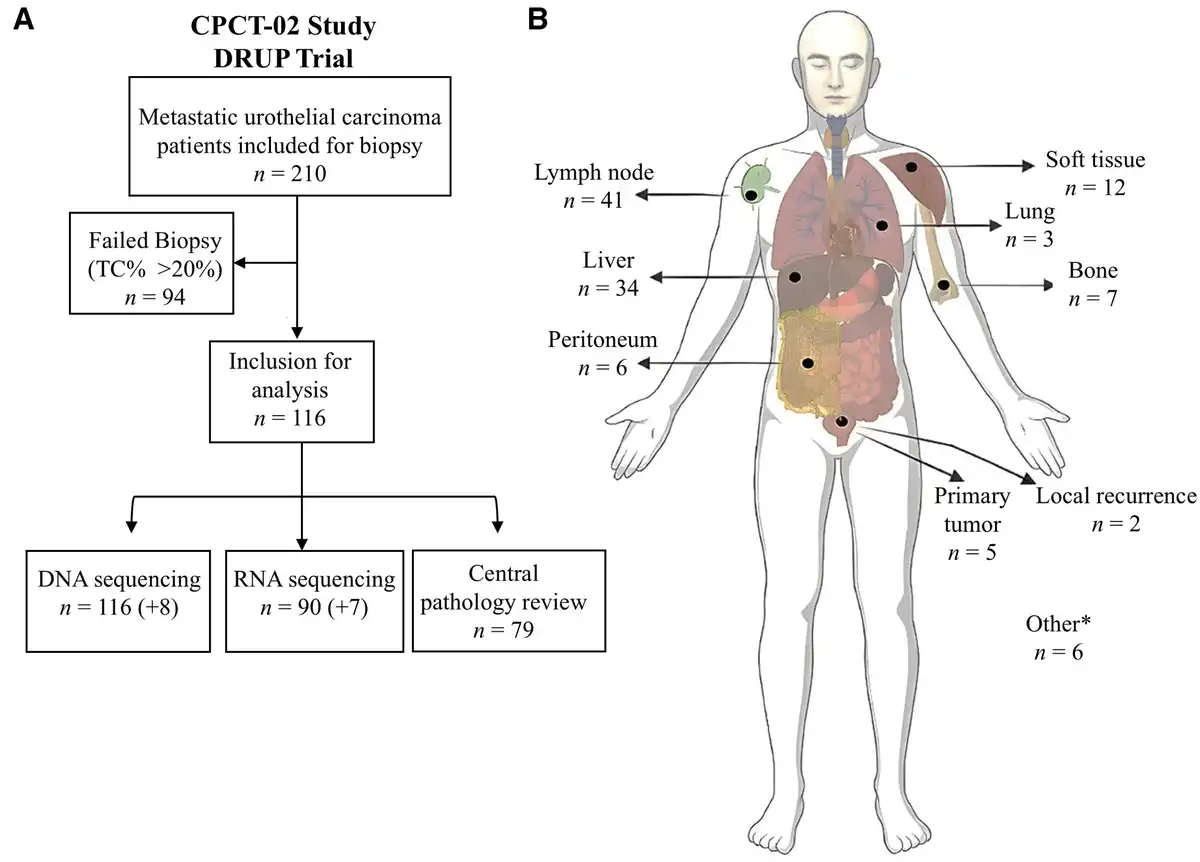
Recent phase I–III trials have accelerated the development of novel systemic therapies for UC, with several key results emerging over the past few years.[6–7–8] At the front-line of this therapeutic evaluation are immune checkpoint inhibitors (ICIs), which target regulatory pathways, such as programmed death-1 (PD-1) and its ligand PD-L1 and CLTA-4, to restore antitumor immunity.[9] These agents have demonstrated meaningful clinical activity and are now integrated across multiple lines of treatment in mUC patients after platinum-based chemotherapy. Similarly, precision-targeted therapies, including fibroblast growth factor receptor (FGFR), tyrosine kinase inhibitors, and antibody–drug conjugates (ADCs) directed against antigens such as Nectin-4, have further expanded the armamentarium.[10] Nevertheless, ICIs remain the most transformative class to date and are strongly recommended as forefront treatment options for individuals who are ineligible for platinum-based chemotherapy, especially those demonstrating PD-L1 positivity.[9,11] Notably, avelumab, a PD-L1 inhibitor, has received approval as maintenance therapy for patients who achieve disease control after initial chemotherapy.[12] Although ICIs have demonstrated clinical benefits across various stages of UC, therapeutic challenges remain in terms of primary and acquired resistance, limited efficacy in biomarker-unselected populations, and the lack of reliable predictive biomarkers capable of guiding treatment selection.[13] Tumor-intrinsic mechanisms, such as impaired antigen presentation and activation of oncogenic pathways (e.g., TGF-β, PI3K/AKT), combined with immunosuppressive components of the tumor microenvironment (TME), such as regulatory T cells (Treg), myeloid-derived suppressor cells (MDSCs), and tumor-associated macrophages (TAMs), contribute to immune evasion.[14] A comprehensive genomic and molecular profiling of mUC (Figure 1) emphasizes the biological complexity and heterogeneity of the disease. Meanwhile, biomarkers including PD-L1, tumor mutational burden (TMB), and circulating tumor DNA (ctDNA) show promise but lack standardization and predictive consistency.[15–16–17] Emerging biomarkers like T-effector gene signatures, APOBEC mutagenesis, TGF-β signaling, and tumor-infiltrating lymphocyte (TIL) profiles further highlight the need for biomarker-driven and combination-based immunotherapeutic strategies to optimize clinical outcomes and improve treatment efficacy.[17,18]
Figure 1.
Study design and biopsy site distribution in mUC patients. (A) Flow diagram outlining patient selection. Of 210 individuals with mUC, 116 had tumor samples with ≥20% cellularity for whole-genome sequencing (WGS) and 90 were eligible for RNA sequencing (RNA-seq). Central pathology review was performed for 79 cases (from either the primary tumor or metastatic sites). Repeat biopsies at progression provided additional DNA (n = 8) and RNA (n = 7) samples. (B) Distribution of biopsy sites used for WGS analysis. *“Other” biopsy locations included abdominal/pelvic masses (n = 3), adrenal gland (n = 1), brain (n = 1), and one unspecified location[15]. Copyright 2022, Elsevier B.V.
In this mini-review, we summarize the evolution of ICIs in UC, critically assess emerging resistance mechanisms and biomarker-guided treatment strategies, and highlight novel combination and drug-delivery approaches designed to achieve more durable clinical responses in advanced or mUC.
2. Immunobiology and resistance mechanism in mUC
mUC exhibits a highly immunogenic profile due to its high TMB and frequent neoantigen formation, which theoretically enhances susceptibility to ICIs. Despite these features, durable responses to ICIs remain limited to a subset of patients, largely due to both tumor-intrinsic and microenvironment-mediated immune evasion mechanisms. The TME in mUC plays a main role in modulating immune responses and promoting immune resistance.[18] It is frequently populated by immunosuppressive cell populations, such as Tregs, MDSCs, and TAMs, which attenuate cytotoxic T-cell activity and hinder the efficacy of immunotherapies. Moreover, antigen presentation is often compromised in mUC through downregulation of major histocompatibility complex (MHC) class-I molecules and mutations in β2-microglobulin, impairing immune recognition and tumor surveillance.[19] Another key feature of the mUC TME is the dysregulation of the TGF-β signaling pathway in stromal fibroblasts, which contributes to promoting immune exclusion by physically preventing T-cell infiltration into the tumor parenchyma, further complicating effective immune surveillance. This immune barrier, combined with chronic exposure to tumor antigens, induces T-cell exhaustion, marked by the upregulation of multiple inhibitory receptors (e.g., LAG-3, TIM-3, TIGIT) that may render PD-1/PD-L1 blockade insufficient.[19,20] These resistance mechanisms highlight the need for biomarker-guided combinatorial approaches to overcome immunotherapy limitations.
To address the aforementioned challenges, integrating ICIs with agents targeting the TME is a promising strategy. Modulating pathways like TGF-β or myeloid suppression or utilizing alternative checkpoints (e.g., LAG-3, TIGIT) may enhance treatment efficacy, as summarized in Table 1. Investigational strategies under exploration include dual checkpoint inhibition (e.g., PD-1 plus CLTA-4, TIGIT, or LAG-3 blockade), TME modulation through TGF-β or adenosine pathway inhibition, and combinations with targeted therapies, ADCs, vaccines, and oncolytic viruses designed to enhance antigen presentation and T-cell recruitment.[10,14,20] These combination therapies hold the potential to overcome the existing barriers in mUC immunotherapy and broaden the scope of patient responses. In this rapidly evolving landscape, a deeper understanding of the biological mechanisms behind the immune resistance is crucial for the rational design of new immunotherapeutic combinations (Table 1). Such strategies may ultimately help broaden and sustain responses in mUC patients, offering more durable and effective treatment outcomes.
| Resistance mechanism | Key groups | Effect on immunity | Potential combination strategy |
|---|---|---|---|
| Loss of antigen presentation | MHC-I, β2-microglobulin mutations | Tumor becomes invisible to T cells | TLR agonists, vaccines, and oncolytic viruses |
| Immunosuppressive microenvironment | Tregs, MDSCs, TAMs | Suppresses effector T-cell activation | ICI + CSF1R, CXR2, or PI3Kγ inhibitors |
| T-cell exclusion (stromal barrier) | TGF-β signaling, cancer-associated fibroblast | Impaired T-cell infiltration | PD-1/PD-L1 + TGF-β inhibitors |
| Oncogenic signaling modules | PI3K/AKT, WNT/β-catenin | Noninflamed cold tumor | ICI-targeted pathway inhibitors (PI3K, WNT, FGFR) |
| T-cell exhaustion/checkpoint redundancy | LAG-3, TIM-3, TIGIT | Limited response to PD-1 blockades | Dual checkpoint blockade (PD-1 + LAG-3/TIGIT/TIM-3) |
| Immunometabolism suppression | Adenosine (CD39/CD73), IDO1 | Inhibits T-cell function | A2A receptor antagonists, CD73 inhibitors + ICIs |
CSF1R, colony stimulating factor 1 receptor.
3. Comparative evaluation of ICI trials in mUC and real-world data
Over the past decade, multiple phase I–III trials have evaluated ICIs across various treatment lines in mUC; however, meaningful cross-trial comparison remains challenging due to substantial methodological heterogeneity. Variations in trial designs, such as first-line, postplatinum, and maintenance settings, and differences in PD-L1 immunohistochemical assay platforms (e.g., SP142, 22C3, and SP263), cutoff thresholds, eligibility criteria (cisplatin-eligible versus cisplatin-ineligible), and endpoint definitions (RECIST v1.1 versus immune-modified response evoluation critera in solid tumors (RECIST)) contribute to variability in reported outcomes.[22,23] For instance, the IMvigor210 and CheckMate275 trials showed response rates of 15% to 21% using single-arm designs in platinum-refractory disease, whereas the KEYNOTE-045 trial demonstrated an OS benefit for pembrolizumab over chemotherapy in a randomized setting, independent of PD-L1 status.[10,18] In contrast, the IMvigor211 trial failed to meet its primary endpoint, illustrating how differences in PD-L1 scoring methodology and patient selection can influence results.[10] Importantly, the JAVELIN Bladder 100 trial established avelumab as the first-line immunotherapy to improve survival in a switch-maintenance strategy after platinum-based chemotherapy, marking a pivotal shift in the treatment landscape.[24]
While these trial results are essential for advancing mUC therapy, real-world data increasingly provide valuable insights into how therapies perform in broader, more diverse patient populations outside the controlled clinical trial setting. Real-world studies such as READY and AVENANCE, which evaluated avelumab maintenance postchemotherapy, reveal different efficacy and toxicity profiles compared with clinical cohorts, highlighting the importance of assessing the real-world applicability of treatment regimens.[25,26] These data often demonstrate variations in response rates, side-effect profiles, and treatment landscape across heterogeneous mUC patients. To better understand the strengths and limitations of current ICI therapies in mUC, a standardized, biomarker-guided evaluation framework is required. A more nuanced analysis combining data from clinical trials and real-world studies helps to optimize ICI utilization and patient outcomes. Table 2 summarizes key clinical trial features and outcomes, highlighting major limitations, such as selection bias, assay heterogeneity, and small sample sizes, while also indicating that real-world data increasingly reveal divergent toxicity and response patterns compared with those observed in highly selected clinical trial cohorts.[18,26] Moreover, it compares the effectiveness of ICI regimens in controlled trial settings versus broader real-world populations to provide a more balanced perspective of their clinical utility.
Table 2
Summary of single-arm phase I/II/III clinical trials of ICIs in mUC, with additional insights from real-world data analysis.
| National clinical trial (Clinicaltrials.gov) | Phase | Treatment setting/population | Intervention | PD-L1 assay/cutoff | ORR (%) | PFS (months) | OS (months) | Key limitations | |
|---|---|---|---|---|---|---|---|---|---|
| KEYNOTE-012 (NCT01848834)[10] | I | Any line | Atezolizumab | SP142 (exploratory 27.0) | 27.0 | 2.0 (2.0–4.0) | 13.0 (5.0–20.0) | Early-phase heterogeneous population and small cohort | |
| JAVELIN solid tumor (NCT01772004)[24] | Ib | Second line | Avelumab | Dako73-10 (exploratory) | 18.2 | 1.6 (1.5–4.4) | 13.7 (8.5–not estimable) | Small cohort, single-arm, and nonrandomized | |
| IMvigor210[27] | II | Platinum ineligible | Atezolizumab | SP142 ≥ 5% | 23 | 2.7 | 15.9 | Single-arm, small sample size, and no randomization | |
| NCT01693562[28] | I/II | Second/cisplatin ineligible | Durvalumab | SP263 ≥ 25% | 31.0 | Not reached | Not reached | Nonrandomized small sample size | |
| KEYNOTE-045[29] | III | Postplatinum | Pembrolizumab vs chemotherapy | 22C CPS ≥ 10 | 21 vs 11 | 2.1 vs 3.3 | 10.3 vs 7.4 | PD-L1 cutoff variability; cross-over and randomization issues | |
| JAVELIN Bladder 100[30] | III | Postchemo maintenance | Avelumab + BSC vs BSC | SP263 ≥ 25% | 18 vs 12 | 3.7 vs 2.0 | 21.4 vs 2.0 | Maintenance only in responders/stable disease; selection bias | |
| CheckMate275[31] | II | Postplatinum | Nivolumab | Dako28-8 ≥ 1% | 19.9 | 2.0 | 8.6 | Single-arm | |
| CheckMate032 (NCT01928394)[32] | I/II | Second/postplatinum | Nivolumab | Dako28-8 (exploratory) | 24.4 | 2.8 (1.5–5.9) | 9.7 (7.3–16.2) | Nonrandomized, mixed dosing, heterogeneity in patient population | |
| IMvigor130[33] | III | First line | Atezolizumab ± chemo | SP142 ≥ 5% | 23 | 8.2 | Not reached | PD-L1 benefit in subset only; inconsistent PFS across subgroups | |
4. Therapeutic landscape in mUC: trends and directions
The therapeutic landscape of mUC has advanced considerably, as illustrated in Figure 2. Platinum-based chemotherapy remains the cornerstone of first-line management for cisplatin-eligible patients, while carboplatin-based regimens or front-line ICIs are used in those who are cisplatin-ineligible, depending on PD-L1 expression status.[20] The introduction of avelumab as switch-maintenance therapy following response or stable disease after platinum-based chemotherapy has established immunotherapy in the postinduction setting as standard practice. In the second-line setting, ICIs such as pembrolizumab remain a key option for platinum-refractory diseases, whereas targeted therapies such as erdafitinib are recommended for patients harboring susceptible FGFR alterations.[10,17,19] In the third-line and beyond, ADCs such as enfortumab vedotin (EV) and sacituzumab govitecan have further expanded the treatment armamentarium. Overall, these advancements represent a shift toward biomarker-guided decision-making and molecular integration of chemotherapy, immunotherapy, and targeted agents across mUC treatment lines. To provide better clarity, the current therapeutic landscape is discussed in the following sections according to treatment setting and strategy, beginning with historical cytotoxic chemotherapy and progressing through modern immunotherapeutic and biomarker-guided approaches.
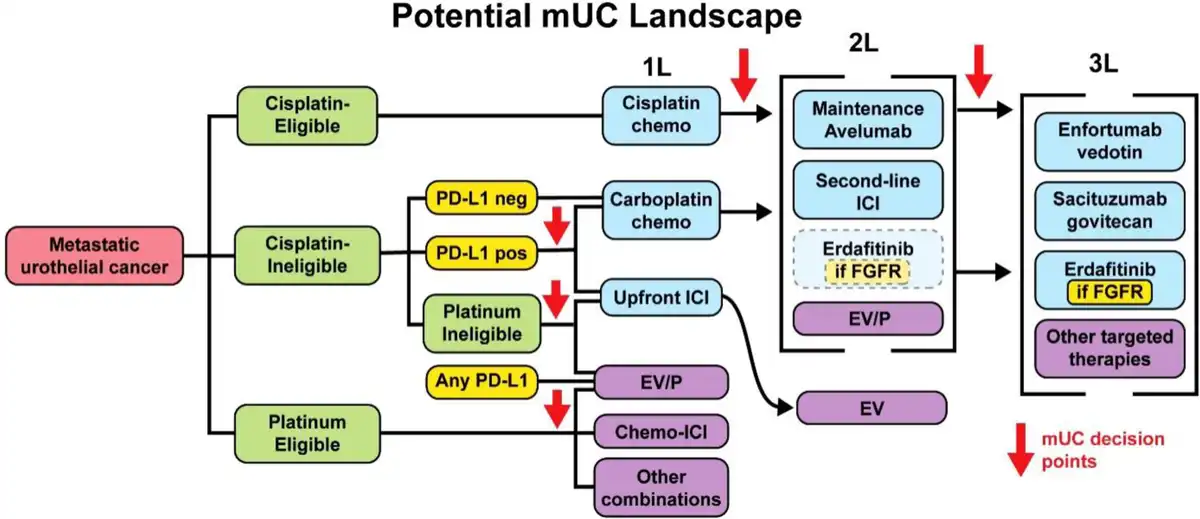
Figure 2.
An overview of mUC therapeutic strategies shaped by clinical factors (green), predictive biomarkers (yellow), FDA-approved therapies (blue), and investigational approaches (purple). Chemoimmunotherapy with atezolizumab improved PFS in the IMvigor130 trial (NCT02807636), through OS remains inconclusive. The enfortumab vedotin plus pembrolizumab (EVP) combination is under investigation across multiple settings: as a front-line option vs platinum-based chemotherapy (EV-302, NCT04223856), for cisplatin-ineligible patients (EV-103, NCT03288545), and in the postplatinum settings (EV-103; EV-201, NCT03219333). Additional novel combinations and targeted therapies are actively being explored across various lines of treatment[34]. Copyright 2022, OAE publishing Inc.
4.1 Platinum-based chemotherapy
Combination chemotherapy based on platinum agents remains the primary first-line therapy for treatment-naive patients with mUC.[3,13] For cisplatin-eligible patients, the standard therapy is platinum-based chemotherapy, often followed by maintenance therapy with avelumab. For individuals who are unsuitable for cisplatin due to renal impairment or other contraindications, alternative treatments include gemcitabine combined with carboplatin, which may also be followed by avelumab or pembrolizumab maintenance.[35] Another option for this subgroup includes the combination of pembrolizumab with EV.[35] Eligibility for cisplatin-based chemotherapy typically requires a good functional status (ECOG-1 PS ≤1), preserved renal function (creatinine clearance >50-60 mL min-1), and no significant comorbidities.[13,34] Dose-dense M-VAC is an alternative option that has also demonstrated efficacy in mUC treatment.[35] Typically, patients receive 6 cycles of chemotherapy; however, early discontinuation or dose reduction may be necessary due to cumulative toxicity.[36] Despite high initial disease control being achieved in approximately 75% to 80% of patients with first-line platinum-based chemotherapy, durable responses are limited due to the patient frequently developing resistance in many cases.[37] Median OS is typically around 14 to 15 months for those receiving cisplatin-based treatment and approximately 9 to 10 months for those treated with carboplatin, respectively.[37–38–39]
4.2 Immune checkpoint inhibitors (ICIs)
ICIs have brought major advances in the management of mUC, particularly in patients experiencing disease progression following platinum-based chemotherapy.[9] These agents enhance the body’s antitumor immune response by blocking key inhibitory pathways, primarily the PD-1/PD-L1 axis and CTLA-4, which cancer cells utilize to evade immune surveillance.[9,11,12] Tumors expressing PD-L1 can inhibit immune activity by engaging PD-1 receptors on activated CD+ T cells,[11] a mechanism that can be reversed by monoclonal antibodies targeting this interaction, such as atezolizumab, avelumab, and durvalumab (anti-PD-L1), as well as pembrolizumab and nivolumab (anti-PD-1). Additionally, targeting CTLA-4, another key checkpoint receptor on T cells, with agents like ipilimumab and tremelimumab, promotes T-cell activation and proliferation.[7,12]
Early-phase trials (I–II) of ICIs in platinum-refractory mUC have demonstrated ORR of 15% to 27% with higher rates observed in PD-L1-positive tumors.[5] Notable results included nivolumab (19.6% ORR, 16 months OS), pembrolizumab (28.9% ORR, 11.3 months OS), and atezolizumab (23%% ORR, 16 months OS), while avelumab (18.2% ORR, 13.7 months OS) and durvalumab (17.8% ORR, 18.2 months OS) also showed promise.[3,12] These positive early outcomes led to accelerated regulatory approvals for ICIs in advanced mUC. However, subsequent randomized trials revealed fewer histrionic benefits, resulting in some indications being withdrawn or restricted. For instance, the atezolizumab indication for platinum-refractory mUC was withdrawn after the IMvigor 211 trial failed to demonstrate significant OS improvement.[40]
Currently, pembrolizumab retains full FDA approval for the treatment of mUC in patients who have experienced disease progression following platinum-based chemotherapy or are cisplatin-ineligible.[34,41] Before ICIs, second-line treatment options for mUC were restricted to agents such as pemetrexed, paclitaxel, vinflunine, and docetaxel, all of which showed limited effectiveness with a median OS of ~7 months.[42,43] The KEYNOTE-045 phase-III trial established pembrolizumab as the preferred second-line therapy, demonstrating a significant improvement in OS (median 10.3 months compared with 7.4 months with chemotherapy) and positioning it as a more effective alternative to traditional cytotoxic agents.[44] While efforts to integrate ICIs into front-line treatment settings through monotherapy in biomarker-enriched populations, combination regimens with chemotherapy, or maintenance therapy have been explored, randomized trials have not yet confirmed a meaningful improvement in OS, leaving the role of ICIs in the front-line setting still under investigation.
5. Front-line use of immunotherapy in mUC
The phase-III DANUBE trial (NCT02516241) assessed the efficacy of durvalumab alone and in combination with tremelimumab (a CTLA-4 inhibitor) versus platinum-based chemotherapy in treatment-naive patients with advanced or mUC. Neither approach demonstrated a significant enhancement in OS in contrast to chemotherapy, even among PD-L1-positive patients. Specifically, durvalumab monotherapy achieved a median OS of 14.4 months compared with 12.1 months with chemotherapy (hazard ratio [HR] = 0.89; P = 0.30), while the combination therapy showed a median OS of 15.1 months (HR = 0.85; P = 0.075). A major limitation of front-line immunotherapy has been its lower ORR and shorter PFS relative to chemotherapy. Although ICIs can elicit durable responses in selected patients, their slower onset of action and limited efficacy across broader populations have restricted their use. Thus, single-agent ICIs have not yet replaced chemotherapy as the standard care for first-line mUC. Nevertheless, recent advances in combination strategies are reshaping the mUC therapeutic landscape. Notably, the FDA approval of pembrolizumab in combination with EV marks a significant shift toward effective first-line immunotherapy-based regimens irrespective of cisplatin eligibility. Current clinical trials are actively investigating novel combinations of ICIs with chemotherapeutic agents or other targeted therapies in an effort to enhance response rates and improve long-term survival outcomes for mUC patients.[45,46]
6. Front-line use of immune-chemotherapy combinations in mUC
The integration of ICIs with chemotherapy in the front-line treatment of mUC has yielded inconsistent outcomes. In the phase-III KEYNOTE-361 trial, combining pembrolizumab with platinum-based chemotherapy did not significantly improve OS compared with chemotherapy alone (median OS: 10.0 versus 14.3 months; HR = 0.86, P = 0.0407, which was not statistically significant at the prespecified alpha level).[40] Similarly, pembrolizumab monotherapy also failed to demonstrate clear superiority. In the IMvigor130 trial, which evaluated atezolizumab combined with platinum-based chemotherapy, there was a modest improvement in PFS (8.2 versus 6.3 months; HR = 0.82; P = 0.007), but no statistically significant OS benefit was observed. Consequently, neither of these ICI-chemotherapy combinations has been widely adopted as a standard first-line treatment for mUC. This lack of strong additive benefit suggests that concurrent administration of chemotherapy and immunotherapy may not generate synergistic effects in mUC, possibly due to unique bladder tumor-specific immunogenic characteristics or differential tumor-immune interactions compared with other cancer types where such combinations have shown greater efficacy.[5,9,12]
7. Maintenance immunotherapy
Maintenance immune therapy has significantly advanced the treatment landscape for mUC-suffering patients. The phase-III JAVELIN bladder 100 trial established avelumab as the standard maintenance therapy for patients achieving disease control after first-line platinum-based chemotherapy. The trial demonstrated a median OS of 21.4 months with avelumab, compared with 14.3 months with best supportive care (BSC) alone (HR = 0.69; P = 0.001). This benefit was consistent across all subgroups, including PD-L1 positive patients, who showed a 1-year survival rate of 79.1% with avelumab versus 60.4% with BSC (HR = 0.56; P < 0.001). Avelumab also significantly improved PFS, with a manageable safety profile, despite a higher incidence of grade ≥3 adverse events.[47] Extended follow-up data further confirmed the durability of these benefits, showing a median OS of 23.80 months compared with 15.0 months with BSC, and a median PFS of 5.5 versus 2.1 months. These results led to avelumab national comprehensive cancer network (NCCN) category 1 recommendation as maintenance therapy for mUC.
Real-world evidence from the READY and AVENANCE studies further validated these findings. Additionally, the CheckMate-901 trial demonstrated the potential of combining nivolumab with cisplatin-based chemotherapy, expanding clinicians’ personalized treatment options based on patient-specific factors. As both avelumab and nivolumab continue to shape maintenance strategies, ongoing studies are evaluating combination approaches and subsequent therapies for patients who progress following maintenance.[47] Future research efforts are focused on novel combinations, including ADCs paired with immunotherapy, dual checkpoint inhibition targeting CTLA-4 and PD-L1, and other emerging treatment modalities designed to further improve outcomes in mUC patients.[7,9,11,45]
8. Emerging immune combinations in mUC
Novel immunotherapeutic strategies in mUC increasingly rely on rational combinations to enhance antitumor efficacy beyond monotherapy. A key example is the combination of pembrolizumab with sEphB4-HSA, which targets tumor growth factors EphB4 (on tumor cells) and EphrinB2 (on tumor vasculature), inhibiting tumor angiogenesis and promoting tumor cell apoptosis.[48] Phase-II data showed a 37% ORR overall, with markedly higher benefit in EphrinB2-positive patients (ORR: 52%, complete response (CR): 24%, PFS: 5.7 months, OS: 21.5 months). This type of combination therapy received FDA breakthrough approval in 2021; however, randomized phase-III validation is required. Similarly, the NORSE study (NCT03473743) evaluated erdafitinib plus the anti-PD-1 antibody cetrelimab in cisplatin-ineligible FGFR-mutant patients, reporting an ORR of 68% compared with 33% with erdafitinib alone, emphasizing the value of genomic stratification.[48,49] Conversely, the BISCAY trial (NCT02546661) assessed durvalumab with various targeted inhibitors, such as FGFR, PARP, and mechanistic target of rapamycin (mTOR) inhibitors in biomarker-selected mUC populations, but showed no significant improvement over targeted therapy alone, suggesting that only select combinations yield synergistic immunomodulation. ADCs represent another promising class, whereas EV targets nectin-4 as monotherapy improves OS postchemotherapy and immunotherapy (EV-301). In combination with pembrolizumab (EV-103), EV has shown an ORR of 73.3% in cisplatin-ineligible first-line patients, with phase-III results eagerly awaited (EV-302). Another ADC, sacituzumab govitecan, has demonstrated ORRs of 27% as monotherapy and 35% in combination with pembrolizumab in heavily pretreated mUC patients, with ongoing trials evaluating the potential of immune-ADC combinations in future lines of therapy.[49,50]
9. Biomarkers for precision immunotherapy in mUC
Emerging immune combinations have significantly advanced the therapeutic options for mUC, with biomarker integration playing a crucial role in personalizing treatment. The effective use of biomarkers, such as PD-L1, TMB, and ctDNA, holds great promise in improving patients’ selection and treatment outcomes. Nonetheless, their clinical utility is limited by variable predictive value and practical challenges.[17] PD-L1 expression, while extensively studied, suffers from methodological inconsistencies, including differences in antibody clones, scoring systems, and tumor versus immune cell expression, which affect its reliability as an individual biomarker.[22] TMB, a surrogate for neoantigen load, has shown promise in predicting responses to immunotherapy but is influenced by intertumoral heterogeneity and lacks standardized cutoff values, limiting its widespread adoption. ctDNA has emerged as a dynamic tool for detecting minimal residual disease (MRD) and guiding adjuvant therapy decisions,[50] with the IMvigor010 trial demonstrating that ctDNA-positive patients have a higher risk of relapse and benefit from adjuvant atezolizumab (HR = 0.58; P = 0.0024).[40] Despite its potential, ctDNA’s clinical implementation is constrained by logistical barriers, including assay availability, turnaround time, and cost. Additionally, emerging biomarkers, such as T-effector gene signatures, APOBEC mutagenesis, TGF-β signaling, and natural killer (NK) and macrophage signatures, are being investigated for their predictive value but remain in the exploratory phase, requiring further validation.[34] The role of tertiary lymphoid structure (TLS), associated with robust immune responses, is also under investigation but requires more evidence before clinical integration. The development of multimodal biomarker strategies, combining mutational profiles with immune-related signatures, aims to enhance patient selection and treatment prediction. As illustrated in Figure 3, biomarker research in mUC is evolving from traditional markers like PD-L1 toward more comprehensive, combinational-induced approaches, particularly after the introduction of EV and EVP.[51] However, real-world integration of these biomarkers remains challenging due to inconsistent predictive value, a lack of harmonization, and the absence of robust composite models. As summarized in Table 3, overcoming these limitations through multiplatform biomarker strategies is critical for advancing precision immunotherapy in mUC, guiding therapeutic combinations, and optimizing patient selection for personalized therapy.[10,16,20,28,52]
Table 3
Summary of biomarkers in immunotherapy for mUC.
| Biomarker | Description | Predictive value | Clinical integration | Limitations |
|---|---|---|---|---|
| PD-L1 expression | Expression of PD-L1 on tumor or immune cells, used to predict response to ICIs (e.g., pembrolizumab, atezolizumab) | Predicts response in some studies but lacks consistency across trials | Widely used in clinical trials, but inconsistent across patient populations | Methodological variability (antibody clones, scoring systems), tumor vs immune cell expression discrepancies |
| TMB | Total number of mutations in tumor DNA, indicative of neoantigen load | Higher TMB correlates with better response to ICIs in some cancers | Evolving as a predictive tool requires further standardization | Intertumoral heterogeneity, lack of standardized cutoff values, and context-dependent |
| ctDNA | Fragments of tumor DNA found in blood, used to detect MRD and guide treatment decisions | High ctDNA levels associated with relapse risk may predict benefit from adjuvant therapy | Promising for MRD detection and relapse prediction, but clinical implementation remains limited | Assay availability, turnaround time, and cost limitations, still in the validation phase |
| T-effector gene signature | Expression profiles indicative of immune response, including T-cell activation and cytokine production | Correlates with response to ICIs in some studies | Currently exploratory, could become part of multimodal strategies in the future | Need further validation in mUC and may not apply uniformly to all patients |
| APOBEC mutagenesis | Gene mutations caused by APOBEC family enzymes, associated with tumor evolution | Linked better response to immune therapies in some cancers | Requires further research and prospective validation | Still under investigation with limited data in mUC |
| TGF-β pathway activity | Inhibition of immune responses via TGF-β, a key immune-suppressive factor | Higher TGF-β signaling may correlate with poor response to immunotherapy | Ongoing studies; potential to combine with ICIs or targeted therapies in the future | Biomarker and pathways exploration are still in early stages |
| NK cells and macrophages | Immune cells involved in tumor surveillance and response to ICIs | Correlated with better immune response in some cancers | It could inform patient selection in combination therapies; it needs further exploration | Still under investigation and inconsistent findings in mUC |
| TLS | Lymphoid-like structures in tumors associated with immune activation | Associated with better prognosis and response to immunotherapy | Promising as a biomarker for immune activity, further studies are needed | Limited data on how TLS specifically impacts ICIs in mUC |
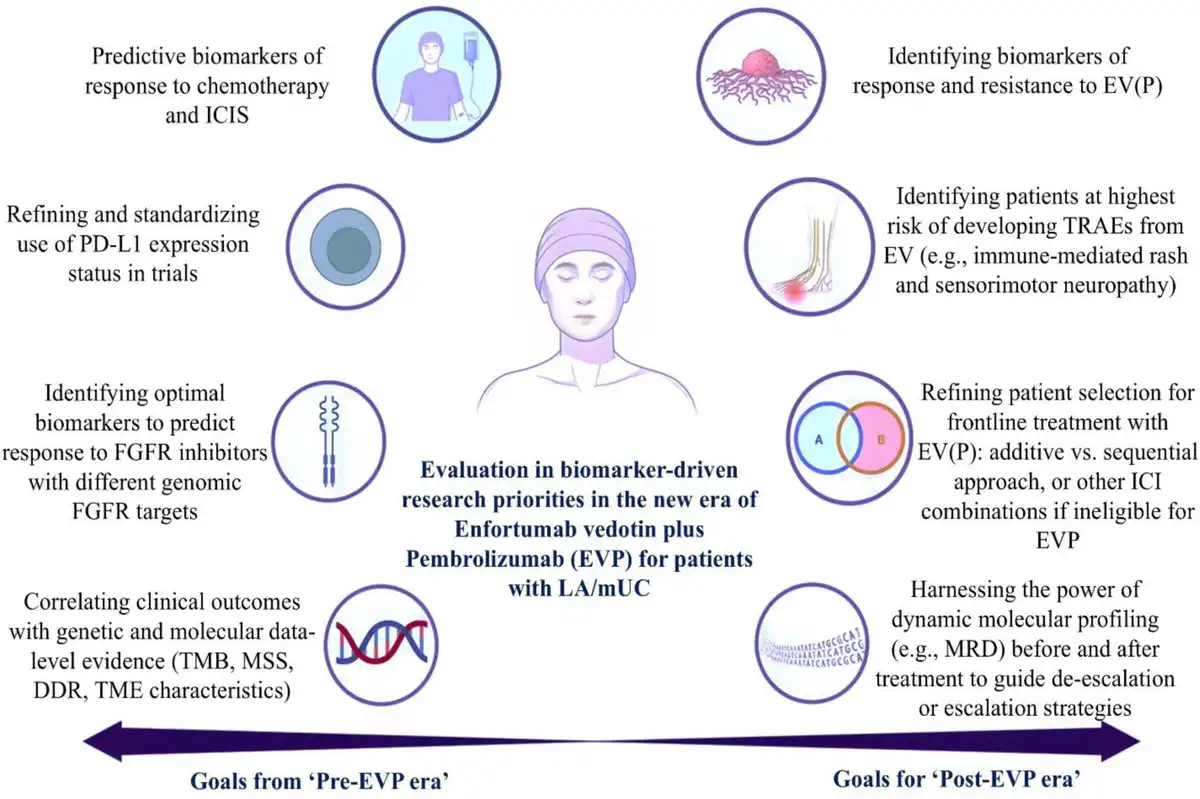
Figure 3.
Evolving directions in biomarker research aligned with the establishment of EVP as the new standard of care in mUC. Key focus areas include DNA damage response and repair (DDR), FGFR alterations, molecular residual disease (MRD), microsatellite status (MSS), TMB, TME, and PD-L1 expression[51]. Copyright 2024, MDPI.
9.1 Advanced drug-delivery systems to enhance immunotherapy in mUC
While ICI-based therapies have demonstrated significant promise in the treatment of mUC, their clinical efficacy is often hampered by poor tumor penetration, systemic toxicity, and suboptimal immune activation in the TME. Advanced drug-delivery systems (DDS) offer potential solutions to these challenges by improving the specificity and effectiveness of immunotherapy in mUC.[53] Notably, nanocarriers, such as PD-1/PD-L1 antibody-loaded nanoparticles, allow for targeted delivery of ICIs directly to the tumor site.[22] This strategy enhances tumor penetration, sustains high local drug concentrations, and minimizes systematic toxicity. By utilizing the enhanced permeability and retention effect, these nanoparticles can preferentially accumulate in tumor tissues, improving the efficacy of immunotherapy while reducing side effects commonly seen under general treatments. Furthermore, biomaterial scaffolds have shown promise for localized immune activation, with potential applications in mUC. These scaffolds can be implanted directly into or near the tumor, where they release ICIs, cytokines or immune-stimulating agents in a controlled manner.[54] This localized delivery enhances the recruitment of TILs and activates immune responses in the TME. Such biodegradable scaffolds have the advantage of promoting sustained immune surveillance while reducing the need for repeated administration. Although challenges remain in terms of biocompatibility, long-term toxicity, and scalable manufacturing, ongoing research is continuously exploring the clinical integration of these DDS with conventional therapies to address these hurdles (Table 4). These innovations can substantially improve response rates, minimize adverse effects, and contribute to more durable outcomes for mUC patients.
Table 4
Advanced DDS for immunotherapy in mUC.
| DDS type | Description | Benefits | Challenges |
|---|---|---|---|
| Nanoparticles (PLGA)[55] | Encapsulate ISIs like PD-1/PD-L1 antibodies in polymeric nanoparticles for targeted delivery | Increased tumor penetration, sustained release, and reduced systemic toxicity | Limited scalability and potential immune rejection |
| Mesoporous silica nanoparticles[56] | Nanosized porous particles for drug-controlled drug release | High loading capacity, prolonged drug-release, and targeted delivery | Risk of inflammation and long-term biocompatibility |
| Liposomes[57] | Lipid-based carriers that deliver ICIs directly to the tumor site | Improved drug stability, enhanced bioavailability, and controlled release | Biodegradability concerns and manufacturing challenges |
| Hydrogels[58] | Injectable gels that release immune stimulants and ICIs locally | Sustained release, easy to implant, and can be tailored to the tumor site | Limited control over release kinetics and potential inflammatory response |
| Biomaterial scaffolds (mesoporous silica)[59] | Implantable scaffolds that release ICIs or cytokines locally | Localized immune activation, reduced systemic exposure, and continuous drug release | Biocompatibility and long-term implantation effects |
10. Toxicity comparisons and management of ICIs in comorbid populations in mUC
10.1 Toxicity comparisons across ICI regimens
ICIs have shown significant promise in the treatment of mUC; however, their clinical application is often hindered by immune-related adverse events (irAEs). These adverse events, which may affect multiple organ systems, can range from mild to severe, and their incidence varies depending on the specific therapeutic regimen. Common irAEs associated with ICIs include dermatitis, colitis, hepatitis, pneumonitis, and endocrinopathies.[60] In combination regimens, particularly those involving ICI (e.g., pembrolizumab or atezolizumab) in conjugation with chemotherapy, the occurrence of irAEs tends to be higher, with some trials demonstrating increased toxicity profiles due to the additive effects of chemotherapy. For instance, the combination of pembrolizumab with cisplatin or gemcitabine has been associated with enhanced efficacy but also increased risks of severe toxicity, including myelosuppression and gastrointestinal distress.[60,61] Conversely, regimens incorporating ADCs, such as EV and EVP, often show a more favorable toxicity profile. Despite this, concerns persist in terms of dose-limiting toxicities, including peripheral neuropathy and gastrointestinal issues, specifically associated with the cytotoxic payload of ADCs. Importantly, while immune-chemotherapy combinations demonstrate improved OS and PFS outcomes, they also necessitate careful patient selection and monitoring due to their heightened risk of severe irAEs.[60] ADC-based regimens, while showing promising efficacy, are exhibiting distinct toxicities related to payload, which can lead to dose-limiting adverse effects that require close clinical supervision.
10.2 Management of ICIs in comorbid populations
The management of ICIs in mUC patients with comorbidities presents additional challenges, as these patients often exhibit altered immune responses and may experience exacerbated or prolonged toxicities. Common comorbid conditions in mUC patients include cardiovascular disease, diabetes, renal impairment, and prior treatments, all of which can influence the tolerability and safety of ICIs.[62] For example, patients with pre-existing renal dysfunction may be at a high risk for nephrotoxicities when treated with cisplatin-based regimens or may have heightened susceptibility to ICIs, particularly if they are receiving concurrent immunosuppressive therapy. In these cases, the renal clearance of ICIs may be impaired, necessitating dose adjustments or alternative treatments.[61] Additionally, patients with diabetes or cardiovascular disease may be more prone to immune-related endocrinopathies, such as thyroiditis or adrenalitis, which require careful management to prevent life-threatening complications. Patients with autoimmune conditions represent another high-risk group for the development of severe irAEs.[60] These individuals may experience exacerbations of their autoimmune disease due to the activation of immune responses by ICIs. Such conditions warrant a more cautious approach, with close monitoring for early signs of autoimmunity or organ-specific toxicity. In these settings, the use of corticosteroids or other immunosuppressive therapies may be necessary to manage severe irAEs, but their use should be balanced against the potential risk of reducing the efficacy of ICIs.[61] Furthermore, the combination of ICIs with other organized therapies, such as targeted therapies or chemotherapy, in patients with comorbid conditions requires careful consideration due to potential drug–drug interactions. These interactions may not only amplify the toxicity of ICIs but also complicate the management of pre-existing health issues in these populations.
10.3 Presence of multiple comorbidities, poor PS, and advanced age
Patients with multiple comorbidities, poor PS, and advanced age are frequently underrepresented in ICI clinical trials, raising concerns among oncologists regarding the feasibility of ICI treatment in these populations. These patients often have limited physiologic reserves, which may hinder their ability to tolerate treatment-related toxicities or recover from adverse events.[63] Consequently, clinicians are often cautious about offering ICIs to these individuals, as they may be less likely to derive a survival benefit from immunotherapy due to the potential exacerbation of existing comorbid conditions.
A retrospective analysis conducted by Clark-Garvey et al.[64] demonstrated that progression of disease was the most common cause for discontinuation of ICIs in patients with varying ECOG PS. Of particular interest, the study found that a higher proportion of patients with PS of 1 (17%) or PS of 2/3 (5.6%), highlighting the heterogeneity of treatment tolerance based on PS. Additionally, the analysis of the Charleston Comorbidity Index (CCI), which quantifies comorbidities and their relationship to 1-year mortality, indicated that patients who discontinued therapy due to disease progression, irAEs, or exacerbation of comorbidities had similar CCI scores, further emphasizing the complexity of treatment decisions in patients with multiple comorbidities.
Furthermore, the safety profile of ICIs in elderly patients remains a critical consideration. A study performed by Singh et al.[65] revealed that adverse events requiring discontinuation occurred in 17.1% of patients aged 65 or older compared with 14.4% in those under 65 years old. Although no significant differences in toxicity were observed between these age groups, elderly patients showed a higher incidence of diarrhea and colitis (4.1%) compared with their younger counterparts (2.4%), which may have implications for managing irAEs in this population. Similarly, a meta-analysis by Elias et al.[66] concluded that ICIs such as nivolumab, pembrolizumab, and atezolizumab provide comparable efficacy in both elderly and younger patients, although age-related differences in toxicities and the physiological reserve of elderly patients must be carefully considered.
In patients with poor PS (ECOG 2 or 3), retrospective studies have shown that ICIs can still offer clinical benefit. A study presented by Pietrantonio et al.[67] indicated that a subset of patients with poor PS experienced meaningful responses to ICIs, with 33% showing a response and a median duration of 16.9 months. These findings suggest that poor PS may be reversible with effective therapy, and that some patients, particularly those with biomarkers predictive of ICI response (e.g., PD-L1 expression, microsatellite instability-high), may benefit from immunotherapy despite their frailty.
10.4 Strategies for managing toxicity in comorbid populations
To optimize clinical outcomes for ICI therapy in patients with comorbidities, a personalized approach is crucial. Integrating a multidisciplinary team of oncologists, pharmacologists, and specialists is key to balancing immunotherapy efficacy and managing comorbidity-related risks. Close monitoring and real-time management of irAEs, with particular attention to organ-specific toxicities, are essential for maintaining the safety of ICIs in these populations. Tailored strategies based on individual patient profiles, such as dose modifications, biomarker-driven selection of candidates, and early intervention for irAEs, may enhance both safety and efficacy of ICI therapy in mUC patients with comorbidities, advanced age, or poor PS.
11. Future perspectives
Immunotherapy has profoundly transformed the therapeutic landscape for mUC patients, offering the potential for durable responses and prolonged remission. However, significant challenges persist in optimizing patient selection, refining treatment timing, and enhancing overall efficacy. Current immune strategies are often implemented at later disease stages, and the absence of robust predictive biomarkers continues to impede precision medicine. Therefore, future directions must prioritize 3 key areas, including enhancing therapeutic combinations, advancing biomarker development, and optimizing treatment settings.
The first priority is the development of more effective therapies and rational combinations. ADCs, ICIs, and targeted agents represent the forefront of this evolution. EV, an ADC targeting Nectin-4, has demonstrated high ORR, particularly when combined with pembrolizumab, with phase-II trials showing an ORR of >70%. The ongoing EV-302 trial is anticipated to confirm these results and potentially establish a new standard of care in the front-line setting. Similarly, the combination of pembrolizumab with sEphB4-HSA in EphrinB2-positive tumors showed an ORR of 52% and a CR of 24%, with extended OS. In FGFR-mutant populations, the NORSE trial found that erdafitinib plus cetrelimab achieved a 68% ORR in cisplatin-ineligible patients, suggesting this targeted-immunotherapy combination may be synergistic and worthy of phase-III validation. Moreover, dual checkpoint blockade remains under investigation, with trials like CheckMate-901 and NILE exploring CTLA-4 and PD-1/PD-L1 inhibition with or without chemotherapy. Emerging ADCs, such as sacituzumab govitecan and RC48, are also advancing both as monotherapies and in combination with ICIs, showing promising preliminary activity.[68] These advancements in therapeutic combinations emphasize the potential for increasing the depth and duration of responses in mUC.
The second crucial pillar involves advancing biomarker science to enable better patient stratification and personalized treatment. While PD-L1 expression has been extensively studied as a predictive biomarker, its clinical utility in mUC remains inconsistent, preliminary due to methodological variability in testing, such as differences in antibody clones and scoring systems. Consequently, PD-L1’s impartial role in patient selection for immunotherapy is increasingly questionable, and multidimensional biomarker strategies are gaining importance. The utility of TMB as a marker for neoantigen load has shown promise in predicting responses to immunotherapy, but its predictive value remains influenced by intertumoral heterogeneity and the lack of standardized cutoff values, limiting its consistency across studies. ctDNA, a dynamic marker for MRD, has demonstrated potential in guiding adjuvant immunotherapy decisions, particularly in patients with high ctDNA levels, as highlighted by the IMvigor010 trials. However, despite its promise, ctDNA’s clinical implementation remains hampered by logistical barriers, such as assay availability, cost, and turnaround time. Emerging biomarkers, including T-effector gene signatures, APOBEC mutagenesis patterns, and TGF-β pathway activity, provide insights into the immune response and TME but require further validation.[16,17] Additionally, biomarkers related to NK cells, macrophage signatures, and TLS are being explored; however, their clinical application remains limited without more robust evidence. Based on these challenges, future biomarker research will likely focus on multiplatform strategies, integrating tumor genomics, immune signatures, and TME features to create more comprehensive patient profiles. Techniques such as single-cell RNA sequencing, spatial transcriptomics, and epigenetic profiling, including circulating methylation signatures, are expected to provide deeper insights into tumor-immune dynamics, offering a more personalized approach to immunotherapy.[34]
The third strategic imperative is the optimization of treatment timing and sequencing based on disease progression and therapeutic response. Administering immunotherapy earlier, particularly in the neoadjuvant or perioperative setting, may maximize benefits by targeting tumor evolution at a less resistant stage. Combining therapies preoperatively, potentially guided by molecular monitoring like ctDNA, could enhance curative potential. Additionally, ICIs are expanding beyond the metastatic setting. For example, ICIs have demonstrated promising results in both non–muscle-invasive bladder cancer (NMIBC) and muscle-invasive bladder cancer (MIBC).[69] Pembrolizumab is already approved for BCG-unresponsive NMIBC in cystectomy-ineligible patients, and adjuvant nivolumab postcystectomy in MIBC has shown significant promise. Optimizing the sequencing of ICIs with other modalities could yield greater clinical benefits and potentially redefine treatment paradigms for earlier-stage disease.
In summary, the future of precision immunotherapy in mUC will be shaped by the synergistic integration of more effective drugs, advanced DDS, refined biomarker-guided patient stratification, biological understanding, and optimization of treatment timing. The ultimate success will depend on the development of multimodal therapies, informed by comprehensive biomarker profiles that guide personalized therapeutic decisions. Advanced DDS, such as nanocarriers for targeted ICIs delivery and biomaterial scaffolds for localized immune activation, hold significant promise in addressing the limitations of current treatments by enhancing the efficacy, specificity, and durability of immune responses. DDS technologies can ensure that immunotherapy agents are delivered directly to tumor sites, minimizing systematic toxicity and maximizing therapeutic effects. As we move into this next era, important advances in both therapeutic agents, drug-delivery technologies, and biomarker science will be critical to improving clinical results. By optimizing DDS alongside precision biomarkers-guided patient selection, treatments can be better tailored to the unique tumor and immune profiles of individual patients, thus ultimately enhancing both the effectiveness and safety of immunotherapy for mUC patients.
12. Conclusions
Platinum-based chemotherapy remains the standard front-line option in mUC, offering superior initial tumor control, but its effectiveness is often limited by its chemoresistance. The integration of ICIs, particularly avelumab as maintenance therapy following chemotherapy, provides a durable survival benefit by combining early cytoreduction with sustained immune activity. While first-line ICI monotherapy and chemotherapy-ICI combinations have demonstrated consistent improvement in OS, combinations like EVP are redefining treatment algorithms, resulting in significantly higher response rates. The future of mUC therapy demands precision medicine, guided by biomarkers like ctDNA, TMB, PD-L1, FGFR alterations, and T-effector signatures, as well as innovations in advanced DDS to enhance therapeutic targeting and minimize toxicity. The current ongoing trials aim to optimize therapeutic combinations and sequencing, advancing toward a more personalized, biomarker-driven standard of care that integrates multimodal therapies for improved outcomes in mUC patients.
Funding
This work was financially supported by Guangdong Basic and Applied Research Foundation (No. 2024A1515220095), the Scientific Research Project of Guangdong Provincial Administration of Traditional Chinese Medicine (No. 20252006), and the postdoctoral startup fund (No. Q0301-182).
Conflicts of interests
The authors declare that they have no conflicts of interest.
Author Contributions
Basit Ali Shah: Writing – original draft, Conceptualization and Funding acquisition. Asma Sardar: Investigation and Validation, Yunyi Li: Writing – Review & editing, Bin Yang: Supervision, Validation, Resources and Funding acquisition.
References
- [1] Nadal R, Valderrama BP, Bellmunt J. Progress in systemic therapy for advanced-stage urothelial carcinoma. Nat Rev Clin Oncol. 2024;21:8–27.
- [2] Holzbeierlein JM, Bixler BR, Buckley DI, et al. Diagnosis and treatment of non-muscle invasive bladder cancer: AUA/SUO Guideline: 2024 amendment. J Urol. 2024;211:533–538.
- [3] Flaig TW, Spiess PE, Agarwal N, et al. Bladder cancer, version 3.2020, NCCN Clinical Practice Guidelines in Oncology. J Natl Compr Canc Netw. 2020;18:329–354.
- [4] Ortiz M, Wabel E, Mitchell K, et al. Mechanisms of chemotherapy resistance in ovarian cancer. Cancer Drug Resist. 2022;5(2):304–316.
- [5] Koufopoulou M, Miranda PAP, Kazmierska P, et al. Clinical evidence for the first-line treatment of advanced urothelial carcinoma: current paradigms and emerging treatment options. Cancer Treat Rev. 2020;89:102072.
- [6] Li Y, Duan Y, Li Y, et al. Cascade loop of ferroptosis induction and immunotherapy based on metal-phenolic networks for combined therapy of colorectal cancer. Exploration. 2025;5(1):20230117.
- [7] Maisch P, Hwang EC, Kim K, et al. Immunotherapy for advanced or metastatic urothelial carcinoma: an abridged Cochrane review. BJU Int. 2024;134:541–550.
- [8] Cai Y, Jiang Y, Chen Y, et al. Amplifying STING activation and immunogenic cell death by metal-polyphenol coordinated nanomedicines for enhanced cancer immunotherapy. Chin Chem Lett. 2025;36:110437.
- [9] Kong X, Zhang J, Chen S, et al. Immune checkpoint inhibitors: breakthroughs in cancer treatment. Cancer Biol Med. 2024;21(6):451–472.
- [10] Siefker-Radtke A, Curti B. Immunotherapy in metastatic urothelial carcinoma: focus on immune checkpoint inhibition. Nat Rev Urol. 2018;15:112–124.
- [11] Stenehjem D, Tran D, Nkrumah M, et al. PD1/PDL1 inhibitors for the treatment of advanced urothelial bladder cancer. Onco Targets Ther. 2018;11:5973–5989.
- [12] Jackson-Spence F, Toms C, Yang Y-H, et al. The role of modern immunotherapy in metastatic urothelial cancer: mini review. J Cancer Metastasis Treat. 2022;8:40.
- [13] Powles T, Bellmunt J, Comperat E, et al.; ESMO Guidelines Committee. Electronic address: clinicalguidelines@esmo.org. Bladder cancer: ESMO clinical practice guideline for diagnosis, treatment and follow-up. Ann Oncol. 2022;33:244–258.
- [14] Lindblad KE, Ruiz de Galarreta M, Lujambio A. Tumor-intrinsic mechanisms regulating immune exclusion in liver cancers. Front Immunol. 2021;12:642958.
- [15] Nakauma-González JA, Rijnders M, van Riet J, et al.; Boormans, comprehensive molecular characterization reveals genomic and transcriptomic subtypes of metastatic urothelial carcinoma. Eur Urol. 2022;81:331–336.
- [16] Lavoie J-M, Vandekerkhove G, Annala M, et al. Circulating tumour DNA (ctDNA) utility as a biomarker for metastatic urothelial carcinoma (mUC). Ann Oncol. 2019;30:v376.
- [17] Klümper N, Eckstein M. Biomarkers of response to anti-NECTIN4 antibody-drug conjugate enfortumab vedotin in urothelial cancer. Eur Urol Focus. 2024;10:224–226.
- [18] Boll LM, de Oca SVM, Camarena ME, et al. Predicting immunotherapy response in advanced bladder cancer: a meta-analysis of six independent cohorts. Nat Commun. 2025;16:224–204.
- [19] Mancini M, Righetto M, Noessner E. Checkpoint inhibition in bladder cancer: clinical expectations, current evidence, and proposal of future strategies based on a tumor-specific immunobiological approach. Cancers (Basel). 2021;13:6016.
- [20] Chu X, Tian W, Wang Z, et al. Correction: co-inhibition of TIGIT and PD-1/PD-L1 in cancer immunotherapy: mechanisms and clinical trials. Mol Cancer. 2023;22:101.
- [21] Walsh RJ, Soo RA. Resistance to immune checkpoint inhibitors in non-small cell lung cancer: biomarkers and therapeutic strategies. Ther Adv Med Oncol. 1758;12(2020):835920937902.
- [22] Vranic S, Gatalica Z. PD-L1 testing by immunohistochemistry in immuno-oncology. Biomol Biomed. 2023;23(1):15–25.
- [23] Lalani A-KA, Sonpavde GP. Systemic treatments for metastatic urothelial carcinoma. Expert Opin Pharmacother. 2019;20:201–208.
- [24] Hoffman-Censits J, Grivas P, Powles T, et al. The JAVELIN bladder medley trial: avelumab-based combinations as first-line maintenance in advanced urothelial carcinoma. Future Oncol. 2024;20:179–190.
- [25] Grivas P, Moon HH. A podcast on real-world evidence with avelumab first-line maintenance and treatment sequencing in locally advanced or metastatic urothelial carcinoma. Target Oncol. 2025;20:743–754.
- [26 Barthélémy P, Thibault C, Fléchon A, et al. Real-world study of avelumab first-line maintenance treatment in patients with advanced urothelial carcinoma in France: overall results from the noninterventional AVENANCE study and analysis of outcomes by second-line treatment. Eur Urol Oncol. 2025;8:407–416.
- [27] Rosenberg JE, Galsky MD, Powles T, et al. Atezolizumab monotherapy for metastatic urothelial carcinoma: final analysis from the phase II IMvigor210 trial. ESMO Open. 1039;9(2024):72.
- [28] Massard C, Gordon MS, Sharma S, et al. Safety and efficacy of durvalumab (MEDI4736), an anti–programmed cell death ligand-1 immune checkpoint inhibitor, in patients with advanced urothelial bladder cancer. J Clin Oncol. 2016;34:3119–3125.
- [29] Balar AV, Castellano DE, Grivas P, et al. Efficacy and safety of pembrolizumab in metastatic urothelial carcinoma: results from KEYNOTE-045 and KEYNOTE-052 after up to 5 years of follow-up. Ann Oncol. 2023;34:289–299.
- [30] Powles T, Park SH, Caserta C, et al. Avelumab first-line maintenance for advanced urothelial carcinoma: results from the JAVELIN Bladder 100 trial after ≥2 years of follow-up. J Clin Oncol. 2023;41:3486–3492.
- [31 Siefker-Radtke AO, Baron AD, Necchi A, et al. Nivolumab monotherapy in patients with advanced platinum-resistant urothelial carcinoma: efficacy and safety update from CheckMate 275. J Clin Oncol. 2019;37:4524–4524.
- [32] Ready NE, Ott PA, Hellmann MD, et al. Nivolumab monotherapy and nivolumab plus ipilimumab in recurrent small cell lung cancer: results from the CheckMate 032 randomized cohort. J Thorac Oncol. 2020;15:426–435.
- [33] Grande E, Galsky M, Arranz Arija JA, et al. IMvigor130: efficacy and safety from a phase III study of atezolizumab (atezo) as monotherapy or combined with platinum-based chemotherapy (PBC) vs placebo + PBC in previously untreated locally advanced or metastatic urothelial carcinoma (mUC). Ann Oncol. 2019;30:v888–v889.
- [34] Jun T, Anker J, Galsky MD. Biomarkers for therapy selection in metastatic urothelial cancer. J Cancer Metas Treat. 2022;8:1.
- [35] Izumi K, Iwamoto H, Yaegashi H, et al. Gemcitabine plus cisplatin split versus gemcitabine plus carboplatin for advanced urothelial cancer with cisplatin-unfit renal function. In Vivo. 2019;33:167–172.
- [36] Sonpavde GP, Mariani L, Lo Vullo S, et al. Impact of the number of cycles of platinum based first line chemotherapy for advanced urothelial carcinoma. J Urol. 2018;200:1207–1214.
- [37] Dogliotti L, Cartenì G, Siena S, et al. Gemcitabine plus cisplatin versus gemcitabine plus carboplatin as first-line chemotherapy in advanced transitional cell carcinoma of the urothelium: results of a randomized phase 2 trial. Eur Urol. 2007;52:134–141.
- [38] von der Maase H, Hansen SW, Roberts JT, et al. Gemcitabine and cisplatin versus methotrexate, vinblastine, doxorubicin, and cisplatin in advanced or metastatic bladder cancer: results of a large, randomized, multinational, multicenter, phase III study. J Clin Oncol. 2000;18:3068–3077.
- [39] De Santis M, Bellmunt J, Mead G, et al. Randomized phase II/III trial assessing gemcitabine/carboplatin and methotrexate/carboplatin/vinblastine in patients with advanced urothelial cancer who are unfit for cisplatin-based chemotherapy: EORTC Study 30986. J Clin Oncol. 2012;30:191–199.
- [40] Rosenberg JE, Hoffman-Censits J, Powles T, et al. Atezolizumab in patients with locally advanced and metastatic urothelial carcinoma who have progressed following treatment with platinum-based chemotherapy: a single-arm, multicentre, phase 2 trial. Lancet. 2016;387:1909–1920.
- [41] Plimack ER, Bellmunt J, Gupta S, et al. Safety and activity of pembrolizumab in patients with locally advanced or metastatic urothelial cancer (KEYNOTE-012): a non-randomised, open-label, phase 1b study. Lancet Oncol. 2017;18:212–220.
- [42] Sonpavde G, Pond GR, Choueiri TK, et al. Single-agent taxane versus taxane-containing combination chemotherapy as salvage therapy for advanced urothelial carcinoma. Eur Urol. 2016;69:634–641.
- [43] Bellmunt J, Théodore C, Demkov T, et al. Phase III trial of vinflunine plus best supportive care compared with best supportive care alone after a platinum-containing regimen in patients with advanced transitional cell carcinoma of the urothelial tract. J Clin Oncol. 2009;27:4454–4461.
- [44] Bellmunt J, de Wit R, Vaughn DJ, et al. Pembrolizumab as second-line therapy for advanced urothelial carcinoma. N Engl J Med. 2017;376:1015–1026.
- [45] Young M. The future of front-line metastatic bladder cancer is platinum-free. Eur Urol Focus. 2024;10:215–216.
- [46] Einerhand SMH, van der Heijden MS. Advancements in the front-line treatment of metastatic urothelial carcinoma. Eur Urol Focus. 2024;10:972–974.
- [47] Powles T, Park SH, Voog E, et al. Avelumab maintenance therapy for advanced or metastatic urothelial carcinoma. N Engl J Med. 2020;383:1218–1230.
- [48] Sadeghi S, Quinn D, Dorff T, et al. EphrinB2 inhibition and pembrolizumab in metastatic urothelial carcinoma. J Clin Oncol. 2023;41:640–650.
- [49] Loriot Y, Necchi A, Park SH, et al.; BLC2001 Study Group. Erdafitinib in locally advanced or metastatic urothelial carcinoma. N Engl J Med. 2019;381:338–348.
- [50] Powles T, Carroll D, Chowdhury S, et al. An adaptive, biomarker-directed platform study of durvalumab in combination with targeted therapies in advanced urothelial cancer. Nat Med. 2021;27:793–801.
- [51] Moussa MJ, Campbell MT, Alhalabi O. Revisiting treatment of metastatic urothelial cancer: where do cisplatin and platinum ineligibility criteria stand? Biomedicines. 2024;12:519.
- [52] Cao X, Tang L, Song J. Circular single-stranded DNA: discovery, biological effects, and applications. ACS Synth Biol. 2024;13:1038–1058.
- [53] Hossen S, Hossain MK, Basher MK, et al. Smart nanocarrier-based drug delivery systems for cancer therapy and toxicity studies: a review. J Adv Res. 2019;15:1–18.
- [54] Ma L, Zhou J, Wu Q, et al. Multifunctional 3D-printed scaffolds eradiate orthotopic osteosarcoma and promote osteogenesis via microwave thermo-chemotherapy combined with immunotherapy. Biomaterials. 2023;301:122236.
- [55] He M-H, Chen L, Zheng T, et al. Potential applications of nanotechnology in urological cancer. Front Pharmacol. 2018;9:745.
- [56] Yang J, Liu B, Wang Q, et al. Carboxylated mesoporous silica nanoparticle-nucleic acid chimera conjugate-assisted delivery of siRNA and doxorubicin effectively treat drug-resistant bladder cancer. Biomed Pharmacother. 2024;178:117185.
- [57] Guo X, Zhang Y, Liu Q, et al. Progress on liposome delivery systems in the treatment of bladder cancer. RSC Adv. 2025;15:14315–14336.
- [58] Chang M, Chi C, Zheng Z, et al. Hydrogel-based formulations for urothelial cancer therapy. Front Pharmacol. 2024;15:1478394.
- [59] Fotie J. Applications of tailored mesoporous silicate nanomaterials in regenerative medicine and theranostics. Int J Mol Sci. 2025;26:7918.
- [60] Kobayashi K, Suzuki K, Hiraide M, et al. Association of immune-related adverse events with pembrolizumab efficacy in the treatment of advanced urothelial carcinoma. Oncology (Huntingt). 2020;98:237–242.
- [61] Mollica V, Rizzo A, Montironi R, et al. Current strategies and novel therapeutic approaches for metastatic urothelial carcinoma. Cancers (Basel). 2020;12:1449.
- [62] Hashimoto M, Fukuokaya W, Yanagisawa T, et al. Association between comorbidities and survival in patients with metastatic urothelial carcinoma treated with pembrolizumab. Int J Clin Oncol. 2024;29:612–619.
- [63] Ramnaraign BH, Chatzkel JA, Al-Mansour ZA, et al. Immunotherapy management in special cancer patient populations. JCO Oncol Pract. 2021;17:240–245.
- [64] Clark-Garvey S, Holden T, Altman DS, et al. Impact of comorbidity on immune checkpoint blockade tolerance across tumor types. J Clin Oncol. 2018;36:e15068–e15068.
- [65] Singh H, Kim G, Maher VE, et al. FDA subset analysis of the safety of nivolumab in elderly patients with advanced cancers. J Clin Oncol. 2016;34:10010–10010.
- [66] Elias R, Giobbie-Hurder A, McCleary NJ, et al. Efficacy of PD-1 and PD-L1 inhibitors in older adults: a meta-analysis. J ImmunoTher Cancer. 2018;6:26.
- [67] Pietrantonio F, Loupakis F, Randon G, et al. Efficacy and safety of immune checkpoint inhibitors in patients with microsatellite instability-high end-stage cancers and poor performance status related to high disease burden. Oncologist. 2020;25:803–809.
- [68] Sheng X, Yan X, Wang L, et al. Open-label, multicenter, phase II study of RC48-ADC, a HER2-targeting antibody–drug conjugate, in patients with locally advanced or metastatic urothelial carcinoma. Clin Cancer Res. 2021;27:43–51.
- [69] Burns CP, Parker JM, Schaap DM, et al. From bench to bladder: the rise in immune checkpoint inhibition in the treatment of non-muscle invasive bladder cancer. Cancers (Basel). 2025;17:1135.
This article is available under Open Access.
© 2025 The Authors