Micro/nanorobots for the removal of microplastics and nanoplastics from the human body
Authors
Huaijuan Zhou, Yingting Yang, Pei Li, Jinhua Li*
- aSchool of Interdisciplinary Science, Beijing Institute of Technology, Beijing, China
- bRobert Wood Johnson Medical School, and Center for Advanced Biotechnology and Medicine, Rutgers University, Piscataway, New Jersey, USA
- cKey Laboratory of Medical Molecule Science and Pharmaceutical Engineering, Ministry of Industry and Information Technology, Beijing Key Laboratory of Construction Tailorable Advanced Functional Materials and Green Applications, School of Chemistry and Chemical Engineering, Beijing Institute of Technology, Beijing, 100081, China
* Correspondence: Address: Jinhua Li, School of Chemistry and Chemical Engineering, Beijing Institute of Technology, Beijing, 100081, China. Email: lijinhua@bit.edu.cn (J. Li).
MedMat · 2025 · Vol. 2 · No. 4 · pp. 183-187
Translations
Long abstracts in additional languages. The English article is the version of record.
中文zh-Hans
在当今时代,塑料产品无处不在,为生活带来极大便利的同时,微塑料和纳米塑料(MNPs)污染问题正以惊人的速度蔓延。这些小于5毫米的颗粒及其降解产物(<1000纳米)通过摄入、吸入和皮肤接触进入人体,引发炎症、氧化应激及细胞凋亡等毒性效应。尽管MNPs在胎盘、母乳、精液及生殖系统中已被广泛检出,且能穿透生物屏障到达肝脏、结肠甚至骨髓,但人类体内缺乏降解机制,导致其长期积累并构成健康威胁。目前研究多集中于环境来源与分布检测,关于如何清除已进入人体的MNPs尚属空白。本文旨在探讨微/纳机器人作为潜在解决方案的可行性,填补这一关键科研缺口。
本观点文章系统综述了当前针对人体内部MNPs去除策略的研究现状与技术框架。鉴于现有手段无法有效降解或排出这些外源性物质,文章重点分析了引入主动清除机制的必要性与设计思路。虽然文中未涉及具体实验操作,但基于体外和动物暴露研究的数据,探讨了利用微/纳机器人作为载体进行靶向递送、物理捕获及生物相容性设计的理论路径。该框架强调需结合MNPs在血液中的分布特征(如>700纳米的PET、PE等聚合物),设计能够穿透血管壁并识别特定组织沉积物的智能系统,以实现对全身各器官中微塑料的高效清除。
现有研究证实了MNPs在人体内的广泛存在及其潜在危害:2021年Ragusa团队发现人胎盘中的聚丙烯和色素颗粒(5-10微米)可跨屏障传递;Leslie团队于2022年在健康志愿者全血中首次检测到浓度达1.6 µg/mL的MNPs,成分包括聚对苯二甲酸乙二醇酯等。这些微粒不仅存在于血液、血栓及骨髓中,还导致脑血栓和神经行为异常。科学解读表明,一旦进入血液循环,MNPs可理论上到达任何器官,与心血管疾病和中风风险相关。然而,目前关于人体暴露剂量与组织分布的相关性仍不明确,“剂量决定毒性”原则要求进一步量化体内负荷以评估真实健康风险。
本文的核心意义在于揭示了清除人体内微塑料的紧迫性与科学空白,指出当前研究在源头控制和检测方面的局限性已不足以应对内部污染问题。尽管MNPs对生殖系统、循环系统及神经系统的威胁日益显著,但尚无有效方案能将其从体内移除。未来的工作亟需聚焦于开发能够精准识别并安全排出MNPs的微/纳机器人技术,同时必须严格验证其在体内的生物安全性及清除效率。随着对组织分布和内部剂量认知的深入,建立针对人体特定器官的靶向清除策略将成为解决这一全球性健康危机的关键方向,以期为人类免受微塑料长期毒性的侵袭提供理论依据与技术路径。
Françaisfr
À l'ère actuelle, les produits plastiques sont omniprésents et offrent une grande commodité, mais la pollution par les microplastiques et nanoplastiques (MNPs) se propage à un rythme alarmant. Ces particules de moins de 5 mm et leurs fragments dégradés (<1000 nm) pénètrent dans le corps humain via l'ingestion, l'inhalation ou l'exposition cutanée, déclenchant des effets toxiques tels que l'inflammation et la mort cellulaire. Bien que leur présence ait été démontrée dans le placenta, le lait maternel, les tissus reproducteurs, pulmonaires et hépatiques, ainsi que dans le sang où ils peuvent atteindre 1,6 µg/mL, l'organisme humain ne possède aucun mécanisme pour les dégrader ou les éliminer. Les recherches actuelles se concentrent principalement sur la source environnementale et la détection, laissant un vide majeur concernant leur retrait du corps. Cet article de perspective vise à combler ce manque en explorant le potentiel des micro/nanorobots.
Cette étude synthétise l'état actuel des connaissances pour évaluer les stratégies nécessaires au retrait des MNPs in vivo. En raison de l'absence de mécanismes biologiques naturels et de la capacité des MNPs à traverser les barrières tissulaires, le texte propose un cadre conceptuel basé sur l'intervention technologique active. L'approche repose sur l'idée d'utiliser des micro/nanorobots capables de cibler spécifiquement les dépôts dans divers organes comme le foie cirrhotique ou la moelle osseuse. Le design théorique suggéré implique une navigation via le système circulatoire pour atteindre des cibles telles que les thrombi, en tenant compte des tailles et compositions variées (polypropylène, polyéthylène téréphtalate) identifiées dans les études de Leslie et Ragusa, afin d'assurer un nettoyage efficace sans dommages collatéraux.
Les résultats scientifiques présentés soulignent l'étendue du problème : la présence de MNPs a été confirmée dans le sperme humain, l'endomètre, les tissus pulmonaires supérieurs et même les caillots sanguins. Des études ont montré que ces particules peuvent traverser la barrière placentaire dès la vie fœtale et être transmises par le lait maternel. La découverte de MNPs (>700 nm) dans le sang à une concentration de 1,6 µg/mL suggère un lien avec les maladies cardiovasculaires et cérébrovasculaires, ainsi que des anomalies neurocomportementales liées aux thromboses cérébrales. Cependant, la corrélation précise entre ces concentrations détectées et l'exposition humaine réelle ou le fardeau corporel reste incertaine, soulignant la nécessité d'appliquer rigoureusement le principe de Paracelse selon lequel « c'est la dose qui fait le poison ».
La portée de cet article réside dans sa mise en évidence urgente du besoin de développer des méthodes pour éliminer les MNPs accumulés dans l'organisme, un domaine actuellement négligé au profit de la détection et de l'étude environnementale. Les limites actuelles incluent le manque de données sur la toxicité à long terme due aux faibles doses chroniques et l'absence totale de protocoles d'élimination clinique. L'avenir des recherches doit impérativement se tourner vers la conception et les tests précliniques de systèmes robotisés capables de cibler sélectivement ces polluants dans n'importe quel organe atteint par le flux sanguin. En comblant ce vide, il sera possible de protéger la santé humaine contre l'exposition transgénérationnelle et systémique aux plastiques, transformant ainsi une préoccupation environnementale en un défi médical résoluble grâce à des innovations technologiques ciblées et sûres pour les tissus biologiques sensibles.
Españoles
En la era actual, los productos plásticos son omnipresentes y ofrecen gran conveniencia, pero el problema de la contaminación por microplásticos y nanoplasticos (MNPs) se propaga a una velocidad alarmante. Estas partículas menores a 5 mm y sus fragmentos degradados (<1000 nm) ingresan al cuerpo humano mediante ingestión, inhalación o exposición cutánea, desencadenando efectos tóxicos como inflamación y apoptosis celular. Aunque estudios han confirmado su presencia en la placenta humana (polipropileno de 5-10 µm), leche materna, semen, tejido endometrial, pulmonar e incluso sangre con una concentración de 1.6 µg/mL, el cuerpo humano carece de mecanismos para degradarlos o eliminarlos. La investigación actual se centra principalmente en la fuente ambiental y su detección, dejando un vacío crítico sobre cómo remover los MNPs que ya han ingresado al organismo. Este artículo de perspectiva busca llenar este hueco explorando el potencial de los micro/nanorobots como solución.
Esta revisión sintetiza el estado actual del conocimiento para evaluar las estrategias necesarias para la remoción in vivo de MNPs. Dada la ausencia de mecanismos biológicos naturales y la capacidad de estos contaminantes para atravesar barreras tisulares, se propone un marco conceptual basado en intervenciones tecnológicas activas. El enfoque sugiere utilizar micro/nanorobots diseñados para navegar por el sistema circulatorio y dirigirse específicamente a depósitos en órganos como el hígado cirrótico, la médula ósea o los trombos sanguíneos. Se destaca la necesidad de considerar las diversas composiciones identificadas (polietileno tereftalato, poliestireno) y tamaños (>700 nm) para diseñar sistemas que puedan capturar eficientemente estas partículas sin causar daños colaterales a tejidos sanos.
Los hallazgos principales indican que los MNPs pueden cruzar la barrera placentaria, exponiendo al feto desde etapas tempranas y potencialmente afectando generaciones futuras. Además de su presencia en el tracto respiratorio superior y tejido pulmonar, se han detectado en colon cirrótico, tumoral y vesícula biliar debido a que la ingestión es la vía principal de entrada. Estudios recientes vinculan los MNPs en sangre con trombosis cerebral y anomalías neuroconductuales, sugiriendo un riesgo cardiovascular significativo. Sin embargo, la relevancia exacta de las concentraciones detectadas (como 1.6 µg/mL) para la carga corporal humana sigue siendo incierta, subrayando que el principio de Paracelso «la dosis hace el veneno» requiere una cuantificación precisa de la distribución tisular y la exposición interna real.
La importancia de este trabajo radica en resaltar la urgencia de desarrollar métodos para eliminar los MNPs acumulados en el cuerpo, un área actualmente descuidada frente a la detección ambiental. Las limitaciones actuales incluyen la falta de datos sobre toxicidad crónica por dosis bajas y la ausencia total de protocolos clínicos de remoción. El futuro trabajo debe enfocarse imperativamente en diseñar sistemas robóticos capaces de identificar y extraer selectivamente estos contaminantes desde cualquier órgano alcanzado por el flujo sanguíneo, como se ha demostrado teóricamente posible. Al abordar este vacío científico, se abre la posibilidad de proteger la salud humana contra los efectos adversos a largo plazo de la exposición transgeneracional sistémica, transformando un desafío ambiental en una oportunidad para innovaciones médicas dirigidas y seguras.
日本語ja
現代において、プラスチック製品は日常生活に不可欠ですが、マイクロプラスチックおよびナノプラスチック(MNPs)による汚染が急速に拡大し、深刻な環境・健康問題となっています。直径5mm未満の粒子とその分解産物である1000nm以下のナノプラスチックは、摂取、吸入、皮膚接触を通じて人体に入り込み、炎症や酸化ストレスを引き起こす毒性作用を示します。Ragusaらによる2021年の研究で胎盤内での検出が確認され、母乳や精液など生殖系への移行も明らかになりました。さらにLeslieらの2022年研究では、健康なボランティアの全血中にポリエチレンテレフタレートなどのMNPs(濃度1.6 µg/mL)が存在することが初めて報告されました。しかし、人体にはこれらを分解・排出する機構がなく、血液を介して全身に拡散し蓄積するため、体内からの除去に関する研究は依然として空白状態です。本稿ではこの課題に対する解決策としての微/ナロボットの可能性を検討します。
本論文は、現在の人体内部MNPsの除去戦略に関する知見を体系的に整理し、技術的アプローチの枠組みを示すものです。体外および動物実験において炎症や細胞アポトーシスが確認されている一方、ヒトへの曝露濃度と体内負荷量の関連性は不明な点が多く残されています。このため、本稿ではMNPsが血液循環を介してあらゆる臓器に到達し得るという特性に基づき、微/ナロボットを用いた能動的除去の設計概念を提案しています。具体的には、肺組織や肝硬変組織、骨髄などへの沈着に対応可能な標的指向型のシステム構築が必要であり、MNPsが血栓中に存在する可能性も考慮した、生体適合性のある材料と制御機構の開発が不可欠であると論じています。
主要な知見として、MNPsが胎盤バリアを通過して早期の生命段階で曝露を引き起こし、世代を超えた健康影響をもたらすリスクがあることが示されています。また、消化管系からの摂取が主な侵入経路であり、結腸組織や胆嚢、肝臓などへの検出も確認されました。特に血液中存在するMNPsは脳血栓症や神経行動異常と関連しており、心血管疾患のリスク要因となり得ると解釈されます。しかし、「毒物は量による」というパラケルススの原則に従い、現在の検出濃度(例:1.6 µg/mL)が実際のヒト曝露および組織分布にどの程度対応するかは依然として不確実です。これらの結果は、MNPsが体内で長期間蓄積し続ける可能性を強く示唆しており、その毒性発現のメカニズム解明と定量評価の必要性を浮き彫りにしています。
本稿の意義は、環境中の汚染源や生態系への影響に注目が集まる中、体内からMNPsを除去する方法に関する研究ギャップを明確にし、その緊急性を訴えた点にあります。現在の限界として、ヒトにおける内部曝露量と毒性発現の関連性が不明であり、臨床的な除去手法が存在しないことが挙げられます。今後の研究方向性としては、血液循環を通じて全身に拡散するMNPsを安全かつ効率的に回収・排出するための微/ナロボット技術の開発が急務です。特に生殖系や神経系への影響が懸念される中、組織分布と内部用量の正確な把握に基づいた標的治療法の確立は、人類の健康を守る上で不可欠であり、環境汚染という課題を医療工学の観点から解決する新たな道筋を示すものです。
العربيةar
في العصر الحالي، المنتجات البلاستيكية منتشرة في كل مكان وتوفر راحة كبيرة للحياة، لكن مشكلة تلوث الجسيمات الدقيقة والنانوية (MNPs) تنتشر بمعدل مقلق. هذه الجسيمات الأصغر من 5 ملم ومشتقاتها المتحللة التي تقل عن 1000 نانومتر تدخل جسم الإنسان عبر الابتلاع أو الاستنشاق أو التعرض الجلدي، مما يثير سلسلة من التأثيرات السمية مثل الالتهاب والإجهاد التأكسدي وموت الخلايا. على الرغم من أن وجود هذه الجسيمات قد تم إثباته في المشيمة البشرية (بولي بروبيلين 5-10 ميكرومتر)، والحليب الأمومي، والحيوانات المنوية، والأنسجة التناسلية، والرئتين والكبد وحتى الدم بتركيز يصل إلى 1.6 مايكروجرام/مل، إلا أن الجسم البشري يفتقر إلى آلية لتدهورها أو إخراجها. تركز الأبحاث الحالية بشكل أساسي على المصادر البيئية واكتشاف وجود MNPs في الأنسجة البشرية، بينما لا يزال هناك فراغ كبير فيما يتعلق بكيفية إزالة الجسيمات التي دخلت بالفعل جسم الإنسان. تهدف هذه المقالة من نوع وجهات النظر إلى سد هذا الفجوة البحثية الحرجة.
يقوم هذا المقال بمراجعة شاملة للحالة الحالية للمعرفة لتقييم الاستراتيجيات اللازمة لإزالة MNPs داخل الجسم الحي. نظرًا لعدم وجود آليات بيولوجية طبيعية وقدرتها على عبور الحواجز البيولوجية، يقترح النص إطارًا مفاهيميًا يعتمد على التدخل التكنولوجي النشط. يركز النهج المقترح على استخدام الروبوتات الدقيقة/النانوية المصممة للتنقل عبر النظام الدوري والتوجه تحديدًا إلى رواسب في أعضاء مثل الكبد المتشمع أو نخاع العظم أو الجلطات الدموية. يُبرز النص الحاجة إلى مراعاة التركيبات المختلفة التي تم تحديدها (مثل البولي إيثيلين تيريفثاليت) والأحجام (>700 نانومتر) لتصميم أنظمة قادرة على التقاط هذه الجسيمات بكفاءة دون التسبب في أضرار جانبية للأنسجة السليمة.
تشمل النتائج الرئيسية أن MNPs يمكنها عبور الحاجز المشيمي، مما يؤدي إلى التعرض منذ المراحل المبكرة من الحياة وتأثيرات صحية محتملة عبر الأجيال. بالإضافة إلى وجودها في الجهاز التنفسي العلوي والأنسجة الرئوية، تم اكتشافها أيضًا في أنسجة القولون المتشمع والسرطاني والمرارة نظرًا لأن الابتلاع هو الطريق الرئيسي لدخول MNPs. ربطت الدراسات الحديثة بين وجود MNPs في الدم وبين الجلطات الدماغية والشذوذات السلوكية العصبية، مما يشير إلى مخاطر قلبية وعائية كبيرة. ومع ذلك، لا تزال الصلة الدقيقة للتركيزات المكتشفة (مثل 1.6 مايكروجرام/مل) بعبء الجسم البشري غير واضحة، مما يؤكد أن مبدأ باراسيلسوس «الجرعة تصنع السم» يتطلب تحديدًا دقيقًا للتوزيع النسيجي والجرعة الداخلية الفعلية.
تكمن أهمية هذه المقالة في تسليط الضوء على الحاجة الملحة لتطوير طرق لإزالة MNPs المتراكمة داخل الجسم، وهو مجال تم إهماله حاليًا لصالح الكشف البيئي. تشمل القيود الحالية نقص البيانات حول السمية المزمنة الناتجة عن الجرعات المنخفضة وغياب تام لبروتوكولات الإخراج السريري. يجب أن يركز العمل المستقبلي بشكل إلزامي على تصميم أنظمة روبوتية قادرة على التعرف واستخلاص هذه الملوثات انتقائيًا من أي عضو يصل إليه تدفق الدم، كما هو ممكن نظريًا بناءً على النتائج الحالية. بملء هذا الفراغ العلمي، يمكن حماية صحة الإنسان من الآثار الضارة طويلة المدى للتعرض الجهازي عبر الأجيال، مما يحول التحدي البيئي إلى فرصة للابتكارات الطبية الموجهة والآمنة التي تعالج هذه المشكلة الصحية العالمية.
Full Text
1. Introduction
In today’s era, plastic products are ubiquitous in daily life and bring us great convenience. Meanwhile, the problem of microplastic pollution is spreading at an alarming rate, becoming an environmental and health hazard that cannot be ignored. Increasing concentrations of microplastics and nanoplastics (MNPs) in the global environment have raised concerns about human exposure and health consequences. Microplastics are not a single substance, but a complex mixture of plastic particles, fragments, and fibers smaller than 5 mm in diameter.[1] Further degradation leads to the formation of nanoplastics smaller than 1000 nanometers (1 μm). MNPs continuously enter the human body in many ways, such as ingestion, inhalation, and skin exposure, which trigger a range of toxicological effects and pose a potential threat to human health.[2]
The MNPs can easily pass through biological barriers and enter various tissues and organs of the human body.[3] Although the threat of MNPs to human health is becoming increasingly prominent, there is still no research on the removal of MNPs from the human body. Current research has mainly focused on the source and distribution of MNPs in the environment and their impact on the ecosystem, and detecting the presence of MNPs in human tissues, but less attention has been paid to how to remove MNPs that have entered the human body. The human body lacks a mechanism to degrade MNPs. Once these foreign substances enter the body, they may accumulate for a long time and continue to have adverse effects on cells, tissues, and organs. However, an effective solution has not yet been found to clear these MNPs lurking in the human body. Therefore, it is urgent to fill the gap in research on removing MNPs from the human body.
2. Distribution of MNPs in the human body
In vitro and animal exposure studies indicate that MNPs may cause inflammation, oxidative stress, and cell apoptosis, but the relevance of concentrations to human exposure and body burden is unclear. “The dose makes the poison” (Paracelsus); therefore, it is of great significance to ascertain the tissue distribution and internal dose of MNPs in the human body.
In 2021, Ragusa and coworkers[4] demonstrated the presence of microplastics in human placenta. These microplastics, of spherical or irregular shape, ranged from 5 to 10 μm in dimension and were identified as polypropylene and pigments. This finding demonstrates that microplastics can cross the placental barrier, leading to exposure very early in life and potential cross-generational health effects. Microplastics were even detected in human breastmilk[5] proving that microplastics can be passed through breastmilk. Besides, microplastics were also present in human semen[6] and endometrium.[7] Taken together, MNPs have been prevalent in the reproductive system.
Inhalation is also a way that MNPs enter the human respiratory system. For example, researchers have validated the existence of microplastics in human lung tissue[8] and upper respiratory tract.[9] Due to the peculiarities of the human digestive system, ingestion is the main way for MNPs to enter the human body. As a consequence, MNPs have been detected in colon tissue,[10] cirrhotic liver tissue,[11] tumoral colon tissue,[12] and gallbladder.[13]
In 2022, Leslie and coworkers[14] conducted a pioneering study to determine the concentration (1.6 µg/mL) of MNPs in human whole blood from healthy volunteers. These MNPs were larger than 700 nm and composed of polyethylene terephthalate, polyethylene, polymers of styrene, and poly(methyl methacrylate). This first report showed that MNPs can enter the human bloodstream, which may be associated with cardiovascular and cerebrovascular diseases, causing health risks. Later, Wu and coworkers gave the first evidence on the presence of microplastics and pigment microparticles in human thrombi.[15] Recently, it was demonstrated that microplastics in blood even caused cerebral thrombosis and neurobehavioral abnormalities.[16] Microplastics were also discovered in human bone marrow.[17] In addition, MNPs were present in cirrhotic liver tissue,[11] saphenous vein tissue,[18] and heart.[19] Taken together, these results imply that MNPs can spread throughout the body and theoretically reach any organ or tissue via the bloodstream.
Although MNPs have emerged as a potential risk factor for cardiovascular disease, direct clinical evidence remains lacking. Recently, Marfella and coworkers[20] carried out a prospective, multicenter, observational study on patients undergoing carotid endarterectomy. A total of 304 patients participated in this study, with detected polyethylene (58.4%) and polyvinyl chloride (12.1%) from atheromatous plaques. At 34 months of follow-up, patients with detected MNPs in atheroma had a higher composite risk of myocardial infarction, stroke, or death from any cause than those nondetected.
The skeletal system is the system of bones, joints, and ligaments in the human body that provides structure and support, protects internal organs, and assists muscle movement. Caused by multiple factors such as bloodstream and surgery, microplastics were also present in human bone and skeletal muscle tissues, as evidenced by Lu et al.,[21] which poses a threat to individual athletic ability. It is known that the complex anatomical structure of the brain and the presence of blood–brain barrier pose severe challenges to drug delivery[22]; similarly, MNPs can hardly cross these natural barriers and enter the human brain. However, in a recent study, Nihart et al confirmed the existence of MNPs in the decedent human brains, largely in the form of nanoscale shard-like fragments.[23] Such findings manifest the urgency to figure out the potential routes of exposure and uptake of MNPs in the human nervous system and their health outcomes. Moreover, in the same study, MNPs were also detected in the human urinary system (kidney).[23]Table 1 summarizes the distribution of MNPs in the human body reported in representative literature.
Table 1
Distribution of MNPs in the human body.
| Location | Materials | Morphology | Dimension | Concentration (abundance) | Year | References | |
|---|---|---|---|---|---|---|---|
| Reproductive system | Placenta | Polypropylene, pigments | Spherical or irregular shape | 5 −10 μm | 12 microplastics in 6 human placentas | 2021 | [4] |
| Breastmilk | Polyethylene, polyvinyl chloride, polypropylene | Irregular fragment, sphere | 2 −12 µm | 0.13~2.72 particles/g | 2022 | [5] | |
| Semen | Polypropylene, polyethylene, polyethylene terephthalate, polystyrene, polyvinyl chloride, polycarbonate, polyoxymethylene, acrylic | Spherical or irregular shapes | 2 −6 μm | 16 particles in 6 semen samples | 2023 | [6] | |
| Endometrium | Ethylene-acrylic acid, fluororubber, chlorinated polyethylene, polyethylene, acrylate | Irregularly shaped | 20 −100 μm | Median 21 particles/100 mg tissue | 2024 | [7] | |
| Respiratory system | Lung tissue | Polypropylene, polyethylene, polyvinyl chloride, etc. | Particulate, fibrillar | Fragments: 3.92 µm, fibers: 11.23 µm | 33 fragments and 4 fibers in 13 decedent lung tissues | 2021 | [8] |
| Upper respiratory tract | Polycarbonate, polyvinyl chloride, polyamide, polyethylene | Fibrous, particle, etc. | NA | Sputum: 102.9 −134.3 particles per gram, nasal lavage fluid: 0.8 −2.6 particles per gram | 2022 | [9] | |
| Digestive system | Colon tissue | Polycarbonate, polyamide, polypropylene | Filaments or fibers | 1.1 mm | 28.1 particles per gram tissue | 2021 | [10] |
| Cirrhotic liver tissue | Polystyrene, polyvinyl chloride, polyethylene terephthalate, polymethyl methacrylate, polyoxymethylene, polypropylene | Fragments | 4 −30 µm | 3.2 particles per gram tissue | 2022 | [11] | |
| Tumoral colon tissue | Polyethylene, poly(methyl methacrylate), polyamide | Irregular shape | 1 −613 μm | 702.68 particles per gram tissue | 2023 | [12] | |
| Gallbladder | Polystyrene, polyethylene, polypropylene, polyethylene terephthalate, ethylene–vinyl acetate copolymer | Irregular shape | NA | 0.56~5.25 particles gram gallstone | 2024 | [13] | |
| Liver | Polyethylene, polypropylene, polyvinyl chloride, styrene-butadiene rubber, nylon-6, nylon 66, etc. | Rod-shaped, shard-like | 1 −5 µm (rod-shaped), <0.4 µm (shard-like) | 141.9 (2016), 465.3 (2024)* | 2025 | [23] | |
| Cardiovascular system | Blood | Polyethylene terephthalate, polyethylene, polymers of styrene, poly(methyl methacrylate) | NA | ≥700 nm | 1.6 µg mL-1 | 2022 | [14] |
| Thrombi | Phthalocyanine, polyethylene, pigments | Irregularly block-shaped | 2.1 −26.0 µm | Phthalocyanine: 21 particles in 16 thrombi, polyethylene: 1 particle in 16 thrombi, pigments: 63 particles in 16 thrombi | 2022 | [15] | |
| Saphenous vein tissue | Alkyd resin, poly(vinyl propionate/acetate), nylon-ethylene-vinyl acetate, tie layer, etc. | Irregular-shaped fragment/film | 119.59 μm length, 41.27 μm width | 14.99 particles per gram tissue | 2023 | [18] | |
| Heart | polyethylene terephthalate, polyurethane, poly(methyl methacrylate), polyethylene | Threads, rods | 20 −469 μm | 3 −74,116 particles per gram tissue | 2023 | [19] | |
| Atheromatous plaque | Polyethylene, polyvinyl chloride | Jagged-edged | <1 μm | Polyethylene: 21.7 μg mg-1 plaque, polyvinyl chloride: 5.2 μg mg-1 plaque | 2024 | [20] | |
| Skeletal system | Bone marrow | Polyethylene, polystyrene, polyvinyl chloride, polyadiohexylenediamine, polypropylene | Irregularly shaped | 20 −100 µm | Polyethylene: 30.02 µg g-1, polystyrene: 5.27 µg g-1, polyvinyl chloride: 17.01 µg g-1, polyadiohexylenediamine 66: 6.81 µg g-1 | 2024 | [17] |
| Bone, skeletal muscle | Bone: polypropylene, polyphenylene oxide, polybutyleneadipate-co-terephthalate, polycarbonate, polyethylene, etc.; muscle, polyphenylene oxide, polyethylene, polyurethane | Bone: fragments | Bone: >100 μm, <10 μm; muscle, >500 μm | Bone: 30.1 −62.2 particles per gram, muscle: 15.22 −56.82 particles per gram | 2024 | [21] | |
| Nervous system | Brain | Polyethylene, polypropylene, polyvinyl chloride, styrene-butadiene rubber, nylon-6, nylon 66, etc. | Shard-like | <1 µm | 3420 (2016), 4763 (2024)* | 2025 | [23] |
| Urinary system | Kidney | Polyethylene, polypropylene, polyvinyl chloride, styrene-butadiene rubber, nylon-6, nylon 66, etc. | Irregularly shaped, shard-like | 1 −5 µm (irregularly shaped), <0.4 µm (shard-like) | 538.1 (2016), 666.3 (2024)* | 2025 | [23] |
*
Total MNP concentrations in decedent specimens, µg/g.
NA, data not available.
3. Removal strategies for MNPs from the human body
Based on the existing preclinical and clinical studies, it is anticipated that the ubiquitous presence of MNPs makes human exposure inevitable. MNPs have been found in the bodies of both healthy people and patients; particularly, more MNPs are present in the organs or tissues of patients. Researchers have demonstrated the abnormal accumulation of MNPs in diseased tissues such as tumors,[12] atheromas,[20] and the brain with dementia.[23] Therefore, the relationship between MNPs and diseases needs to be clarified. In the field of environmental remediation, various strategies have been exploited to eliminate MNPs, including catalytic degradation and catalytic recycling.[24] However, to date, there are no studies on the removal of MNPs from the human body, which calls for urgent action to address this serious health challenge and meet medical needs.
Micro/nanorobots are a type of miniature artificial machine with a maximum size of microns. Their greatest feature is the ability to move autonomously or under field control.[25–26–27] Micro/nanorobots have shown great promise for a variety of biomedical applications, such as single-cell microsurgery,[28,29] smart drug delivery,[30,31] and cell manipulation and delivery.[32,33] Zhou et al.[34] developed magnetic microrobots carrying polydopamine and lipase to capture and degrade microplastics from an aqueous environment. Considering that micro/nanorobots can reach narrow and hard-to-reach locations in the human body, such as blood vessels, digestive tract, and bile duct, they can be functionalized with catalysts or enzymes that degrade MNPs. There are microbial strains that can efficiently degrade MNPs in nature, which can be engineered into biohybrid microbe microrobots to degrade MNPs. Moreover, hydrogels can be exploited to fabricate micro/nanorobots for removing MNPs due to their excellent biocompatibility, favorable biodegradability, and high cargo loading capacity.[35,36] Taken together, these strategies can be exploited in the future to eliminate MNPs in the human body. Nevertheless, the design of these micro/nanorobots should take into account their degradability or retrievability after completing their tasks. More details are discussed in the next section.
4. Conclusion and outlook
When researchers identified MNPs deep within the human placenta, in a newborn’s first mouthful of breastmilk, and in the plaques of arteries that sustain life, it was a deafening wakeup call about living with the ubiquity of MNPs rather than just a scientific discovery. Increasing human exposure to MNPs will greatly raise human health risks and be associated with a variety of diseases. The potential toxicity effects and mechanisms of MNPs on the human body, such as the nervous system, cardiovascular system, reproductive system, digestive system, and respiratory system, should be elucidated from the clinical perspective in the future. For example, large-scale, long-term prospective population cohort studies can be conducted to establish a definitive causal relationship between the burden of human exposure to MNPs and the risk of specific diseases (such as neurodegenerative diseases, cardiovascular diseases, metabolic diseases, and reproductive disorders). It is also suggested to focus on the special risks of vulnerable groups such as fetuses, infants, and occupationally exposed populations.
There is currently no research in the area of the removal of MNPs from the human body. In this context, we call on more researchers to pay attention to this field. First, in vitro studies and animal experiments on MNPs removal should be carried out in the laboratory, despite being extremely far from clinical application. Completely different from environmental remediation, when developing novel strategies to remove MNPs from the human body, several core challenges should be carefully tackled, encompassing excellent biosafety to be compatible with tissue cells, high efficiency and specificity to precisely target MNPs of different types, sizes, and distributions, and adaptability to the complex physiological environment of the human body.
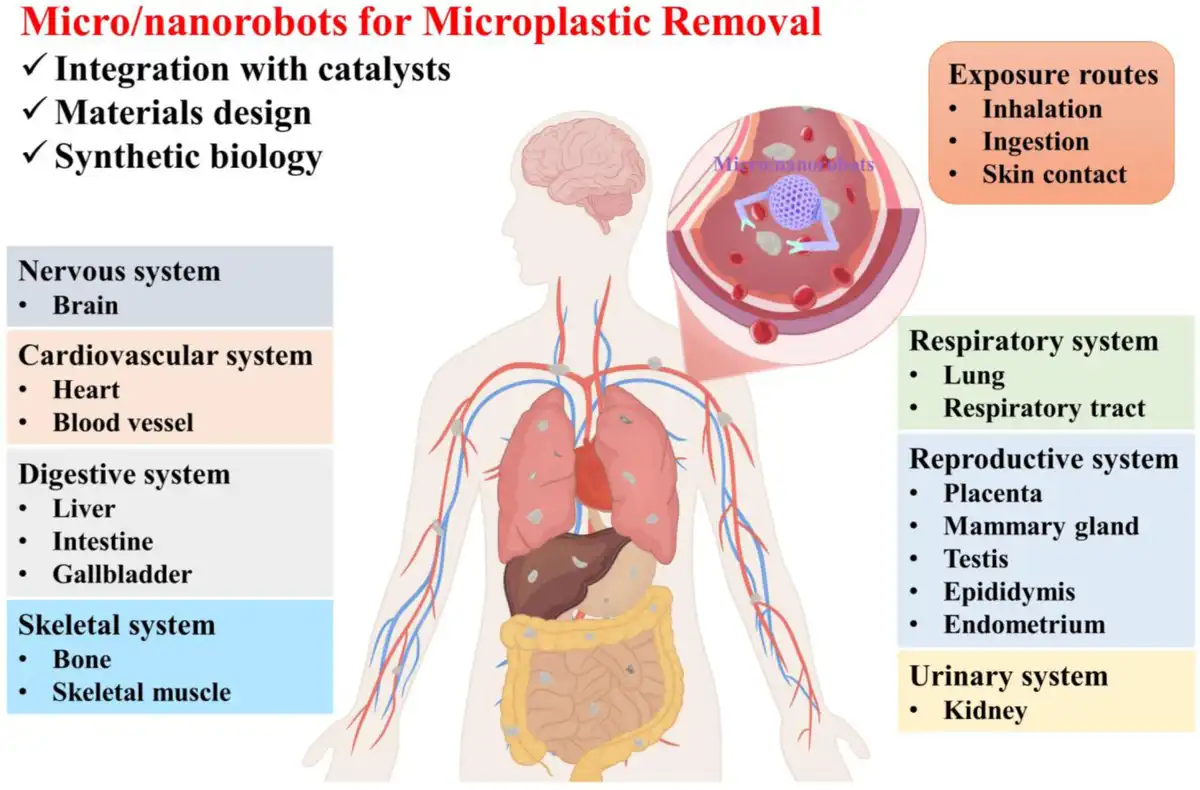
Micro/nanorobots can actively move around and search for targets in a space of interest, which holds great promise for the removal of MNPs from the human body, as illustrated in Figure 1. This direction is the most revolutionary, but also the most difficult, facing huge scientific obstacles such as immunogenicity, off-target effects, and delivery efficiency. When designing micro/nanorobots for this purpose, many factors need to be considered. (1) Micro/nanorobots can be integrated with novel catalysts, enzymes, or bacteria that can safely and controllably degrade MNPs in specific locations of the human body (such as blood and brain), thereby achieving targeted degradation. (2) To enable micro/nanorobots to eliminate MNPs from the human body, synthetic biology may bring breakthroughs in designing highly specific, safe, and controllable MNPs-degrading enzymes or engineering bacteria. (3) Regarding the materials design of orally administered micro/nanorobots, nonabsorbable hydrogels and clay minerals can be combined to efficiently adsorb MNPs in the intestine, prevent them from penetrating the intestinal barrier into the circulatory system, and promote their excretion with feces. (4) Micro/nanorobots possess better locomotion performance in body fluids, where MNPs are present in large quantities. Through body fluids, MNPs can spread to various tissues and organs throughout the body. Therefore, it is of great importance to develop safe micro/nanorobots that can specifically bind to MNPs in blood or tissue fluids and enhance their excretion through the hepatobiliary system (bile) or kidney system (urine) after capture and degradation. We expect this perspective will shed light on the impact of MNPs exposure on human health and pave the way for developing micro/nanorobotic strategies to eliminate MNPs from the human body.
Figure 1.
Schematic illustration of exploiting micro/nanorobots for the removal of MNPs from the human body.
Funding source
This work is financially supported by Beijing Natural Science Foundation (No. 2242059) and Beijing Nova Program of Science and Technology (No. 20240484527).
Conflicts of interests
The authors declare that they have no conflicts of interest.
Author contributions
H.Z.: funding acquisition, writing—review and editing, and writing—original draft; Y.Y. and P.L.: investigation; J.L.: conceptualization, supervision, funding acquisition, writing—review and editing, and writing—original draft.
References
- [1] Allen D, Allen S, Abbasi S, et al. Microplastics and nanoplastics in the marine-atmosphere environment. Nat Rev Earth Environ. 2022;3(6):393–405.
- [2] Landrigan PJ, Raps H, Cropper M, et al. The Minderoo-Monaco Commission on plastics and human health. Ann Glob Health. 2023;89(1):23.
- [3] Zhao J, Lan R, Tan H, et al. Detection and characterization of microplastics and nanoplastics in biological samples. Nat Rev Bioeng. 2025. https://doi.org/10.1038/s44222-025-00335-0
- [4] Ragusa A, Svelato A, Santacroce C, et al. Plasticenta: first evidence of microplastics in human placenta. Environ Int. 2021;146:106274.
- [5] Ragusa A, Notarstefano V, Svelato A, et al. Raman microspectroscopy detection and characterisation of microplastics in human breastmilk. Polymers. 2022;14(13):2700.
- [6] Montano L, Giorgini E, Notarstefano V, et al. Raman microspectroscopy evidence of microplastics in human semen. Sci Total Environ. 2023;901:165922.
- [7] Sun J, Sui M, Wang T, et al. Detection and quantification of various microplastics in human endometrium based on laser direct infrared spectroscopy. Sci Total Environ. 2024;906:167760.
- [8] Amato-Lourenço LF, Carvalho-Oliveira R, Júnior GR, et al. Presence of airborne microplastics in human lung tissue. J Hazard Mater. 2021;416:126124.
- [9] Jiang Y, Han J, Na J, et al. Exposure to microplastics in the upper respiratory tract of indoor and outdoor workers. Chemosphere. 2022;307:136067.
- [10] Ibrahim YS, Tuan Anuar S, Azmi AA, et al. Detection of microplastics in human colectomy specimens. JGH Open. 2021;5(1):116–121.
- [11] Horvatits T, Tamminga M, Liu B, et al. Microplastics detected in cirrhotic liver tissue. eBioMedicine. 2022;82:104147.
- [12] Cetin M, Demirkaya Miloglu F, Kilic Baygutalp N, et al. Higher number of microplastics in tumoral colon tissues from patients with colorectal adenocarcinoma. Environ Chem Lett. 2023;21(2):639–646.
- [13] Zhang D, Wu C, Liu Y, et al. Microplastics are detected in human gallstones and have the ability to form large cholesterol-microplastic heteroaggregates. J Hazard Mater. 2024;467:133631.
- [14] Leslie HA, van Velzen MJM, Brandsma SH, et al. Discovery and quantification of plastic particle pollution in human blood. Environ Int. 2022;163:107199.
- [15] Wu D, Feng Y, Wang R, et al. Pigment microparticles and microplastics found in human thrombi based on Raman spectral evidence. J Adv Res. 2023;49:141–150.
- [16] Huang H, Hou J, Li M, et al. Microplastics in the bloodstream can induce cerebral thrombosis by causing cell obstruction and lead to neurobehavioral abnormalities. Sci Adv. 2025;11(4):eadr8243.
- [17] Guo X, Wang L, Wang X, et al. Discovery and analysis of microplastics in human bone marrow. J Hazard Mater. 2024;477:135266.
- [18] Rotchell JM, Jenner LC, Chapman E, et al. Detection of microplastics in human saphenous vein tissue using μFTIR: a pilot study. PLoS One. 2023;18(2):e0280594.
- [19] Yang Y, Xie E, Du Z, et al. Detection of various microplastics in patients undergoing cardiac surgery. Environ Sci Technol. 2023;57(30):10911–10918.
- [20] Marfella R, Prattichizzo F, Sardu C, et al. Microplastics and nanoplastics in atheromas and cardiovascular events. N Engl J Med. 2024;390(10):900–910.
- [21] Lu S, Wei Y, Xu R, et al. New insights: discovery of microplastics in human bone and skeletal muscle. Innov Med. 2024;2(4):100100.
- [22] Shi D, Wang X, Deng Y, et al. Smart micro/nanorobots for drug delivery in the brain. Prog Mater Sci. 2026;155:101533.
- [23] Nihart AJ, Garcia MA, El Hayek E, et al. Bioaccumulation of microplastics in decedent human brains. Nat Med. 2025;31(4):1114–1119.
- [24] Chen J, Wu J, Sherrell PC, et al. How to build a microplastics-free environment: strategies for microplastics degradation and plastics recycling. Adv Sci. 2022;9(6):e2103764.
- [25] Zhou H, Mayorga-Martinez CC, Pané S, et al. Magnetically driven micro and nanorobots. Chem Rev. 2021;121(8):4999–5041.
- [26] Liang X, Chen Z, Deng Y, et al. Field-controlled microrobots fabricated by photopolymerization. Cyborg Bionic Syst. 2023;4:0009.
- [27] Li J, Shen H, Zhou H, et al. Antimicrobial micro/nanorobotic materials design: from passive combat to active therapy. Mater Sci Eng R Rep. 2023;152:100712.
- [28] Srivastava SK, Medina-Sánchez M, Koch B, et al. Medibots: dual-action biogenic microdaggers for single-cell surgery and drug release. Adv Mater. 2016;28(5):832–837.
- [29] Nelson BJ, Kaliakatsos IK, Abbott JJ. Microrobots for minimally invasive medicine. Annu Rev Biomed Eng. 2010;12(1):55–85.
- [30] Li J, Dekanovsky L, Khezri B, et al. Biohybrid micro- and nanorobots for intelligent drug delivery. Cyborg Bionic Syst. 2022;2022:9824057.
- [31] Ye M, Zhou Y, Zhao H, et al. Magnetic microrobots with folate targeting for drug delivery. Cyborg Bionic Syst. 2023;4:0019.
- [32] Chen W, Zhou H, Zhang B, et al. Recent progress of micro/nanorobots for cell delivery and manipulation. Adv Funct Mater. 2022;32(18):2110625.
- [33] Wang F, Zhang Y, Jin D, et al. Magnetic soft microrobot design for cell grasping and transportation. Cyborg Bionic Syst. 2024;5:0109.
- [34] Zhou H, Mayorga-Martinez CC, Pumera M. Microplastic removal and degradation by mussel-inspired adhesive magnetic/enzymatic microrobots. Small Methods. 2021;5(9):2100230.
- [35] Zhou H, Dong G, Gao G, et al. Hydrogel-based stimuli-responsive micromotors for biomedicine. Cyborg Bionic Syst. 2022;2022:9852853.
- [36] Li J, Wu C, Chu PK, et al. 3D printing of hydrogels: rational design strategies and emerging biomedical applications. Mater Sci Eng R Rep. 2020;140:100543.
This article is available under Open Access.
© 2025 The Authors