Mapping the landscape of metal-organic frameworks in orthopedics: a review
Authors
Yao Yang, Yingjie Wang, Yanling Zhou, Xianzuo Zhang, Yuan Chen, Baoliang Lu, Zheng Su*, Wanbo Zhu*, Junchen Zhu*
- aDepartment of Orthopedics, The Second Affiliated Hospital of Anhui University m of Chinese Medicine, Hefei, China
- bDepartment of Orthopedics, The First a Affiliated Hospital of USTC, Division of Life Sciences and Medicine, University of t Science and Technology of China, Hefei, China
- cGraduate School of Bengbu p Medical College, Bengbu, China
- dDepartment of Orthopedics, Shanghai Jiao Tong University Affiliated Sixth People’s Hospital, Shanghai Jiao Tong University, Shanghai, China. w
* Correspondence: Address: Zheng Su, Department of Orthopedics, The t First Affiliated Hospital of USTC, Division of Life Sciences and Medicine, University M of Science and Technology of China, No.17 Lujiang Road, Luyang District, Hefei, P China. Email: suz924@ustc.edu.cn (Z. Su); Junchen Zhu, Department c of Orthopedics, The Second Affiliated Hospital of Anhui University of Chinese Medicine, No.300 Shouchun Road, Luyang District, Hefei, China. Email: r junchenzhu@ahtcm.edu.cn (J. Zhu); Wanbo Zhu, Department of Orthopedics, i Shanghai Jiao Tong University Affiliated Sixth People’s Hospital, Shanghai t Jiao Tong University, No. 600 Yishan Road, Shanghai, China. Email: r zhuwanbo@sjtu.edu.cn (W. Zhu). s Yao Yang, Yingjie Wang, and Yanling Zhou have contributed equally to this l manuscript. a
MedMat · 2025 · Vol. 2 · No. 2 · pp. 118-132
Abstract
This study presents the first bibliometric analysis of metal-organic frameworks (MOF) in orthopedics, highlighting key research trends and investigative focuses. An exhaustive review of 219 records from the Web of Science core collection database provided insights into the development and potential uses of MOF in orthopedic interventions and bone tissue engineering. Known for their unique architecture, large surface areas, and adjustable porosity, MOF have shown promise in a variety of biomedical applications, including drug delivery, bone restoration, and as components in orthopedic implants. This investigation identifies prominent MOF series and summarizes their main functions in orthopedic settings. In vivo studies have confirmed the versatility and effectiveness of MOF in promoting bone regeneration, combating infections, targeting bone tumors, and reducing osteoporosis. However, challenges persist in translating MOF research into clinical orthopedic applications, particularly in ensuring biocompatibility and stability in the human body and uniformity of MOF composites. Future directions include expanding MOF applications through global collaboration and interdisciplinary efforts to accelerate their integration into clinical orthopedics. This research emphasizes the substantial potential of MOF to transform orthopedic treatments, advocating for further investigation and collaboration to fully exploit their clinical capabilities.
Translations
Long abstracts in additional languages. The English article is the version of record.
中文zh-Hans
金属有机框架(MOF)作为一类具有独特拓扑结构、超大比表面积及可调孔隙率的新型多孔材料,在生物医学领域展现出巨大潜力。然而,尽管其在药物递送和骨组织工程中的应用前景广阔,目前关于MOF在骨科干预中的系统性研究仍缺乏全面梳理,导致其临床转化路径尚不清晰。本研究旨在通过首次 bibliometric 分析,系统描绘金属有机框架在骨科领域的研究版图,明确当前的关键发展趋势与核心关注点,为后续深入探索其在骨修复、抗感染及肿瘤靶向治疗中的应用提供理论依据和方向指引。
本综述基于Web of Science核心合集数据库进行了详尽的文献检索与分析,共纳入219篇相关记录作为研究对象。研究团队对近年的MOF骨科应用文献进行了系统性梳理,重点识别了具有代表性的MOF系列及其主要功能特征。通过整合现有数据,本文构建了关于MOF在骨组织工程及植入物组件中应用的综合分析框架,详细阐述了其从基础材料特性到具体临床场景的转化逻辑,并特别关注了体内实验验证的有效性证据,为理解该领域的研究脉络提供了坚实的文献支撑。
分析结果显示,金属有机框架在促进骨骼再生、对抗感染、靶向骨肿瘤以及缓解骨质疏松等方面表现出显著的多样性与有效性。现有体外及体内研究证实,MOF凭借其独特的结构优势,能够有效实现药物控释并改善局部微环境,从而加速骨愈合过程。然而,当前研究也揭示了若干关键挑战:包括材料在人体内的生物相容性不足、长期稳定性难以保证以及复合材料均匀性问题突出。这些发现表明,虽然MOF在骨科治疗中具有变革潜力,但其从实验室走向临床仍面临严峻的材料学障碍需要克服。
尽管金属有机框架有望彻底改变骨科治疗方案,但其在临床应用中的转化仍存在显著局限性,特别是生物安全性与体内稳定性的验证尚不充分。未来的研究方向应致力于通过全球范围内的跨学科合作,进一步拓展MOF的应用边界并优化其复合材料的制备工艺。本研究强调,只有通过持续深入的机制探索与国际协作,才能充分挖掘金属有机框架的临床潜力,解决当前面临的稳定性与均一性难题,最终实现其在骨科临床实践中的广泛整合与应用转化。
Françaisfr
Les cadres organométalliques (MOF), caractérisés par leur architecture unique, leurs surfaces spécifiques élevées et leur porosité ajustable, représentent une classe de matériaux prometteuse pour diverses applications biomédicales. Malgré leur potentiel dans le domaine du génie tissulaire osseux et des interventions orthopédiques, il existe un manque de synthèse systématique concernant l'état actuel de la recherche sur les MOF en orthopédie, ce qui entrave une compréhension claire de leurs trajectoires de translation clinique. L'objectif principal de cette étude est de présenter la première analyse bibliométrique dédiée aux MOF dans le domaine orthopédique, afin d'identifier les tendances de recherche clés et les axes d'investigation prioritaires pour orienter l'évolution future du secteur.
Cette revue exhaustive s'appuie sur une sélection rigoureuse de 219 enregistrements issus de la base de données Web of Science core collection. Les auteurs ont méthodiquement analysé ces documents pour cartographier le développement et les utilisations potentielles des MOF dans les interventions orthopédiques et l'ingénierie tissulaire osseuse. L'étude met particulièrement en lumière les séries de MOF prédominantes, résumant leurs fonctions principales au sein de contextes orthopédiques spécifiques, tout en intégrant une évaluation critique des études in vivo qui ont validé leur efficacité dans la régénération osseuse et le ciblage thérapeutique.
Les résultats principaux confirment que les MOF démontrent une polyvalence remarquable pour promouvoir la régénération osseuse, combattre les infections, cibler les tumeurs osseuses et réduire l'ostéoporose. Les données synthétisées soulignent leur capacité à agir comme composants d'implants orthopédiques ou vecteurs de délivrance de médicaments grâce à leurs propriétés physico-chimiques uniques. Toutefois, l'interprétation scientifique met en évidence des défis persistants : la nécessité absolue d'améliorer la biocompatibilité et la stabilité in vivo, ainsi que le problème critique de l'uniformité des composites de MOF, qui restent les principaux obstacles à leur adoption clinique généralisée.
En conclusion, bien que les MOF aient un potentiel substantiel pour transformer les traitements orthopédiques, leur traduction en applications cliniques réelles est freinée par des limitations techniques et biologiques non résolues. Les directions futures doivent impérativement inclure une expansion des applications via la collaboration mondiale et des efforts interdisciplinaires accrus pour accélérer l'intégration de ces matériaux dans la pratique clinique orthopédique. Cette recherche plaide en faveur d'une investigation approfondie continue, soulignant que seule une coopération internationale renforcée permettra de surmonter les défis actuels et d'exploiter pleinement les capacités cliniques des cadres organométalliques pour le bénéfice des patients orthopédiques à venir.
Españoles
Los marcos metal-orgánicos (MOF) constituyen una clase de materiales porosos con arquitecturas únicas, grandes superficies específicas y porosidad ajustable que muestran un gran potencial en diversas aplicaciones biomédicas. A pesar de su promesa en la regeneración ósea y como componentes de implantes ortopédicos, existe actualmente una falta de revisión sistemática sobre el estado del arte de los MOF en ortopedia, lo que dificulta clarificar sus trayectorias hacia la traducción clínica. El objetivo principal de este estudio es presentar el primer análisis bibliométrico dedicado a los MOF en el ámbito ortopédico, con el fin de identificar las tendencias clave de investigación y los enfoques investigativos prioritarios para orientar el desarrollo futuro del campo.
Esta revisión exhaustiva se basa en un examen detallado de 219 registros extraídos de la base de datos Web of Science core collection. Los autores han analizado sistemáticamente estos documentos para ofrecer perspectivas sobre el desarrollo y los usos potenciales de los MOF en intervenciones ortopédicas e ingeniería de tejidos óseos. El estudio identifica series prominentes de MOF, resume sus funciones principales en entornos ortopédicos específicos y sintetiza la evidencia disponible de estudios in vivo que han confirmado su versatilidad y eficacia en contextos clínicos reales.
Los hallazgos principales confirman que los MOF demuestran una notable diversidad y efectividad para promover la regeneración ósea, combatir infecciones, dirigirse a tumores óseos y reducir la osteoporosis. Las revisiones de estudios in vivo validan su capacidad como componentes en implantes o sistemas de liberación de fármacos gracias a sus propiedades fisicoquímicas únicas. Sin embargo, el análisis científico también revela desafíos persistentes: la necesidad crítica de garantizar una biocompatibilidad adecuada y estabilidad dentro del cuerpo humano, así como problemas significativos relacionados con la uniformidad de los compuestos de MOF que obstaculizan su adopción clínica generalizada.
Aunque los marcos metal-orgánicos tienen un potencial sustancial para transformar los tratamientos ortopédicos, su traducción a aplicaciones clínicas reales enfrenta limitaciones técnicas y biológicas no resueltas. Las direcciones futuras deben incluir necesariamente una expansión de las aplicaciones mediante la colaboración global y esfuerzos interdisciplinarios acelerados para integrar estos materiales en la práctica clínica ortopédica. Esta investigación aboga por una mayor indagación y cooperación, subrayando que solo a través del trabajo conjunto se podrán superar los desafíos actuales de estabilidad y uniformidad, explotando así plenamente las capacidades clínicas de los MOF.
日本語ja
金属有機骨格(MOF)は、その独自の構造、巨大な比表面積および調整可能な孔隙率により、生体医学分野において大きな可能性を秘めています。しかしながら、薬物送達や骨修復への応用が期待される一方で、整形外科介入におけるMOFの研究動向に関する包括的な整理はまだ不十分であり、臨床転換の道筋は明確ではありません。本研究は、金属有機骨格が整形外科領域で果たす役割と研究状況を初めて体系的に分析することを目的としており、主要な研究トレンドと調査焦点を明らかにし、将来的な応用拡大のための基盤を提供することを目指しています。
本レビューでは、Web of Scienceコアコレクションデータベースから219件の記録を対象とした包括的な文献検索および分析を実施しました。これらのデータを詳細に検討することで、整形外科介入や骨組織工学におけるMOFの開発経緯と潜在的用途に関する洞察を得ました。研究は、代表的なMOFシリーズを特定し、それらの主要機能を整形外科設定において要約するとともに、体内実験による有効性確認の証拠を統合し、材料特性から臨床応用までの論理的枠組みを構築しました。
分析結果によると、金属有機骨格は骨再生の促進、感染症への対抗、骨腫瘍への標的治療および骨粗鬆症の軽減において多様性と有効性を示すことが確認されました。既存の研究は、MOFがその構造的優位性を利用して薬物制御放出を実現し、局所微環境を改善することで骨癒合プロセスを加速できることを裏付けています。しかし同時に、体内での生体適合性の不足、長期安定性の確保の難しさ、および複合体材料の均一性に関する課題といった顕著な障壁も浮き彫りとなりました。
金属有機骨格は整形外科治療を変革する大きな可能性を秘めていますが、臨床応用への転換には依然として重大な限界が存在します。特に生体適合性と体内安定性の検証が不十分であり、複合体の均一性確保という材料学的課題が残されています。今後の方向性としては、世界的規模での学際的協力を通じてMOFの応用範囲を拡大し、臨床整形外科への統合を加速させることが不可欠です。本研究は、これらの課題を克服し、金属有機骨格の臨床能力を最大限に活用するためには、継続的な調査と国際協力が重要であると強調しています。
العربيةar
تُعد الأطر المعدنية العضوية (MOFs) فئة من المواد المسامية ذات بنية فريدة، ومساحة سطحية كبيرة جداً، ونفاذية قابلة للتعديل، مما يمنحها إمكانات هائلة في مجالات الطب الحيوي. وعلى الرغم من وعودها الواعدة في تطبيقات مثل توصيل الأدوية واستعادة العظام واستخداماتها كمكونات في الغرسات العظمية، إلا أن هناك نقصاً في التلخيص المنهجي للأبحاث الحالية حول استخدام MOFs في التدخلات الجراحية والعلاج الطبيعي للعظام، مما يجعل مسار تحويلها إلى سريرية غير واضح. يهدف هذا الدراسة إلى تقديم أول تحليل استنادي (bibliometric) للمجال البحثي الخاص بـ MOFs في طب العظام، لتحديد الاتجاهات الرئيسية للبحث والتركيزات الاستقصائية الحالية، وتقديم أساس نظري وتوجيه للمستقبل.
تعتمد هذه المراجعة الشاملة على فحص شامل لـ 219 سجلاً تم استخلاصها من قاعدة بيانات Web of Science core collection. قام فريق البحث بتحليل منهجي لهذه السجلات لتقديم رؤى حول تطور واستخدامات MOFs المحتملة في التدخلات العظمية وهندسة الأنسجة العظمية. يحدد هذا التحقيق سلاسل بارزة من MOFs ويُلخص وظائفها الرئيسية في الإعدادات الجراحية، مع التركيز بشكل خاص على دمج الأدلة المستمدة من الدراسات التي أجريت داخل الكائن الحي (in vivo) والتي أكدت فعالية هذه المواد.
تُظهر النتائج الرئيسية أن الأطر المعدنية العضوية تظهر تنوعاً وفعالية ملحوظة في تعزيز تجديد العظام، ومكافحة العدوى، واستهداف أورام العظام، وتقليل هشاشة العظام. وقد أثبتت الدراسات داخل الكائن الحي قدرة MOFs على العمل كمكونات فعالة في الغرسات أو أنظمة توصيل الأدوية بفضل خصائصها الفيزيائية والكيميائية الفريدة التي تحسن البيئة الموضعية وتسرع عملية الشفاء. ومع ذلك، يكشف التحليل العلمي أيضاً عن تحديات مستمرة تتعلق بضمان التوافق الحيوي والاستقرار داخل جسم الإنسان، بالإضافة إلى مشكلة عدم تجانس مركبات MOFs.
على الرغم من أن الأطر المعدنية العضوية تمتلك إمكانات كبيرة لتحويل علاجات العظام، إلا أن تحويلها إلى تطبيقات سريرية يواجه قيوداً تقنية وبيولوجية غير محلولة. وتشمل الاتجاهات المستقبلية ضرورة توسيع نطاق استخدام MOFs من خلال التعاون العالمي وجهود متعددة التخصصات لتسريع دمج هذه المواد في الممارسة السريرية لطب العظام. تؤكد هذه الدراسة على الحاجة إلى مزيد من التحقيق والتعاون الدولي للتغلب على التحديات الحالية المتعلقة بالاستقرار والموحدة، واستغلال القدرات السريرية الكاملة لهذه التقنية لصالح المرضى.
Keywords
Full Text
1. Introduction
Orthopedic research, which focuses on musculoskeletal health and therapeutic interventions for bone-related disorders, is instrumental in improving the quality of life.[1–2–3] Yet, there’s an urgent demand for more innovative solutions to treat extensive bone defects, joint inflammation, bone infections, and tumor damage.[4–5–6] Traditional materials employed in these interventions face numerous limitations,[7,8] thereby leading to a growing interest in advanced materials to address challenges in bone regeneration, osseointegration, and bone disease treatment. In this context, the evolution of materials science and biomedical engineering has brought to light novel synthetic biomaterials such as bioactive glass, bioceramics, bone morphogenetic protein (BMP), polycaprolactone, metal-organic frameworks (MOF).[9–10–11–12] MOF, in particular, have gained substantial attention in biomedical research due to their unique structure, large surface area, adjustable porosity, biodegradability, and customizability,[13–14–15] positioning them as a promising candidate material for promoting orthopedic treatment and bone tissue engineering.
MOF, distinguished by their organic ligands coordinated with metal ions or clusters, present a diverse array of structures with unique properties. These characteristics make MOF particularly promising in the field of orthopedics.[16,17] Previous research has underscored the multifaceted applications of MOF in this area, ranging from faciliating bone regeneration to acting as a drug delivery vehicle and improving the effectiveness of orthopedic implants.[18–19–20] Despite these advancements, the exploration of MOF in orthopedics remains relatively unexplored, with a lack of comprehensive understanding of the current research landscape. Bibliometric methods, pivotal in assessing scientific progress and academic impact, offering insights into research quality, trends, and influence, thereby supporting decision-making in scientific policy and resource allocation. While previous studies have explored into MOF applications in biomedicine[21] and photo-/electrochemistry,[22] there is a notable gap in bibliometric analysis concerning their orthopedic applications.
This article endeavors to shed light on the prevailing trends, pivotal publications, influential journals, and primary research directions in the orthopedic utilization of MOF materials. Through comprehensive analysis of an extensive array of publications, this study aims to delineate the current state of research and identify emerging frontiers, thereby directing subsequent research endeavors and optimizing the potential of MOF in orthopedics. Moreover, this investigation is anticipated to serve as a reference for MOF applications across diverse disciplines, promoting interdisciplinary integration and furthering advancements in fields such as materials science and biomedicine. The exploration of MOF within the field of orthopedics is expected to pave the way for future personalized and precision medicine, underscoring the crucial role of pioneering materials science in healthcare evolution.
2. Data and methods
2.1 Data sources and search strategies
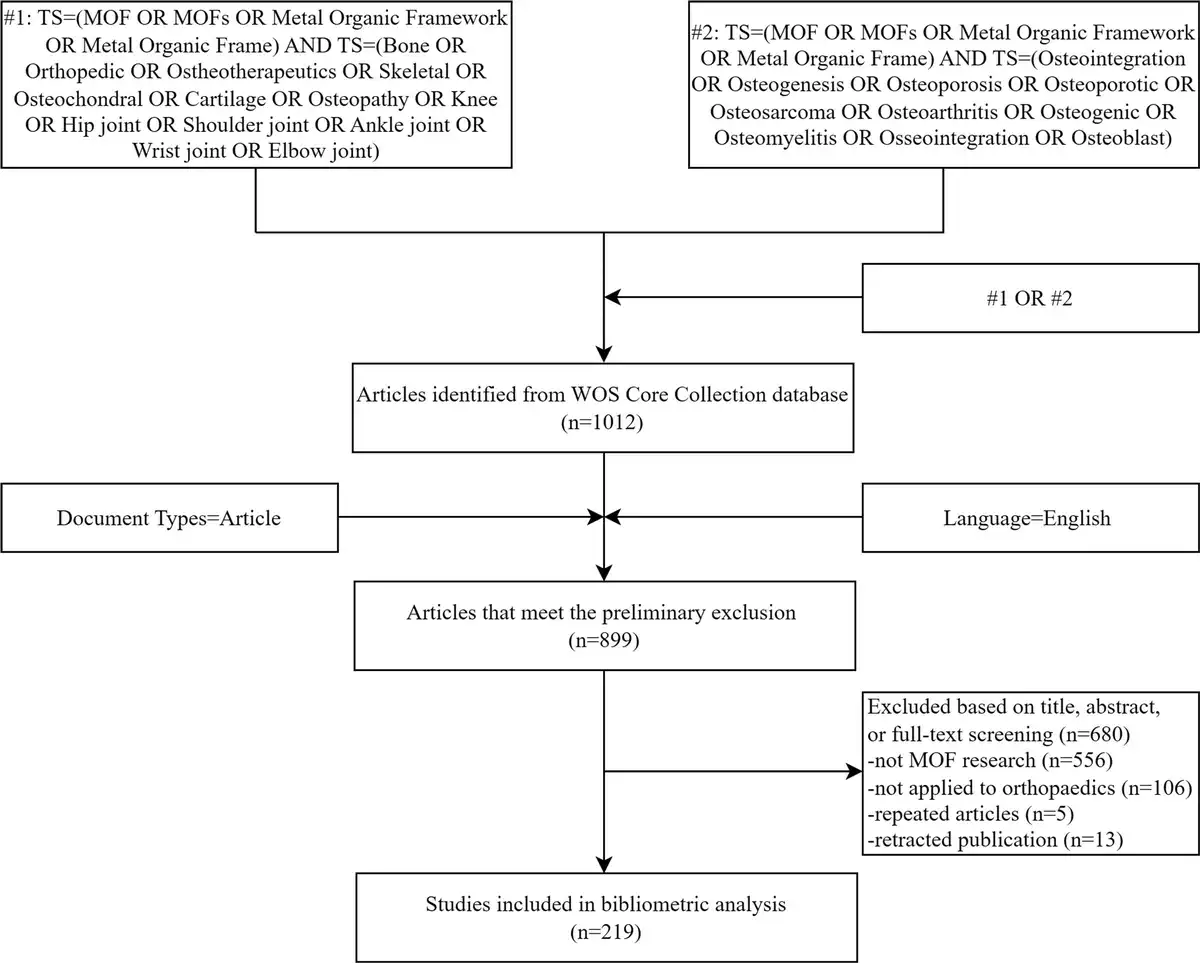
An exhaustive online bibliographic search was performed using the Web of Science Core Collection (WOSCC) database. The search strategy employed was as follows: TS= (MOF OR MOFs OR Metal-Organic Framework OR Metal-Organic Frame) AND TS= (Bone OR Orthopedic OR Ostheotherapeutics OR Skeletal OR Osteointegration OR Osteogenesis OR Osteoporosis OR Osteoporotic OR Osteosarcoma OR Osteoarthritis OR Osteogenic OR Osteomyelitis OR Osseointegration OR Osteoblast OR Osteochondral OR Cartilage OR Osteopathy OR Knee OR Hip joint OR Shoulder joint OR Ankle joint OR Wrist joint OR Elbow joint). The data retrieval process was unconstrained by time, and to minimize bias resulting from frequent database updates, all searches and data exports were completed on March 25, 2025.
2.2 Article screening
A total of 1012 results were retrieved from the WOSCC database. All records were screened and evaluated by 2 independent authors. If there was a disagreement between the 2 authors, a third author participated in the discussion and reached a consensus. Firstly, the screening results were initially refined by limiting the language of the publication to English and the type of publication to article. Second, the records were further screened by reading the title or abstract or full text to exclude unsuitable articles. The specific screening process was shown in Figure 1. Finally, 219 records were included in our study.
Figure 1.
Flowchart for publication retrieval, exclusion, and inclusion.
2.3 Data collection and extraction
The eligible publications were meticulously annotated and exported from the WOSCC database. The data extracted from these publications encompassed article information (title and keyword), author information (author name, institution, country, corresponding author, or reprint author), publication information (journal, year of publication, and impact factor), citation information (total number of citations and cited references).
2.4 Statistics analysis
To illustrate the trends in article publications and citations, we employed histograms and line graphs. The temporal changes of these trends was analyzed using the Mann-Kendall mutation test in MATLAB software. Keyword clustering cooccurrence networks and time coverage maps were used to determine the main research focal points. The geographical distribution of research activity and publication status across various countries was depicted using a world map. Furthermore, an in-depth analysis of literature collaborative networks was performed to understand the relationships between different research entities. For data analysis and visualization, we used several tools: VOS viewer[23] 1.6.18 (Leiden University Centre for Science and Technology Research), the Bibliometrix R package version 4.0 (https://www.bibliometrix.org), Charts and Maps (https://amcharts.com), Diamond (Crystal Impact GbR, University of Bonn, Germany), and Microsoft Excel (Microsoft Corporation, Redmond, WA).
3. Results
3.1 Visualization of annual publications and citations
We analyzed the number of articles and total citations per year, including articles published between 2015 and 2024 in this study. The total number of articles increased annually, with the number of citations reaching a peak in 2022 before gradually declining, resulting in a relatively low citation count in 2024 (Figure 2A). The Mann-Kendall abrupt change test revealed a change point in the publication of articles after 2021, indicated by the intersection of the UF and UB curves. Meanwhile, the UF curve showed an upward trend in article publications after 2018 and a significant upward trend after 2022 (Figure 2B). Additionally, the citation change point occurred in 2019, followed by a sustained upward trend in citations (Figure 2C).
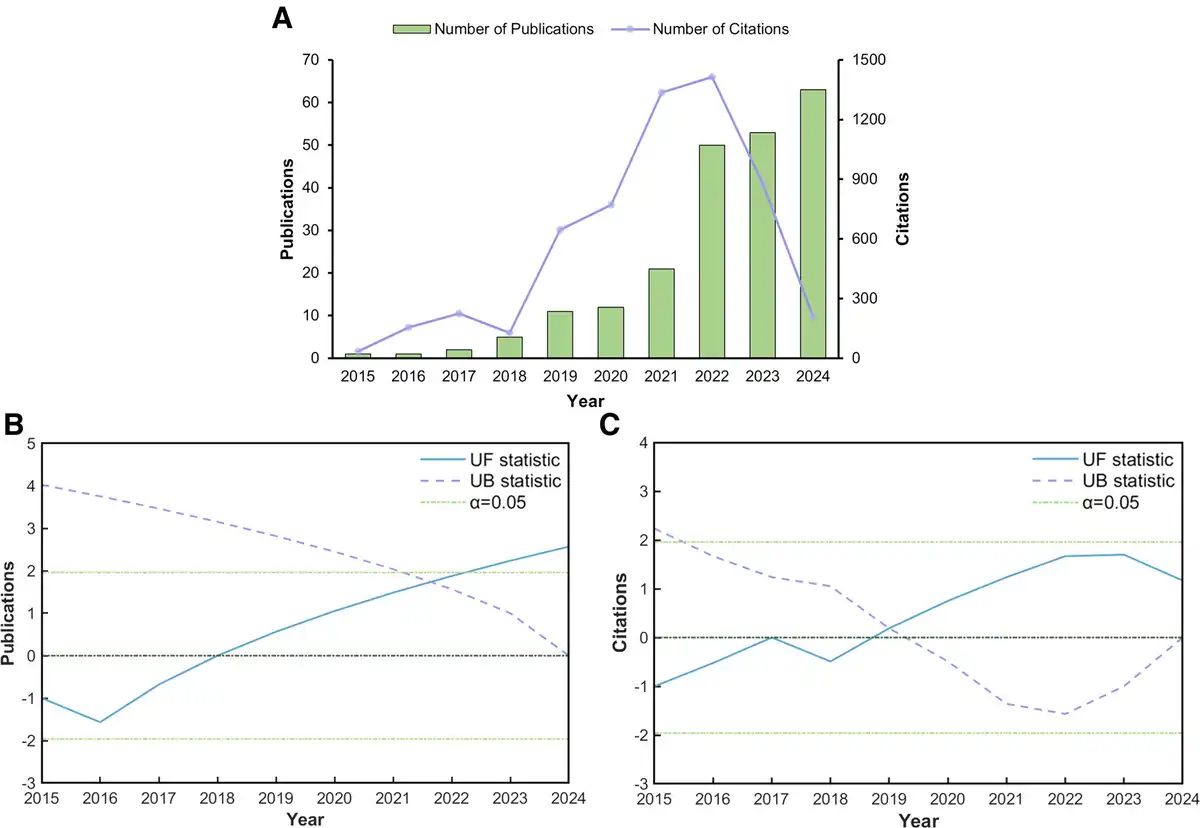
Figure 2.
(A) Trends in annual publications and citations. The Mann-Kendall trend test is applied to analyze the trends in (B) publications and (C) citations. The UF curve represents the directional trend, while the UB curve signifies the inverse series of the UF curve. A positive UF value indicates an increasing trend, whereas a negative UF value signifies a decreasing trend. The significance level, set at 0.05, corresponds to a value of ±1.96. A UF value exceeding 1.96 indicates a significant increasing trend, while a UF value < −1.96 indicates a significant decreasing trend. The point of intersection within the confidence interval (±1.96) denotes the mutation point.
3.2 Analysis of high productive journals and highly cited articles
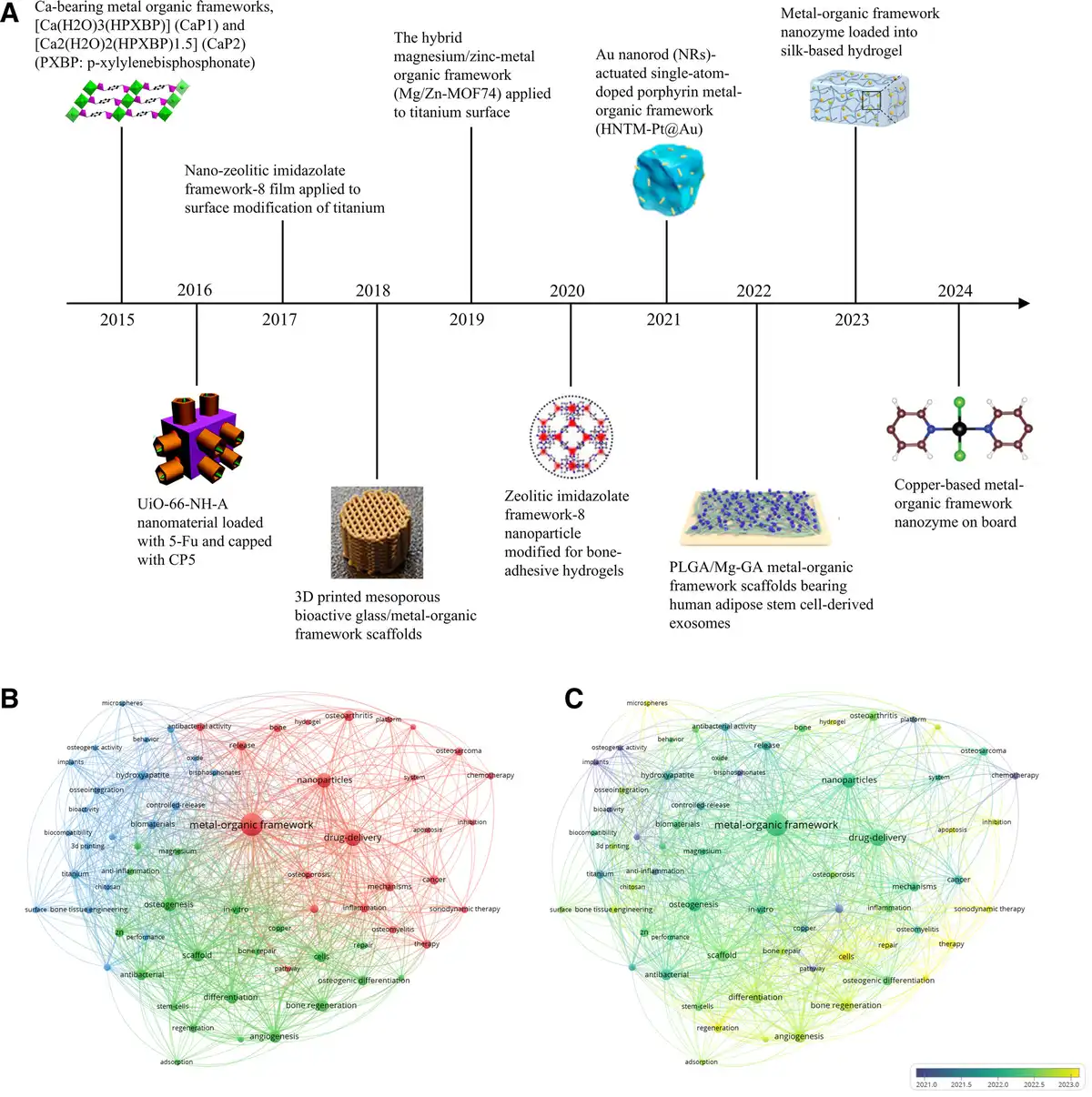
Among the top 11 journals by publication volume, there were a total of 83 articles, accounting for 37.9% of the total publications (Table 1). ACS Applied Materials & Interfaces had the highest number of publications, followed by Chemical Engineering Journal, and ACS Applied Materials & Interfaces had the highest number of citations. The top 3 journals with the highest impact factors were Bioactive Materials, ACS Nano, and Advanced Science. The MOF materials studied in articles with the highest annual citation counts were illustrated in Figure 3A. Among these studies, 4 research items demonstrated the role of enhancing bone regeneration, 1 study showed its potential in treatments for osteomyelitis, 2 study highlighted its role in promoting osteogenic, 1 study applied it in treating bone tissue diseases, 1 study shows its ability to treat osteoarthritis, and 1 study focused on its application in treating bone joint tuberculosis. The top 10 most cited articles were listed in Table 2, all originating from institutions in China, with 2 articles from Chongqing University, 2 from Sichuan University, and others from Hubei University, Jilin University, China Medical University, Shanghai Jiao Tong University, Guangdong Medical University, and Zhejiang University.
Table 1
The top 11 most productive journals.
| Journal | Publications | Total citations | Average citation | Impact factor |
|---|---|---|---|---|
| ACS Applied Materials & Interfaces | 16 | 624 | 39.00 | 8.5 |
| Chemical Engineering Journal | 13 | 494 | 38.00 | 13.4 |
| Advanced Healthcare Materials | 7 | 219 | 31.29 | 10 |
| Journal of Materials Chemistry B | 7 | 336 | 48.00 | 6.1 |
| Small | 7 | 162 | 23.14 | 13 |
| Journal of Nanobiotechnology | 7 | 215 | 30.71 | 10.6 |
| Journal of Colloid and Interface Science | 6 | 94 | 15.67 | 9.4 |
| Biomaterials | 5 | 437 | 87.40 | 12.8 |
| Bioactive Materials | 5 | 350 | 70.00 | 18 |
| ACS Nano | 5 | 379 | 75.80 | 15.8 |
| Advanced Science | 5 | 140 | 28.00 | 14.3 |
Table 2
The top 10 most cited references.
| Title | Institution | Journal | Year | Citations |
|---|---|---|---|---|
| Fabrication of magnesium/zinc-metal-organic framework on titanium implants to inhibit bacterial infection and promote bone regeneration | Chongqing University, China | Biomaterials | 2019 | 228 |
| Single-atom catalysis for efficient sonodynamic therapy of methicillin-resistant Staphylococcus aureus-infected osteomyelitis | Hubei University, China | Acs Nano | 2021 | 188 |
| ZIF-8-modified multifunctional bone-adhesive hydrogels promoting angiogenesis and osteogenesis for bone regeneration | Sichuan University, China | ACS Applied Materials & Interfaces | 2020 | 182 |
| Ca2+, pH and thermo triple-responsive mechanized Zr-based MOFs for on-command drug release in bone diseases | Jilin University, China | Journal of Materials Chemistry B | 2016 | 154 |
| Surface modification of titanium implants by ZIF-8@Levo/LBL coating for inhibition of bacterial-associated infection and enhancement of in vivo osseointegration | Chongqing University, China | Chemical Engineering Journal | 2020 | 150 |
| Exosome-functionalized magnesium-organic framework-based scaffolds with osteogenic, angiogenic and antiinflammatory properties for accelerated bone regeneration | China Medical University, China | Bioactive Materials | 2022 | 145 |
| Cartilage-targeting peptide-modified dual-drug delivery nanoplatform with NIR laser response for osteoarthritis therapy | Shanghai Jiao Tong University, China | Bioactive Materials | 2021 | 130 |
| Osteogenic activity and antibacterial effect of porous titanium modified with metal-organic framework films | Sichuan University, China | Journal of Biomedical Materials Research Part A | 2017 | 119 |
| Current status and prospects of metal-organic frameworks for bone therapy and bone repair | Guangdong Medical University, China | Journal of Materials Chemistry B | 2022 | 114 |
| Controlled release of naringin in metal-organic framework-loaded mineralized collagen coating to simultaneously enhance osseointegration and antibacterial activity | Zhejiang University, China | ACS Applied Materials & Interfaces | 2017 | 106 |
3.3 Analysis of keywords
A total of 66 keywords appeared 4 times or more in frequency. The network cooccurrence and time overlay visualization of these keywords could be seen in Figure 3B, C. These keywords were divided into 3 clusters (Figure 3B). The red cluster was primarily associated with the applications of MOF materials as drug delivery systems and drug carriers. The blue cluster mainly encompasses properties of MOF as bioactive materials, such as osteogenic activity, biocompatibility, surface modification, and so on. The green cluster focused on the application of MOF in the field of orthopedics and their functional roles, including osteogenesis, bone regeneration, bone repair and angiogenesis. The average appearance year of keywords was color-coded in Figure 3C, indicating the evolution of these keywords over time, where purple signifies earlier appearances overall, while yellow indicated later appearances. Keywords like “sonodynamic therapy,” “bone tissue engineering,” “bone regeneration,” and “bone repair” appeared relatively later.
3.4 Analysis of country/region, institution, and author characteristics of publications
China was the primary contributor, with a publication count as high as 184 articles, firmly maintaining the top position. The second positions were held by Iran, with publication counts of only 12 articles (Table 3). The geographical distribution of 21 countries/regions engaged in related research worldwide was depicted in Figure 4A. Concerning international cooperation, China, Australia, the United States, Iran, and the United Kingdom were the 5 countries participating in more collaborative efforts. China had the most collaboration partners (including the United States, the United Kingdom, Germany, India, Australia, Singapore, and Portugal). Five countries (Denmark, Canada, Saudi Arabia, Egypt, and Turkiye) did not participate in international collaboration (Figure 4B). The collaborative network among institutions, as shown in Figure 4C (publications ≥ 4), comprises 33 institutions, where the Chinese Academy of Sciences had the most extensive collaborative network (total link strength = 26), followed by the Huazhong University of Science and Technology (total link strength = 20). Shandong University, Guangxi Medical University, Shandong University, and Dalian University of Technology (China) did not engage in interinstitutional collaboration. The top 11 most prolific institutions all hailed from China (Table 4), with Sichuan University leading in publication volume (29 articles, 13.24%), followed by Chinese Academy of Sciences (20 articles, 9.13%). A total of 33 authors with 4 or more publications formed a collaborative network, divided into 9 collaboration clusters as shown in Figure 4D. The largest collaboration cluster, marked in red, predominantly comprises individuals from Sichuan University, primarily including Q.B. Wan, X. Zhang, J.Y. Chen, J. Wang, X.B. Pei, and others. The second-largest collaboration cluster, represented in blue, primarily comprised X.M. Liu from Hebei University of Technology, Y.F. Zheng and S.L. Wu from Peking University, along with individuals from Tianjin University, including Z.D. Cui, S.L. Zhu, and Z.Y. Li. The top 10 most prolific authors were all from China (Table 5), with the first 6 originating from Sichuan University and belonging to the same collaboration cluster within the author collaboration network.
Table 3
The top 10 most productive countries.
| Country | Articles | Total citations | Average citations | Percentage |
|---|---|---|---|---|
| China | 184 | 5235 | 28.45 | 84.02 |
| Iran | 12 | 187 | 15.58 | 5.48 |
| Australia | 7 | 291 | 41.57 | 3.20 |
| United States | 7 | 129 | 18.43 | 3.20 |
| Singapore | 5 | 102 | 20.40 | 2.28 |
| India | 5 | 157 | 31.40 | 2.28 |
| United Kingdom | 4 | 88 | 22.00 | 1.83 |
| Portugal | 3 | 44 | 14.67 | 1.37 |
| Poland | 3 | 34 | 11.33 | 1.37 |
| Turkiye | 3 | 174 | 58.00 | 1.37 |
Table 4
The top 11 most productive institutions.
| Institution | Country | Articles | Total citations | Average citations | Percentage |
|---|---|---|---|---|---|
| Sichuan University | China | 29 | 1026 | 35.38 | 13.24 |
| Chinese Academy of Sciences | China | 20 | 416 | 20.80 | 9.13 |
| Shanghai Jiao Tong University | China | 19 | 688 | 36.21 | 8.68 |
| Huazhong University of Science and Technology | China | 13 | 452 | 34.77 | 5.94 |
| Tianjin University | China | 9 | 353 | 39.22 | 4.11 |
| Central South University | China | 9 | 145 | 16.11 | 4.11 |
| Peking University | China | 8 | 393 | 49.13 | 3.65 |
| Wuhan University | China | 8 | 208 | 26.00 | 3.65 |
| Fudan University | China | 8 | 247 | 30.88 | 3.65 |
| Chongqing University | China | 8 | 622 | 77.75 | 3.65 |
| Sun Yat-sen University | China | 8 | 159 | 19.88 | 3.65 |
Table 5
The top 10 most productive authors.
| Author | Country | Institution | Articles | Total citations | Percentage |
|---|---|---|---|---|---|
| Jian, Wang | China | Sichuan University | 13 | 714 | 5.94 |
| Xibo, Pei | China | Sichuan University | 12 | 725 | 5.48 |
| Junyu, Chen | China | Sichuan University | 11 | 687 | 5.02 |
| Qianbing, Wan | China | Sichuan University | 11 | 687 | 5.02 |
| Xin, Zhang | China | Sichuan University | 9 | 675 | 4.11 |
| Zhou, Zhu | China | Sichuan University | 7 | 412 | 3.20 |
| Xiangmei, Liu | China | Hebei University of Technology | 7 | 465 | 3.20 |
| Yufeng, Zheng | China | Peking University | 7 | 393 | 3.20 |
| Shuilin, Wu | China | Peking University | 6 | 379 | 2.74 |
| Bin, Tang | China | Southern University of Science and Technology | 6 | 165 | 2.74 |
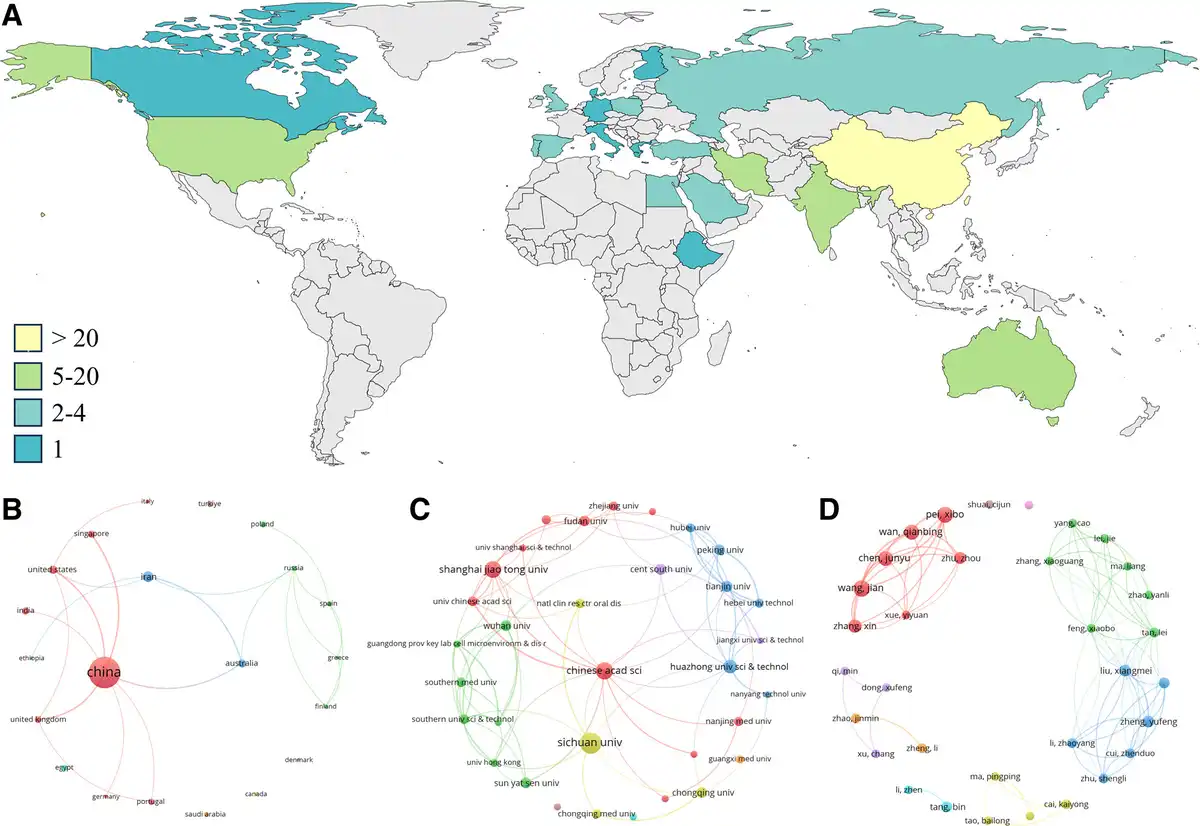
Figure 4.
(A) Distribution of publishing countries on the world map. (B) Clustering of country collaboration network visualizations. (C) Interinstitutional collaboration network visualizations (articles ≥ 4). (D) Author collaboration network visualization analysis (articles ≥ 4).
4. Discussion
The ongoing progression of science and technology has consistently revealed the extensive potential of MOF materials, garnering increasing interest and research within the scientific community. The application of MOF materials in the biomedical sector, particularly in orthopedics, has recently witnessed a remarkable surge. This article is the inaugural bibliometric analysis of MOF applications in orthopedics, providing insights into the current trends and focal areas of research in this domain. Our analysis in the results section offers an in-depth examination of the developmental trajectory of MOF materials in orthopedic applications.
The analysis reveals a year-over-year increase in the number of orthopedic research papers related to MOF, highlighting the growing interest among researchers in this field. Moreover, after reaching a peak in 2022, the number of citation has declined, which is likely associated with the time accumulation of literature. However, recent high-quality literature has not received adequate time accumulation.
Our study also encompasses a thorough analysis of influential journals and articles in this research arena. Notably, ACS Applied Materials & Interfaces has emerged as a leading journal in publishing MOF material research, highlighting its critical role in the field. Other journals like Bioactive Materials, ACS Nano, and Advanced Science, known for their high impact factors, also play a significant role in MOF research. We have identified several highly cited papers focusing on areas such as bone tissue regeneration and treatments for osteomyelitis and osteoarthritis. These articles, through their extensive citation, demonstrate their pivotal contribution to the field and guide future research trajectories in understanding and harnessing MOF materials in orthopedic applications. This study also provides guidance for researchers to select representative types from a wide range of MOF series.
4.1 Classification of common series of MOF materials
4.1.1 Zeolitic imidazolate frameworks series
Zeolitic imidazolate frameworks (ZIF), a subclass of MOF, are synthesized from metal ions and imidazolidone groups. Their structure, akin to zeolite, primarily comprises imidazolidone rather than oxygen, endowing ZIF with a highly ordered pore structure and surface area, exceptional thermal stability and solubility, and mild synthesis conditions. These features contribute to ZIF outstanding gas adsorption capabilities and multifunctionality, making them suitable for various applications such as gas adsorption, storage, drug delivery, and biological imaging. ZIF-8, a prominent MOF variant, exhibits excellent biocompatibility, pH-responsive drug release, high drug loading capacity, and stability under physiological neutral conditions, while gradually decomposing in acidic microenvironments. As one of the most extensively researched and promising types of MOF, ZIF-8 has extensive applications in the biomedical field and is a series with the most research literature.
4.1.2 Porphyrin series
The Porphyrin Series MOF consist of crystal-structured materials, derived from porphyrin organic ligands and metal ions or clusters. Porphyrins, a class of N-heterocyclic compounds prevalent in nature, possess notable photophysical and photochemical properties, as well as biosafety. These attributes make them ideal organic ligands in MOF. The structural flexibility of porphyrins allows for diverse coordination modes, thereby facilitating their utilization as multifunctional carriers. This versatility significantly enhances the loading and precise release of diverse functional materials, such as drugs, thereby increasing efficacy and minimizing side effects. The Porphyrin Series MOF have shown promising applications in biomedical, optoelectronic, energy storage, and environmental management fields. Notably, PCN-222, a standout in this series, demonstrates exceptional capabilities in gas adsorption, drug delivery, biological imaging, and photocatalysis, garnering significant attention and research interest.
4.1.3 Universitetet i Oslo series
The Universitetet i Oslo (UiO) series, a collection of MOF, consists of crystal-structured compounds featuring metal ions (predominantly transition metals) and organic ligands. These MOF are distinguished by their highly adjustable pore structures and surface characteristics, alongside exceptional gas adsorption capabilities, chemical stability, and biocompatibility. UiO-66, a zirconium-based MOF, is a notable example, renowned for its orderly pore structure, efficient gas adsorption, and versatile applications in gas separation, energy storage, catalysis, and drug delivery.
4.1.4 Isoreticular MOF series
Introduced in the 1990s by Professor Yaghi et al.,[33] the isoreticular MOF (IRMOF) series comprises a family of structurally analogous MOF, designated as IRMOF-n, where “n” signifies varying structures. Despite their structural similarities, these MOF offer modifiable pore structures and surface properties through alterations in ligand length and bridging group types. Owing to their varied configurations, high porosity, and exceptional gas adsorption capacities, IRMOF have garnered significant interest in materials science. Their potential applications include across gas storage, catalysis, drug delivery, separation technologies, sensors, and energy storage. Notably, MOF-5 has been particularly recognized for its unique structure and outstanding properties, making it particularly useful in hydrogen storage and gas separation.
4.1.5 Materials of Institute Lavoisier series
Named in honor of the French chemist Lavoisier, the materials of Institute Lavoisier (MIL) series comprises a diverse range of MOF renowned for their tunable pore structures, extensive surface areas, biocompatibility, and chemical stability. Such characteristics render MIL series MOF highly valuable for research and applications, particularly in gas storage, separation, catalysis, drug delivery, and environmental protection. Notably, MIL-100 has attracted considerable attention due to its outstanding pore structure, high surface area, CO2 adsorption capacity, and catalytic efficiency, showcasing its potential in fields such as gas adsorption, catalysis, and biomedicine.
4.1.6 Other series
This section includes specific, lesser-known series such as the Northwestern University (NU) series. Developed by a team at NU, USA, the NU series MOF exhibit highly controllable pore structures, remarkable gas adsorption capabilities, and catalytic efficiency, finding applications in gas adsorption, separation, and catalysis. Another notable series is the HKUST-1 series, named after the Hong Kong University of Science and Technology. HKUST-1, a copper-based MOF incorporating copper ions and benzoic acid, demonstrates efficacy in catalytic reactions. This type of MOF is distinguished by its excellent gas adsorption performance, highly porous structure, and large surface area. These characteristics suggest potential for applications in gas adsorption, catalysis, and biomedical applications.
4.2 Practicality and usability of MOF materials in orthopedic clinical applications
4.2.1 Current key challenges and needs in orthopedics
Orthopedic medicine currently faces several critical challenges and demands. A primary area of concern involves the treatment of complex fractures and repair of extensive bone defects, such as those encountered in postsurgical reconstructions and severe trauma cases.[34] Additionally, there is a pronounced need for the development of biomaterials characterized by biocompatibility and degradability to mitigate the risks of rejection and secondary surgeries.[35,36] Moreover, there is a growing anticipation for functional materials that support bone cell proliferation, enhance bone tissue formation, accelerate healing, and prevent infection.[37,38]
In the realm of drug delivery and bioactive substance integration, there is an escalating requirement for precise drug delivery systems that optimize therapeutic effectiveness while reducing side effects.[39] Bioactive substances in orthopedics necessitate stable carriers and suitable release mechanisms to ensure long-term efficacy. Furthermore, there is a pressing need for advancements in clinical therapy. This encompasses personalized and customized treatment strategies, considering individual patient needs and conditions, and integrating advanced technologies like 3D printing and nanotechnology. Such innovations aim to develop more effective, sustainable therapies, thereby driving progress in orthopedics.
4.2.2 Advantages of MOF material properties
MOF offer a plethora of benefits due to their diverse series and structures, making them highly advantageous in various applications, particularly in addressing orthopedic challenges.[40] These materials herald new prospects for tackling different facets of orthopedic issues, potentially revolutionizing the field. The highly adaptable and multifunctional nature of MOF introduces novel approaches to orthopedic treatments. Their flexible structure can be customized to meet specific requirements,[41] fulfilling multiple roles such as promoting bone tissue regeneration,[42] and preventing infections.[24,43–44–45] This adaptability is essential for meeting the intricate demands of orthopedic treatments.
Moreover, MOF are characterized by their extensive surface area and intricate pore structure,[13,46] enhancing their capacity to carry higher drug loads and support bone cell adhesion and proliferation.[47–48–49] This feature addresses the requirement for materials with larger surface areas in therapeutic applications. Some MOF exhibit excellent biocompatibility and degradability,[50,51] maintaining stability under physiological conditions and efficiently decomposing posttreatment, thereby minimizing the risks of foreign body rejection and secondary surgeries. These materials also provide controlled drug delivery and release capabilities, facilitating precise and sustained drug administration by modulating their pore structure and chemical properties.[39] This avoids the “burst effect” – an immediate, concentrated drug release – making them ideal for delivering radiotherapy and chemotherapy agents in bone tumor treatments.
Since MOF are synthesized through the coordination of organic ligands with metal ions, they can incorporate a variety of metal ions with specific physiological functions into their structures. For instance, MOF incorporating Mg²⁺, Zn²⁺, Cu²⁺, Zr²⁺, and Co²⁺ ions have demonstrated significant osteogenic effects through the controlled release of these ions.[40,52–53–54] Additionally, these MOF exhibit antibacterial and antiinflammatory properties. These characteristics position MOF as a promising approach for the treatment of orthopedic diseases. In addition, the nanoscale dimensions and customizability of MOF cater to the demand for small, precisely engineered materials in orthopedics, enabling targeted applications in tissue engineering and potentially enhancing therapeutic efficacy while reducing side effects.[14]
4.2.3 The in vivo application of MOF in orthopedic diseases treatment
Recent studies have highlighted the significant potential of MOF in orthopedics, particularly within the realms of bone tissue engineering and repair. In vivo investigations are essential for confirming MOF efficacy and functionality, setting the stage for potential clinical applications.
Significant research has demonstrated the effectiveness of MOF, such as ZIF-8, in enhancing osteogenesis and angiogenesis in rodent models with critical-sized bone deficits (Table 6). The research conducted by Li et al.[58] demonstrates the role of MOF in promoting bone regeneration through a bone defect model (Figure 5A). Another study[69] showcases the superior chondroprotective and antisynovial hyperplasia effects of MOF at the level of joint tissues (Figure 5B), Both contribute to bone tissue regeneration by promoting osteoblast differentiation. Building upon this, Shen et al.[70] research further illustrated MOF role in combating osteoporosis by inhibiting osteoclast differentiation (Figure 5C). Moreover, MOF composites have been formulated to modulate drug release for angiogenesis induction, and magnesium-based MOF scaffolds have been demonstrated to optimize the bone healing environment.[60–61–62–63] MOF hydrogel nanocomposites releasing cobalt ions have proven effective in vascular and bone tissue regeneration.[67] These findings highlight MOF potential as multifaceted, bioactive scaffolds in bone tissue engineering, capable of orchestrating the release of biologically active molecules.
Literature related to bone defect modeling.
| Authors | Research findings and conclusions | References |
|---|---|---|
| Xue et al. | MOF triggered the recruitment of bone marrow mesenchymal stem cells by providing pH-responsive release of Zn2+ ions and provided the underlying microenvironment for osteoblasts, ultimately enabling simultaneous bone and vascular repair | [55] |
| Toprak et al. | Encapsulating BMP-6 within the ZIF-8 has shown significant efficacy in bone regeneration, attributable to the sustained and controlled release of BMP-6 | [56] |
| Feng et al. | Encapsulation of MicroRNA using ZIF-8 notably enhances its stability against degradation, improves cellular absorption, and facilitates endosomal escape. This process significantly contributes to the promotion of osteogenesis and angiogenesis | [57] |
| Li et al. | Zeolitic imidazolate framework-8, infused with deferoxamine (DFO), effectively modulates the release of DFO and Zn2+, significantly enhancing angiogenesis and osteogenesis | [58] |
| Kang et al. | Exosome-functionalized magnesium organic frameworks synergize the advantages of magnesium ions, gallic acid, and exosomes from human adipose stem cells, enhancing osteogenesis and angiogenesis while exhibiting antiinflammatory effects, simultaneously improving the biocompatibility and functionality of the scaffold in bone regeneration | [19] |
| Lao et al. | Metformin-loaded ZIF-8 nanoparticles, a type of MOF, were integrated with methacrylated gelatin hydrogels to form a composite. The composite’s effectiveness lies in the combined action of metformin and zinc ions released from the MOF, which synergistically disrupts the ROS-inflammation cycle, thereby facilitating bone regeneration in diabetic conditions | [59] |
| Al-Baadani et al. | Alendronate-loaded ZIF-8 nanoparticles were successfully incorporated into electrospun nanofibers, forming a novel MOF composite. This innovative MOF-based material demonstrates significant potential in promoting bone regeneration and inhibiting osteoclast formation, offering a viable solution for treating osteoporotic bone defects | [60] |
| Xu et al. | The integration of exosomes with MOF-modified scaffolds facilitates a dual synergistic release of bioactive copper ions and exosomes, significantly enhancing bone regeneration and angiogenesis | [61] |
| Xu et al. | MOF composites, consisting of MIL-88 loaded with dimethyloxallyl glycine (DMOG) and combined with poly (lactic acid-co-glycolic acid) (PLGA), promote bone regeneration and vascularization in damaged areas. This effect is achieved through the synergistic release of DMOG and ferric ions | [62] |
| Zheng et al. | The magnesium-based metal-organic framework (Mg-MOF) scaffold significantly enhanced the bone repair microenvironment, markedly improving bone regeneration. This was achieved through the regulation of macrophage polarization, angiogenesis, and osteogenesis | [63] |
| Zhu et al. | These variants of Mg-MOF74 promote osteogenesis and angiogenesis, processes critical for bone formation and the development of new blood vessels, respectively. The nano-sized Mg-MOF74, in particular, is distinguished by its superior biological interactions and the continuous release of magnesium ions, making it especially suitable for biomedical applications | [64] |
| Gao et al. | Nano-structured ZIF-8 (nano ZIF-8) has shown considerable promise in facilitating the differentiation of rat bone mesenchymal stem cells (rBMSCs) into osteoblasts, thus promoting osteogenesis in both in vitro and in vivo settings. Furthermore, nano ZIF-8 endocytosis predominantly influences the canonical mitogen-activated protein kinase (MAPK) pathway, which plays a crucial role in the osteogenic differentiation of rBMSCs | [65] |
| Zhang et al. | Encapsulation of DMOG within nano-structured ZIF-8 nanoparticles significantly promotes osteogenesis and angiogenesis. The efficacy of this approach is linked to ZIF-8 nanoparticles’ proficient drug delivery and prolonged release properties | [66] |
| Sun et al. | An innovative hydrogel composed of a MOF designed for bone repair applications. The MOF-based composite material facilitates the controlled release of cobalt ions, effectively simulating hypoxia to enhance angiogenesis and osteogenesis | [67] |
| Liu et al. | The ZIF-8 modified hydrogel, meticulously engineered for bone regeneration. This hydrogel significantly enhances bone adhesion and mechanical stability while actively fostering angiogenesis and osteogenesis. Furthermore, its biocompatibility, combined with antibacterial attributes, effectively reduces the risk of infections after surgery. | [31] |
| Dong et al. | The MOF hydrogels, characterized by their pH-responsive nature, are engineered to selectively release biomolecules in reaction to pH fluctuations. This targeted release mechanism is crucial in effectively regulating inflammatory responses, as well as fostering angiogenesis and osteogenesis | [68] |
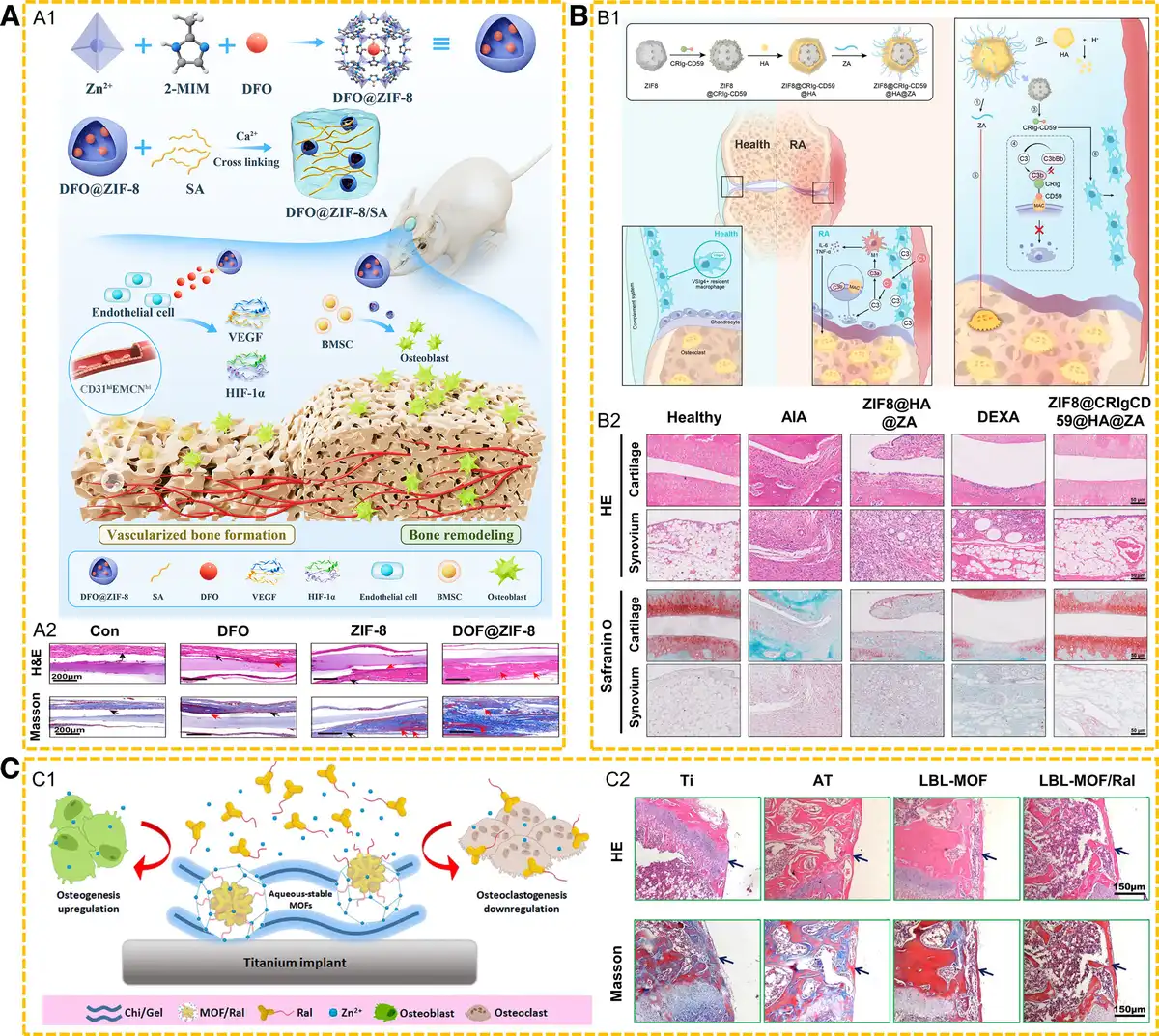
(A1) Synthesis of DFO@ZIF-8 nanocomposites and their promotion of bone regeneration. (A2) H&E and Masson’s trichrome staining and detailed images of bone tissue after 4 weeks of implantation in different groups of rat skull defect models (red arrows indicate newly mineralized bone, black arrows indicate soft tissue). DFO, deferoxamine. (B1) The synthesis process and therapeutic mechanism of a dual-targeted nanoplatform based on a metal-organic framework for the treatment of rheumatoid arthritis. (B2) Cartilage and synovium after different groups of joint tissue samples treated with hematoxylin and eosin (H&E) and safranin O fast green staining. (C1) Schematic diagram of Zn-based MOF/raloxifen coating to promoting early bone osseointegration. (C2) Representative H&E and Masson staining images of different peri-implant bone tissues (The arrows represent new bone tissues. While the blue and red colors in the Masson image represent bone tissue with low and high maturity, respectively). Information was adapted and modified from (A)[58] (B)[69] and (C).[70]
In the realm of musculoskeletal disorder research, MOF have emerged as innovative therapeutic tools, particularly for rheumatoid arthritis and osteoarthritis. Notable developments include dual-targeted MOF-based nano-platforms for delivering complement inhibitors[69] and pH-responsive MOF for precise drug release.[71] Further progress has been made in areas such as cartilage-targeting, peptide-modified MOF,[18] ultrasound-activated single-atom catalysts for treating deep tissue infections,[25] and antioxidant as well as antiinflammatory functionalized MOF for regenerating cartilage and subchondral bone.[72,73] The integration of MOF-based nanozymes into silk hydrogels has been promising in advancing osteogenesis and chondrogenesis,[26] marking a significant leap in bone-cartilage tissue engineering.
Recent progress in antibacterial coatings for titanium implants using MOF is noteworthy, particularly in preventing postsurgical infections and improving osteointegration. Bailong Tao and his team have pioneered the development of a multifunctional hybrid coating incorporating ZIF-67 nanoparticles on titanium substrates.[74] This innovative coating has exhibited potent antibacterial properties against both Escherichia coli (Gram-negative bacteria) and Staphylococcus aureus (Gram-positive bacteria) in infected femoral animal models (Figure 6A). Furthermore, in addressing deeper levels of biofilm infections, Zhang et al.[75] have developed ultrasound-activated, copper-doped porphyrin MOF-based nanodots that effectively mitigate implant biofilm infections (Figure 6B). Other innovations include Mg/Zn-MOF coatings,[24] simvastatin-loaded MOF with polydopamine nanolayers,[76] Co-MOF coatings with osteogenic growth peptides,[47,74,77] and pH-responsive ZIF-8 frameworks containing antibiotics.[78] These advancements play a pivotal role in the creation of orthopedic implants that exhibit superior biocompatibility and resistance to infection.
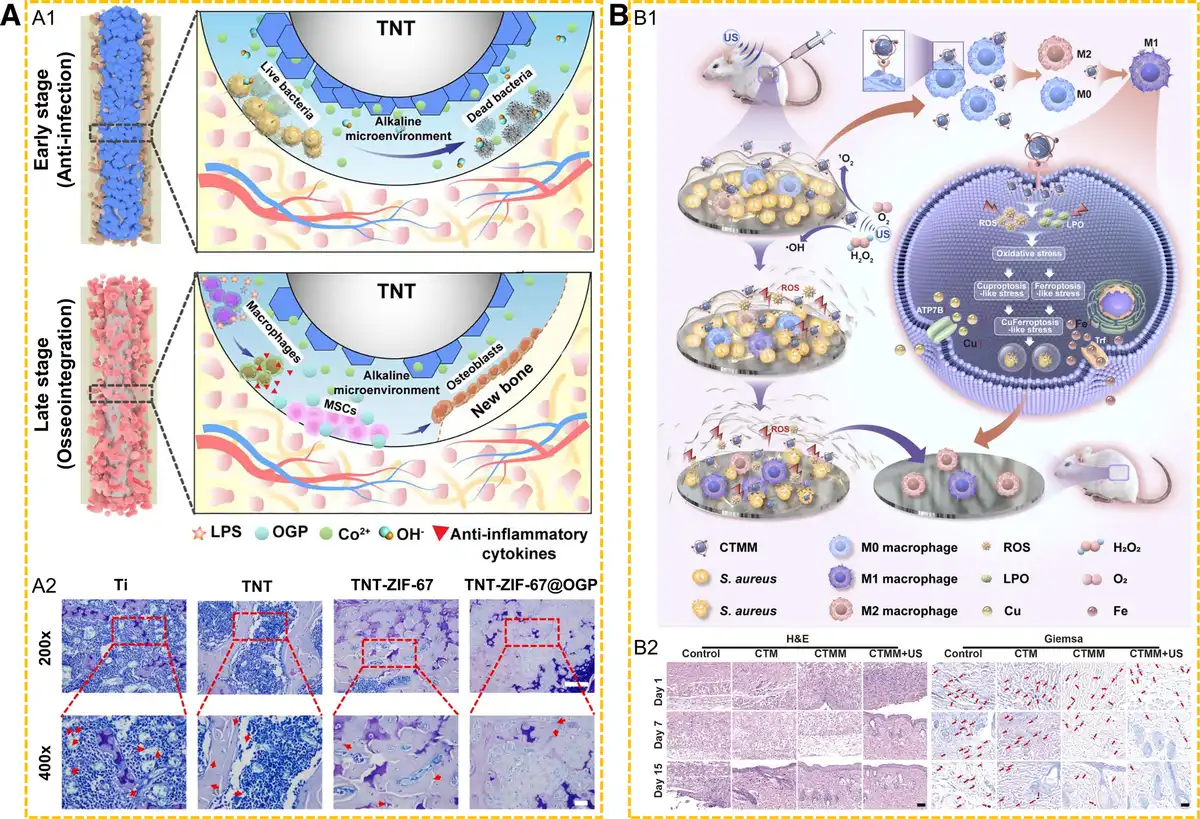
(A1) TNT-ZIF-67@OGP substrate binding antimicrobial and bone immunomodulatory activity promotes bone regeneration. (A2) Observation of residual Staphylococcus aureus on Giemsa staining images of different implants. (B1) Schematic illustration of ultrasound-driven CTMM eliminating intracellular bacterial infection. (B2) H&E and Giemsa staining images of subcutaneous tissues from different groups at days 1, 7, and 15. Scale bars, 50 µm. CTMM, CuTCPP@MOF nanodots@mannose; OGP, osteogenic growth peptide; TCPP, Tetrakis (4-carboxyphenyl) porphyrin; TNT, titanium dioxide nanotube; ZIF-67, zeolitic imidazolate frameworks-67. Information was adapted and modified from (A)[74] and (B).[75]
In the management of bone tumors, early studies leveraging 3D printing technology have shown that MOF scaffolds can effectively dissolve bone tumors in animal models. Due to their tunable structure, high loading capacity, biocompatibility, ease of modification, and functionalization, researchers increasingly utilize MOF as platforms for targeted drug delivery. Ma et al.[79] developed a nanoplatform featuring an Au nanoparticle core with a dual shell comprising MOF and mesoporous silica, which demonstrated exceptional antitumor efficacy and significantly reduced bone resorption (Figure 7A). Further advancements by Tao Li and team explored novel approaches in combating the antiradiation and immunosuppressive microenvironments associated with metastatic osteosarcoma,[80] culminating in the creation of a Ta-Zr codoped nano-MOF (TZM). This innovation marked a pioneering step in enhancing the efficacy of radiotherapy and radiodynamic therapy, eliciting strong antitumor immune responses and establishing TZM as a potential multifaceted radiosensitizer (Figure 7B). Moreover, the integration of MOF in sonodynamic therapy and as platforms for multimodal cancer treatment highlights their critical role in the development of personalized, minimally invasive, and precision-targeted therapeutic approaches.[81,82]
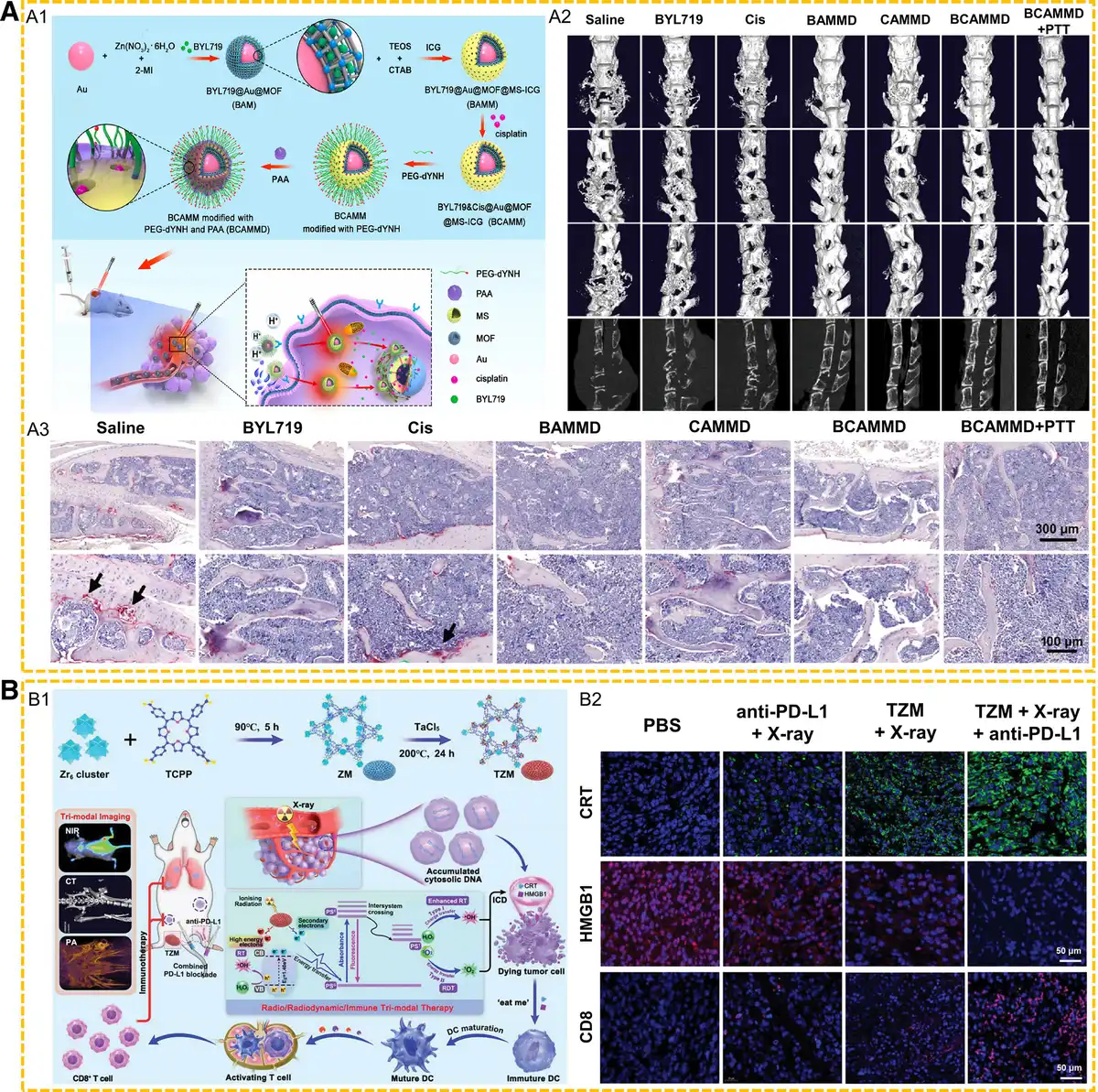
(A1) Synthesis process and antitumor mechanism of a nano platform composed of Au nanoparticle core, MOF double shell, and mesoporous silica loaded with alpelisib (BYL719) and cisplatin in tumor cells. (A2) Microscopic CT images of spinal metastasis specimens from different groups. (A3) TRAP staining images of spinal tumors in each group. (B1) Preparation diagram of TZM and its mechanism as a radiosensitizer for the treatment of metastatic osteosarcoma. (B2) Expression of CRT and HMGB in tumor sections of mice after 3 days of different treatments and immunofluorescence analysis of tumor-infiltrating CD8 T cells after 5 days of different treatments. CRT, calreticulin; HMGB, high-mobility group box; TZM, Ta-Zr codoped nMOF. Information was adapted and modified from (A)[79] and (B).[80]
In summary, MOF exhibit significant potential in the treatment of orthopedic diseases. However, the effectiveness of MOF varies across different conditions, with distinct advantages and limitations in each case. (1) In fracture repair, MOFs’ primary advantage lies in their ability to control the release of metal ions such as magnesium, calcium, and zinc, which promote osteoblast proliferation and differentiation, thereby accelerating bone tissue regeneration and effectively shortening the healing time. Additionally, MOF can be used for localized antiinflammatory and bone regeneration drug delivery, enhancing therapeutic efficacy due to their adjustable drug release properties. However, degradation of MOF may produce immunostimulatory byproducts that could trigger local inflammatory responses.[83] (2) MOF have demonstrated promise in treating osteoporosis by promoting bone matrix mineralization, increasing bone mineral density, and addressing bone loss through the delivery of antiresorptive drugs. Some MOF also possess antiinflammatory and antioxidant properties, which may help mitigate bone degeneration. Nevertheless, their long-term stability and biodegradability in vivo require optimization to ensure safety and efficacy in managing osteoporosis over extended periods.[40] (3) In bone tumor therapy, MOF offer distinct advantages by enabling targeted drug delivery, enhancing the concentration of antitumor agents at the tumor site while minimizing damage to healthy bone tissue. Furthermore, MOF can be combined with antimicrobial therapies to reduce the risk of postoperative infections. However, biologically active degradation byproducts may provoke local immune responses or adverse physiological effects, emphasizing the need for stringent safety standards in clinical applications.[84] (4) Research on MOF in osteoarthritis treatment has largely focused on their antiinflammatory and slow-release drug capabilities. By releasing metal ions such as copper and zinc, MOF can directly inhibit inflammatory responses while also serving as carriers for antiinflammatory drugs or biologics to enhance therapeutic efficacy. However, certain metal ions may be toxic to joint tissues, particularly when used for prolonged periods or at high doses.[85,86] Moreover, the therapeutic potential of MOF remains limited in cases of severely degenerated joint tissues. (5) The primary application of MOF in osteomyelitis treatment is their antimicrobial properties and targeted delivery capabilities. MOF can facilitate the loading and controlled release of antibiotics, increasing drug concentration at the infection site, enhancing antimicrobial effectiveness, and reducing the side effects associated with systemic antibiotic use. However, due to the need for prolonged implantation, the biocompatibility of MOF degradation products must be thoroughly evaluated to minimize potential immune reactions or toxic side effects.[87,88]
Future research should focus on the following areas to optimize the application of MOF in orthopedic diseases: (a) Optimizing the synthesis process of MOF: Developing more efficient and controllable synthesis methods to improve biodegradability and ensure that degradation products do not exhibit toxic side effects on bone tissue or other organs. (b) Enhancing the long-term stability and controlled drug release of MOF: Improving the chemical stability of MOF in vivo through material modification or surface functionalization, enabling precise and controlled drug release to improve therapeutic outcomes. (c) Reducing the synthesis cost of MOF: Current synthesis methods are complex and costly, limiting their feasibility for large-scale clinical application. Future research should focus on developing simpler, more efficient, and cost-effective synthesis techniques to facilitate their application in orthopedic clinics. (d) Developing multifunctional MOF: Introducing additional functionalities, such as antitumor, antibacterial, and antioxidant properties, to enable MOF to address multiple aspects of orthopedic disease treatment, including bone tissue regeneration, inflammation control, and infection prevention.
4.2.4 Challenges in applying MOF materials in orthopedic clinics
Despite the vaired functional roles of MOF in orthopedics, identified through in vitro and in vivo animal studies, their application in orthopedic clinics faces significant challenges. Initially, while MOF have demonstrated biocompatibility and stability in simulated human physiological environments and animal studies, the complex, dynamic, and variable physiological environment of the human body, with its fluctuating pH levels, presents a stark contrast to animal models.[89,90] This raises concerns about their stability and performance in humans, necessitating comprehensive studies on their response and stability across various biological environments, and their long-term safety and stability in vivo.
Moreover, most in vivo studies do not solely depend on MOF but combine them with other functional materials. Ensuring consistent quality and controllability of these MOF composites during fabrication is a formidable challenge. The effect of MOF composites also varies with size.[91] Additionally, as drug carriers, nano-MOF must ensure stable and efficient drug release, prevent accumulation in biological media,[92] and manage the complex interactions between drugs and MOF.[51] The behavior, metabolism, and decomposition of MOF within the human body remain incompletely understood, making it challenging to develop techniques for accurate assessment and monitoring within organisms.
Finally, our literature review revealed no studies or reports on the use of MOF materials in orthopedic clinical settings. Thus, there is a need for more extensive research, support from preclinical trial data, and technological advancements to ensure the safe and effective use of MOF materials in clinical orthopedics.[93]
4.3 Future prospects of MOF materials in orthopedic applications
4.3.1 Enhancement of MOF material applications through international and institutional collaboration
Our analysis of publication data reveals a dominant role of China in MOF materials research within orthopedics, both in terms of publication volume and international collaboration strength. Notably, partnerships have expanded with countries such as the United States, the United Kingdom, Germany, Australia, and Singapore, enhancing knowledge and expertise exchange. Institution-level analysis underscores the pivotal contributions of the Chinese Academy of Sciences, Sichuan University, and Shanghai Jiao Tong University, underlining their leadership in this field. Examination of author collaboration networks has identified key authors and clusters, highlighting the importance of these collaborations in advancing research. Looking forward, enhanced cross-institutional and international collaborations are anticipated to further propel the field, driving innovation and facilitating knowledge sharing.
4.3.2 Multidisciplinary field linkage to accelerate MOF in clinical application
Despite extensive research has been conducted on MOF materials in orthopedics, the translation of these findings into clinical applications remains a lengthy process. The development of MOF materials requires interdisciplinary expertise, encompassing materials science, chemistry, engineering, biomedical science, and clinical medicine, as evidenced by the diversity of author research areas in relevant literature.[20,26,69,72,94–95–96] For successful clinical application, a collaborative effort is essential: first, to tailor MOF materials to specific clinical needs; second, to evaluate their safety and efficacy in living organisms; and third, to conduct preclinical studies in a clinical context to assess their practical viability. This necessitates subsequent material adjustments and optimizations for clinical utility.[51] Consequently, a multidisciplinary collaborative approach will not only expedite the development and application of MOF materials in orthopedics but also facilitate their transition from laboratory to clinical settings. Such collaboration will broaden the scope of MOF applications in orthopedics, offering new therapeutic options and potentially enhancing patient quality of life. Moreover, this collaborative model may yield numerous applications across various disciplines.[93,97,98]
Our study faces certain limitations, it is confined to a single database, WOSCC, potentially leading to an incomplete collection of relevant literature. Nevertheless, WOSCC is among the world’s most extensive and comprehensive databases, offering a substantial volume of literature that adequately represents the current state of research in this field and is widely utilized by scholars. Additionally, the impact of recent high-quality publications may be underestimated due to low citation rates. Furthermore, our analysis exclusively includes articles published in English.
5. Conclusion
The utilization of MOF in orthopedics, particularly in the realms of bone regeneration, repair, and tissue engineering, represents a burgeoning field of research. While numerous in vivo studies highlight MOF diverse benefits and functions in this domain, extended research and innovative advancements are essential for a deeper understanding of MOF before their clinical application. Continued investigation and progressive innovation are anticipated to establish MOF as a significant tool in treating orthopedic diseases.
Conflicts of interests
The authors declare that they have no conflicts of interest.
Funding
This work was supported by the Traditional Chinese Medicine Inheritance Innovation Research project in Anhui Province (No. 2022CCZC02), the National Natural Science Foundation of China (Grant No. 82202672), the Key Research and Development Program of Anhui Province (No. 2022e07020017), China Postdoctoral Science Foundation Grant (No. 2022M723049), the Natural Science Foundation of Anhui Province(No. 2108085QH319), Anhui Provincial Research Preparation Plan (2022AH040074), the Joint Fund for Medical Artificial Intelligence (No. MAI2022C002), and the Fundamental Research Funds for the Central Universities (No. WK9110000173).
Data availability statement
The datasets used and/or analyzed during the current study are available from the corresponding author upon reasonable request.
Author contributions
Wanbo Zhu, Junchen Zhu, and Zheng Su conceived the idea for this study. Yao Yang, Yingjie Wang, and Yuan Chen carried out the data extraction. The statistical analysis was performed by Yao Yang and Yingjie Wang. Image plotting was conducted by Yao Yang, Baoliang Lu, Zheng Su, and Xianzuo Zhang. Yao Yang, Yingjie Wang, and Yanling Zhou drafted the initial manuscript, while all coauthors provided critical feedback and revisions to the final version. Wanbo Zhu and Junchen Zhu provided financial support, Zheng Su and Junchen Zhu provided administrative assistance. All authors reviewed the manuscript.
References
- [1] Briggs AM, Cross MJ, Hoy DG, et al. Musculoskeletal health conditions represent a global threat to healthy aging: a report for the 2015 World Health Organization World Report on Ageing and Health. Gerontologist. 2016;56:S243–S255.
- [2] Lin Z, Zheng K, Zhong J, et al. Advances in microneedle-based therapy for bone disorders. Biomed Pharmacother. 2023;165:115013.
- [3] Walsh MC, Takegahara N, Kim H, et al. Updating osteoimmunology: regulation of bone cells by innate and adaptive immunity. Nat Rev Rheumatol. 2018;14:146–156.
- [4] Chen ZY, Gao S, Zhang YW, et al. Antibacterial biomaterials in bone tissue engineering. J Mater Chem B. 2021;9:2594–2612.
- [5] Clézardin P, Coleman R, Puppo M, et al. Bonemetastasis: mechanisms, therapies, and biomarkers. Physiol Rev. 2021;101:797–855.
- [6] Smolen JS, Aletaha D, McInnes IB. Rheumatoid arthritis. Lancet. 2016;388:2023–2038.
- [7] Zou YD, Huang BT, Cao LH, et al. Tailored mesoporous inorganic biomaterials: assembly, functionalization, and drug delivery engineering. Adv Mater. 2021;33.
- [8] Xiong W, Lan QM, Liang XN, et al. Cartilage-targeting poly(ethylene glycol) (PEG)-formononetin (FMN) nanodrug for the treatment of osteoarthritis. J Nanobiotechnol. 2021;19.
- [9] Ryan EJ, Ryan AJ, González-Vázquez A, et al. Collagen scaffolds functionalised with copper-eluting bioactive glass reduce infection and enhance osteogenesis and angiogenesis both in vitro and in vivo. Biomaterials. 2019;197:405–416.
- [10] Belluomo R, Khodaei A, Amin Yavari S. Additively manufacture d Bi-functionalize d bioceramics for reconstruction of bone tumor defects. Acta Biomater. 2023;156:234–249.
- [11] Wu H, Wei XH, Liu YC, et al. Dynamic degradation patterns of porous polycaprolactone/?-tricalcium phosphate composites orchestrate macrophage responses and immunoregulatory bone regeneration. Bioact Mater. 2023;21:595–611.
- [12] Li X, Shu XY, Shi YX, et al. MOFs and bone: application of MOFs in bone tissue engineering and bone diseases. Chin Chem Lett. 2023;34:107986.
- [13] Horcajada P, Gref R, Baati T, et al. Metal-organic frameworks in biomedicine. Chem Rev. 2012;112:1232–1268.
- [14] Simon-Yarza T, Mielcarek A, Couvreur P, et al. Nanoparticles of metal-organic frameworks: on the road to in vivo efficacy in biomedicine. Adv Mater. 2018;30:e1707365.
- [15] Wang D, Jana D, Zhao Y. Metal-organic framework derived nanozymes in biomedicine. Acc Chem Res. 2020;53:1389–1400.
- [16] Fardjahromi MA, Nazari H, Tafti SA, et al. Metal-organic framework-based nanomaterials for bone tissue engineering and wound healing. Mater Today Chem. 2022;23:100670.
- [17] Mi B, Xiong Y, Zhao Y, et al. Metal-organic framework-integrated composites for bone tissue regeneration. Adv Funct Mater. 2023.
- [18] Xue S, Zhou XJ, Sang WL, et al. Cartilage-targeting peptide-modified dual-drug delivery nanoplatform with NIR laser response for osteoarthritis therapy. Bioact Mater. 2021;6:2372–2389.
- [19] Kang Y, Xu C, Meng L, et al. Exosome-functionalized magnesium-organic framework-based scaffolds with osteogenic, angiogenic and anti-inflammatory properties for accelerated bone regeneration. Bioact Mater. 2022;18:26–41.
- [20] Ren N, Liang N, Dong MW, et al. Stem cell membrane-encapsulated zeolitic imidazolate framework-8: a targeted nano-platform for osteogenic differentiation. Small. 2022;18:12.
- [21] Yu S, Xu K, Wang Z, et al. Bibliometric and visualized analysis of metal-organic frameworks in biomedical application. Front Bioeng Biotechnol. 2023;11:1190654.
- [22] Mo F, Zhou QX, Wang Q, et al. The applications of MOFs related materials in photo/electrochemical decontamination: an updated review. Chem Eng J. 2022;450:138326.
- [23] van Eck NJ, Waltman L. Software survey: VOSviewer, a computer program for bibliometric mapping. Scientometrics. 2010;84:523–538.
- [24] Shen XK, Zhang YY, Ma PP, et al. Fabrication of magnesium/zinc-metal organic framework on titanium implants to inhibit bacterial infection and promote bone regeneration. Biomaterials. 2019;212:1–16.
- [25] Yu Y, Tan L, Li ZY, et al. Single-atom catalysis for efficient sonodynamic therapy of methicillin-resistant Staphylococcus aureus-infected osteomyelitis. ACS Nano. 2021;15:10628–10639.
- [26] Cao ZC, Wang HM, Chen JL, et al. Silk-based hydrogel incorporated with metal-organic framework nanozymes for enhanced osteochondral regeneration. Bioact Mater. 2023;20:221–242.
- [27] Shi FN, Almeida JC, Helguero LA, et al. Calcium phosphonate frameworks for treating bone tissue disorders. Inorg Chem. 2015;54:9929–9935.
- [28] Tan LL, Song N, Zhang SXA, et al. Ca2+, pH and thermo triple-responsive mechanized Zr-based MOFs for on-command drug release in bone diseases. J Mater Chem B. 2016;4:135–140.
- [29] Chen J, Zhang X, Huang C, et al. Osteogenic activity and antibacterial effect of porous titanium modified with metal-organic framework films. J Biomed Mater Res A. 2017;105:834–846.
- [30] Pei P, Tian ZF, Zhu YF. 3D printed mesoporous bioactive glass/metal-organic framework scaffolds with antitubercular drug delivery. Microporous Mesoporous Mater. 2018;272:24–30.
- [31] Liu YH, Zhu Z, Pei XB, et al. ZIF-8-modified multifunctional bone-adhesive hydrogels promoting angiogenesis and osteogenesis for bone regeneration. ACS Appl Mater Interfaces. 2020;12:36978–36995.
- [32] Yu B, Sun W, Lin JT, et al. Using cu-based metal-organic framework as a comprehensive and powerful antioxidant nanozyme for efficient osteoarthritis treatment. Adv Sci. 2024;11.
- [33] Yaghi OM, Li HL. Hydrothermal synthesis of a metal-organic framework containing large rectangular channels. J Am Chem Soc. 1995;117:10401–10402.
- [34] Zhang K, Zhou Y, Xiao C, et al. Application of hydroxyapatite nanoparticles in tumor-associated bone segmental defect. Sci Adv. 2019;5.
- [35] Song X, Xu L, Zhang W. Biomimetic synthesis and optimization of extracellular vesicles for bone regeneration. J Control Release. 2023;355:18–41.
- [36] Roseti L, Parisi V, Petretta M, et al. Scaffolds for bone tissue engineering: state of the art and new perspectives. Mater Sci Eng C Mater Biol Appl. 2017;78:1246–1262.
- [37] Montoya C, Du Y, Gianforcaro AL, et al. On the road to smart biomaterials for bone research: definitions, concepts, advances, and outlook. Bone Res. 2021;9:12.
- [38] Wei H, Cui J, Lin K, et al. Recent advances in smart stimuli-responsive biomaterials for bone therapeutics and regeneration. Bone Res. 2022;10.
- [39] Horcajada P, Chalati T, Serre C, et al. Porous metal-organic-framework nanoscale carriers as a potential platform for drug delivery and imaging. Nat Mater. 2010;9:172–178.
- [40] Zhao CQ, Shu CQ, Yu JM, et al. Metal-organic frameworks functionalized biomaterials for promoting bone repair. Mater Today Bio. 2023;21:100717.
- [41] Zhang J-P, Zhang Y-B, Lin J-B, et al. Metal azolate frameworks: from crystal engineering to functional materials. Chem Rev. 2012;112:1001–1033.
- [42] Dong J, Zhou W, Hu X, et al. Honeycomb-inspired ZIF-sealed interface enhances osseointegration via anti-infection and osteoimmunomodulation. Biomaterials. 2024;307:122515–122515.
- [43] Su Z, Kong L, Dai Y, et al. Bioresponsive nano-antibacterials for H2S-sensitized hyperthermia and immunomodulation against refractory implant-related infections. Sci Adv. 2022;8.
- [44] Su Z, Kong L, Mei J, et al. Enzymatic bionanocatalysts for combating peri-implant biofilm infections by specific heat-amplified chemodynamic therapy and innate immunomodulation. Drug Resist Updat. 2023;67:100917.
- [45] Hu X, Ma R, Zhang P, et al. Biomimetic metal-organic framework combats biofilm-associated infections via hyperthermia-enhanced bacterial metabolic interference and autophagy-promoted adaptive immunity. Adv Funct Mater. 2023.
- [46] Li H, Eddaoudi M, O’Keeffe M, et al. Design and synthesis of an exceptionally stable and highly porous metal-organic framework. Nature. 1999;402:276–279.
- [47] Tao BL, Zhao WK, Lin CC, et al. Surface modification of titanium implants by ZIF-8@Levo/LBL coating for inhibition of bacterial-associated infection and enhancement of in vivo osseointegration. Chem Eng J. 2020;390:124621.
- [48] Jiang YA, Pan XM, Yao MY, et al. Bioinspired adhesive and tumor microenvironment responsive nanoMOFs assembled 3D-printed scaffold for anti-tumor therapy and bone regeneration. Nano Today. 2021;39:101182.
- [49] Xiong F, Qin ZN, Chen HM, et al. pH-responsive and hyaluronic acid-functionalized metal-organic frameworks for therapy of osteoarthritis. J Nanobiotechnol. 2020;18:14.
- [50] Lee J, Farha OK, Roberts J, et al. Metal-organic framework materials as catalysts. Chem Soc Rev. 2009;38:1450–1459.
- [51] Gimenez-Marques M, Hidalgo T, Serre C, et al. Nanostructured metal-organic frameworks and their bio-related applications. Coord Chem Rev. 2016;307:342–360.
- [52] Chen Z, Xing F, Yu PY, et al. Metal-organic framework-based advanced therapeutic tools for antimicrobial applications. Acta Biomater. 2024;175:27–54.
- [53] Mi B, Xiong Y, Zhao Y, et al. Metal-organic framework-integrated composites for bone tissue regeneration. Adv Funct Mater. 2024;34:2308656.
- [54] Tang H, Yu YM, Zhan XX, et al. Zeolite imidazolate framework-8 in bone regeneration: a systematic review. J Control Release. 2024;365:558–582.
- [55] Xue YY, Zhu Z, Zhang X, et al. Accelerated bone regeneration by MOF modified multifunctional membranes through enhancement of osteogenic and angiogenic performance. Adv Healthcare Mater. 2021;10:14.
- [56] Toprak O, Topuz B, Monsef YA, et al. BMP-6 carrying metal organic framework-embedded in bioresorbable electrospun fibers for enhanced bone regeneration. Mater Sci Eng C Mater Biol Appl. 2021;120:111738.
- [57] Feng H, Li ZY, Xie WJ, et al. Delivery of therapeutic miRNAs using nanoscale zeolitic imidazolate framework for accelerating vascularized bone regeneration. Chem Eng J. 2022;430:132867.
- [58] Li YH, Zhu JJ, Zhang X, et al. Drug-delivery nanoplatform with synergistic regulation of angiogenesis-osteogenesis coupling for promoting vascularized bone regeneration. ACS Appl Mater Interfaces. 2023;15:17543–17561.
- [59] Lao A, Wu JQ, Li DJ, et al. Functionalized metal-organic framework-modified hydrogel that breaks the vicious cycle of inflammation and ROS for repairing of diabetic bone defects. Small. 2023;19:18.
- [60] Al-Baadani MA, Xu L, Yie KH, et al. In situ preparation of alendronate-loaded ZIF-8 nanoparticles on electrospun nanofibers for accelerating early osteogenesis in osteoporosis. Mater Des. 2022;217:110596.
- [61] Xu C, Kang Y, Dong XF, et al. Integration exosomes with MOF-modified multifunctional scaffold for accelerating vascularized bone regeneration. Chin Chem Lett. 2023;34:107528.
- [62] Xu C, Kang Y, Guan SQ, et al. Iron-based metal-organic framework as a dual cooperative release system for enhanced vascularization and bone regeneration. Chin Chem Lett. 2023;34:107825.
- [63] Zheng ZW, Chen YH, Guo B, et al. Magnesium-organic framework-based stimuli-responsive systems that optimize the bone microenvironment for enhanced bone regeneration. Chem Eng J. 2020;396:125241.
- [64] Zhu Z, Jiang SK, Liu YH, et al. Micro or nano: evaluation of biosafety and biopotency of magnesium metal organic framework-74 with different particle sizes. Nano Res. 2020;13:511–526.
- [65] Gao XM, Xue YY, Zhu Z, et al. Nanoscale zeolitic imidazolate framework-8 activator of canonical MAPK signaling for bone repair. ACS Appl Mater Interfaces. 2021;13:97–111.
- [66] Zhang X, Chen JY, Pei X, et al. One-pot facile encapsulation of dimethyloxallyl glycine by nanoscale zeolitic imidazolate frameworks-8 for enhancing vascularized bone regeneration. Adv Healthcare Mater. 2023;12:e2202317.
- [67] Sun Y, Liu XZ, Zhu Y, et al. Tunable and controlled release of cobalt ions from metal-organic framework hydrogel nanocomposites enhances bone regeneration. ACS Appl Mater Interfaces. 2021;13:59051–59066.
- [68] Dong W, Zhao S, Wang Y, et al. Stimuli-responsive metal-organic framework hydrogels endow long carbon fiber reinforced polyetheretherketone with enhanced anti-inflammatory and angiogenesis and osteogenesis. Mater Des. 2023;225:111485.
- [69] Tao SY, Yu H, You T, et al. A dual-targeted metal-organic framework based nanoplatform for the treatment of rheumatoid arthritis by restoring the macrophage niche. ACS Nano. 2023;17:13917–13937.
- [70] Shen X, Yie KH, Wu X, et al. Improvement of aqueous stability and anti-osteoporosis properties of Zn-MOF coatings on titanium implants by hydrophobic raloxifene. Chem Eng J. 2022;430:133094.
- [71] Zhang ZJ, Hou YK, Chen MW, et al. A pH-responsive metal-organic framework for the co-delivery of HIF-2 alpha siRNA and curcumin for enhanced therapy of osteoarthritis. J Nanobiotechnol. 2023;21:19.
- [72] Shu CQ, Qin C, Chen L, et al. Metal-Organic Framework Functionalized Bioceramic Scaffolds with Antioxidative Activity for Enhanced Osteochondral Regeneration. Adv Sci. 2023;10:14.
- [73] Xu SB, Lin YY, Zhao XJ, et al. NIR triggered photocatalytic and photothermal bifunctional MOF nanozyme using for improving osteoarthritis microenvironment by repairing injured chondrocytes of mitochondria. Chem Eng J. 2023;468:143826.
- [74] Tao BL, Lin CC, He Y, et al. Osteoimmunomodulation mediating improved osteointegration by OGP-loaded cobalt-metal organic framework on titanium implants with antibacterial property. Chem Eng J. 2021;423:130176.
- [75] Zhang X, Wang Z, Liu Q, et al. Targeted modulation and enhancement of macrophages via sonodynamic therapy-driven cupferroptosis-like stress for implant-associated biofilm infections. Nano Today. 2024;54:102092.
- [76] Deng Y, Shi JC, Chan YK, et al. Heterostructured metal-organic frameworks/polydopamine coating endows polyetheretherketone implants with multimodal osteogenicity and photoswitchable disinfection. Adv Healthcare Mater. 2022;11:16.
- [77] Tao BL, Yi WW, Qin X, et al. Improvement of antibacterial, anti-inflammatory, and osteogenic properties of OGP loaded Co-MOF coating on titanium implants for advanced osseointegration. J Mater Sci Technol. 2023;146:131–144.
- [78] Teng WSY, Zhang ZJ, Wang YK, et al. Iodine immobilized metal-organic framework for NIR-triggered antibacterial therapy on orthopedic implants. Small. 2021;17:13.
- [79] Ma YQ, Chen L, Li XL, et al. Rationally integrating peptide-induced targeting and multimodal therapies in a dual-shell theranostic platform for orthotopic metastatic spinal tumors. Biomaterials. 2021;275:120917.
- [80] Li T, Gao MQ, Wu ZF, et al. Tantalum-zirconium co-doped metal-organic frameworks sequentially sensitize radio-radiodynamic-immunotherapy for metastatic osteosarcoma. Adv Sci. 2023;10:16.
- [81] Wang YT, Cui JJ, Chen JJ, et al. Novel bone tumor cell targeting nanosystem for chemo-photothermal therapy of malignant bone tumors. Chem Eng J. 2022;446:136905.
- [82] Deng XY, Guo Y, Zhang XD, et al. Film-facilitated formation of ferrocenecarboxylic acid-embedded metal-organic framework nanoparticles for sonodynamic osteosarcoma treatment. Mater Today Chem. 2022;24:100842.
- [83] Liu D, Chen J, Zhou J, et al. Macrophage-related inflammatory responses to degradation products of biodegradable molybdenum implants. Mater Today Bio. 2025;31:101519.
- [84] Mohammapdour R, Ghandehari H. Mechanisms of immune response to inorganic nanoparticles and their degradation products. Adv Drug Deliv Rev. 2022;180:114022.
- [85] Hao F, Yan Z-Y, Yan X-P. Recent advances in research on the effect of physicochemical properties on the cytotoxicity of metal-organic frameworks. Small Sci. 2022;2:2200044.
- [86] Kumar P, Anand B, Tsang YF, et al. Regeneration, degradation, and toxicity effect of MOFs: opportunities and challenges. Environ Res. 2019;176:108488.
- [87] Khan AR, Grewal NS, Zhou C, et al. Recent advances in biodegradable metals for implant applications: exploring in vivo and in vitro responses. Results Eng. 2023;20:101526.
- [88] Li C, Guo C, Fitzpatrick V, et al. Design of biodegradable, implantable devices towards clinical translation. Nat Rev Mater. 2020;5:61–81.
- [89] Mitragotri S, Lammers T, Bae YH, et al. Drug delivery research for the future: expanding the nano horizons and beyond. J Control Release. 2017;246:183–184.
- [90] Wang Y, Yin J, Cao W, et al. The instability of a stable metal-organic framework in amino acid solutions. Nano Res. 2022;15:6607–6612.
- [91] Mitchell MJ, Billingsley MM, Haley RM, et al. Engineering precision nanoparticles for drug delivery. Nat Rev Drug Discovery. 2021;20:101–124.
- [92] McKinlay AC, Morris RE, Horcajada P, et al. BioMOFs: metal-organic frameworks for biological and medical applications. Angew Chem Int Ed Engl. 2010;49:6260–6266.
- [93] Cai H, Huang YL, Li D. Biological metal-organic frameworks: structures, host-guest chemistry and bio-applications. Coord Chem Rev. 2019;378:207–221.
- [94] Feng XB, Ma L, Lei J, et al. Piezo-augmented sonosensitizer with strong ultrasound-propelling ability for efficient treatment of osteomyelitis. ACS Nano. 2022;16:2546–2557.
- [95] Wang W, Xiong YZ, Zhao RL, et al. A novel hierarchical biofunctionalized 3D-printed porous Ti6Al4V scaffold with enhanced osteoporotic osseointegration through osteoimmunomodulation. J Nanobiotechnol. 2022;20:19.
- [96] Zhu Z, Liu YH, Chen JY, et al. Structural-functional pluralistic modification of silk fibroin via MOF bridging for advanced wound care. Adv Sci. 2022;9:19.
- [97] Yang J, Trickett CA, Alahmadi SB, et al. Calcium L-lactate frameworks as naturally degradable carriers for pesticides. J Am Chem Soc. 2017;139:8118–8121.
- [98] Wang K, Lv X-L, Feng D, et al. Pyrazolate-based porphyrinic metal-organic framework with extraordinary base-resistance. J Am Chem Soc. 2016;138:914–919.
This article is available under Open Access.
© 2025 The Authors