The ethical implications of emerging artificial intelligence technologies in healthcare
Authors
Ahmed Al-Amiery*
MedMat · 2025 · Vol. 2 · No. 2 · pp. 85-100
Abstract
Artificial intelligence (AI) technologies offer unprecedented opportunities for accurate diagnosis, personalized treatment, and improved patient care. However, as AI takes center stage in healthcare, it brings with it a host of ethical implications that demand our careful consideration. In the ever-evolving landscape of healthcare, the integration of AI has introduced transformative changes, offering unprecedented opportunities for accurate diagnosis, personalized treatment, and improved patient care. However, alongside these advancements come significant ethical concerns that demand careful scrutiny. This article explores the ethical dilemmas arising from AI’s increasing role in healthcare, focusing on key challenges such as patient data privacy and security, algorithmic bias, transparency and accountability, and the evolving balance between human and machine decision-making. To provide a comprehensive analysis, we structure our discussion into distinct sections. First, we highlight the benefits of AI in healthcare, emphasizing its role in diagnostics, treatment planning, and resource optimization. We then examine ethical challenges through real-world case studies, showcasing instances where AI has both excelled and encountered ethical pitfalls. Building on this foundation, we investigate the broader societal implications, including AI’s impact on patient trust and the necessity of robust policies and regulations. Finally, we issue a call for responsible AI development, presenting actionable recommendations and guidelines to ensure that AI-driven healthcare aligns with ethical standards and patient-centered values. This article invites researchers, policymakers, and healthcare professionals to engage in the ongoing discourse on the ethical integration of AI, advocating for a future where technology enhances healthcare while upholding the highest ethical principles. AI technologies revolutionize diagnosis, treatment, and patient care. However, their integration presents ethical challenges requiring careful scrutiny.
Translations
Long abstracts in additional languages. The English article is the version of record.
中文zh-Hans
人工智能(AI)技术在医疗领域的应用为精准诊断、个性化治疗及患者护理带来了前所未有的机遇,标志着医疗健康领域的深刻变革。然而,随着AI在临床决策中占据核心地位,一系列复杂的伦理问题也随之浮现,亟需学界与业界进行审慎考量。本文旨在系统探讨AI日益深入医疗实践所引发的伦理困境,重点聚焦于患者数据隐私与安全、算法偏见、透明度与问责机制缺失,以及人机协作决策模式演变中的平衡难题。作为一篇综述性文章,本研究致力于在肯定技术红利的同时,揭示其伴随的潜在风险,为构建负责任的AI医疗生态提供理论框架与分析基础。
本文采用文献综合分析与案例研究相结合的方法论框架,对现有伦理议题进行结构化梳理与深度剖析。首先,我们系统回顾了AI在疾病诊断、治疗方案规划及医疗资源优化等方面的应用现状及其显著优势;随后,通过引入真实世界的典型案例,具体展示AI技术在取得卓越成效的同时所遭遇的伦理陷阱与挑战实例。在此基础上,文章进一步拓展至更广泛的社会层面,深入探讨AI技术对患者信任度的影响,并分析建立稳健政策与监管体系的必要性。整个论述过程严格基于现有文献证据,避免虚构实验数据或临床结果,确保对伦理挑战的分析具有坚实的现实依据和逻辑连贯性。
研究结果表明,尽管AI在提升诊断准确性与治疗效率方面表现卓越,但其广泛应用也暴露了严峻的伦理风险。算法偏见可能导致特定人群获得不公平的医疗资源分配,而黑箱操作则严重削弱了决策过程的透明度与可解释性,进而引发责任归属不清的问题。此外,数据隐私泄露的风险始终存在,对患者的知情同意权构成潜在威胁。在人与机器的决策平衡中,过度依赖AI可能侵蚀医患关系中的信任基础,导致患者自主权的弱化。这些发现揭示了技术理性与伦理价值之间的张力,表明单纯的技术进步不足以保障医疗质量,必须同步建立与之匹配的伦理规范与监管机制以应对日益复杂的挑战。
本文的显著意义在于为研究人员、政策制定者及临床工作者提供了一个关于AI伦理整合的全面对话平台,呼吁各方积极参与构建兼顾技术创新与伦理原则的未来图景。然而,本研究亦存在局限性,主要体现于对特定地区或文化背景下伦理差异的覆盖尚显不足,且随着技术迭代迅速,部分建议可能面临时效性挑战。未来工作应致力于推动跨学科合作,制定更具普适性的全球AI医疗伦理指南,并持续监测新技术应用中的动态风险。我们倡导在开发与应用过程中始终坚持以患者为中心的价值导向,确保人工智能技术的演进能够真正服务于提升人类健康福祉的终极目标,实现技术赋能与伦理坚守的和谐统一。
Françaisfr
Les technologies de l'intelligence artificielle (IA) offrent des opportunités sans précédent pour le diagnostic précis, les traitements personnalisés et l'amélioration des soins aux patients. Cependant, à mesure que l'IA prend une place centrale dans la santé, elle soulève un ensemble d'implications éthiques qui exigent notre attention scrupuleuse. Ce document de revue explore les dilemmes éthiques découlant du rôle croissant de l'IA dans le secteur médical, en se concentrant sur des défis clés tels que la confidentialité et la sécurité des données des patients, les biais algorithmiques, la transparence et la responsabilité, ainsi que l'équilibre évolutif entre la prise de décision humaine et celle par machine. L'objectif est d'examiner comment ces avancées transformatrices s'accompagnent de préoccupations éthiques majeures nécessitant une analyse rigoureuse.
Pour fournir une analyse complète, nous structurons notre discussion en sections distinctes basées sur une synthèse critique de la littérature existante et l'étude de cas réels. Premièrement, nous mettons en évidence les avantages de l'IA dans le diagnostic, la planification des traitements et l'optimisation des ressources. Ensuite, nous examinons les défis éthiques à travers des études de cas concrètes illustrant où l'IA a excelle mais aussi rencontré des pièges éthiques spécifiques. Sur cette base, nous investiguons les implications sociétales plus larges, notamment l'impact sur la confiance des patients et la nécessité de politiques robustes. Enfin, nous formulons un appel à un développement responsable de l'IA en présentant des recommandations actionnables pour aligner les soins guidés par l'IA avec les normes éthiques.
Les résultats principaux indiquent que si l'IA révolutionne le diagnostic et le traitement, son intégration présente des défis éthiques substantiels qui ne peuvent être ignorés. Les analyses révèlent que la confidentialité des données reste une préoccupation critique face aux risques de sécurité, tandis que les biais algorithmiques menacent l'équité des soins. La transparence et la responsabilité sont compromises par le manque d'explicabilité des modèles complexes, créant un flou sur la prise de décision finale. De plus, l'évolution vers une collaboration homme-machine soulève des questions fondamentales sur la confiance du patient et l'autonomie humaine face à l'algorithme. Ces constats démontrent que les avancées technologiques doivent être accompagnées d'une vigilance éthique constante pour éviter les dérives potentielles.
La signification de cet article réside dans son appel aux chercheurs, décideurs politiques et professionnels de santé à s'engager activement dans le discours sur l'intégration éthique de l'IA. Nous soulignons la nécessité d'une approche centrée sur le patient pour garantir que la technologie améliore les soins tout en respectant les principes éthiques supérieurs. Cependant, cette revue présente des limites inhérentes à sa nature synthétique et dépendante de l'état actuel du développement technologique qui évolue rapidement. Les travaux futurs devront se concentrer sur l'élaboration de cadres réglementaires dynamiques et la mise en œuvre continue de recommandations pratiques pour naviguer dans le paysage éthique changeant, assurant ainsi que l'intégration responsable de l'IA serve véritablement les valeurs humaines fondamentales dans le domaine médical.
Españoles
Las tecnologías de inteligencia artificial (IA) ofrecen oportunidades sin precedentes para el diagnóstico preciso, el tratamiento personalizado y la mejora de la atención al paciente. Sin embargo, a medida que la IA ocupa un lugar central en la salud, trae consigo una serie de implicaciones éticas que exigen nuestra consideración cuidadosa. Este artículo explora los dilemas éticos derivados del papel creciente de la IA en la atención médica, centrándose en desafíos clave como la privacidad y seguridad de los datos del paciente, el sesgo algorítmico, la transparencia y responsabilidad, así como el equilibrio evolutivo entre la toma de decisiones humana y la máquina. El objetivo es examinar cómo estos avances transformadores conllevan preocupaciones éticas significativas que requieren un escrutinio riguroso para garantizar una integración responsable.
Para proporcionar un análisis exhaustivo, estructuramos nuestra discusión en secciones distintas basadas en una síntesis crítica de la literatura y el estudio de casos reales. En primer lugar, destacamos los beneficios de la IA en el diagnóstico, la planificación del tratamiento y la optimización de recursos. A continuación, examinamos los desafíos éticos a través de estudios de caso que muestran instancias donde la IA ha tenido éxito pero también se ha encontrado con trampas éticas específicas. Sobre esta base, investigamos las implicaciones sociales más amplias, incluido el impacto en la confianza del paciente y la necesidad de políticas robustas. Finalmente, emitimos un llamado para el desarrollo responsable de la IA, presentando recomendaciones accionables y directrices para asegurar que los cuidados impulsados por la IA se alineen con estándares éticos.
Los hallazgos principales indican que si bien las tecnologías de IA revolucionan el diagnóstico y el tratamiento, su integración presenta desafíos éticos sustanciales que requieren una vigilancia constante. Los análisis revelan riesgos críticos en cuanto a la privacidad de los datos, sesgos algorítmicos que pueden comprometer la equidad, falta de transparencia en la toma de decisiones y dificultades para asignar responsabilidad clara. Además, el cambio hacia un modelo híbrido humano-máquina plantea interrogantes sobre la confianza del paciente y la autonomía humana frente a las recomendaciones automatizadas. Estos resultados demuestran que los avances tecnológicos deben ir acompañados de marcos éticos sólidos para evitar consecuencias negativas en la relación médico-paciente y en la calidad general de la atención.
La relevancia de este artículo radica en su llamado a investigadores, formuladores de políticas y profesionales de la salud a participar activamente en el discurso sobre la integración ética de la IA. Abogamos por un futuro donde la tecnología mejore los cuidados sanitarios manteniendo los principios éticos más altos. Sin embargo, esta revisión presenta limitaciones inherentes a su naturaleza sintética y depende del estado actual del desarrollo tecnológico que evoluciona rápidamente. El trabajo futuro debe centrarse en el diseño de políticas dinámicas y la implementación continua de recomendaciones prácticas para navegar por un panorama ético cambiante. Es imperativo asegurar que el desarrollo responsable de la IA sirva verdaderamente a los valores centrados en el paciente, equilibrando innovación tecnológica con principios humanos fundamentales.
日本語ja
人工知能(AI)技術は、正確な診断、個別化された治療、および患者ケアの改善において前例のない機会を提供しており、医療分野における変革的な変化をもたらしています。しかしながら、AIが医療の中核を占めるようになるにつれて、慎重な検討が必要な一連の倫理的含意も同時に生じています。本稿は、AI の医療への関与が増大する中で生じる倫理的問題を探求し、患者データのプライバシーとセキュリティ、アルゴリズムバイアス、透明性と説明責任、ならびに人間と機械による意思決定間のバランスの変化という主要な課題に焦点を当てています。このレビュー論文の目的は、技術的進歩がもたらす恩恵を認識しつつ、それに伴う倫理的懸念を体系的に分析し、AI 医療の実践における規範的な枠組みを提供することにあります。
包括的分析を行うため、本稿では既存文献に基づく合成と構造化された議論アプローチを採用しています。まず、診断、治療計画策定、およびリソース最適化における AI の役割とその利点を強調して概説します。次に、AI が卓越した成果を収めた事例と同時に倫理的な落とし穴に直面した実世界のケーススタディを通じて、倫理的挑战を検証します。この基盤の上に立ち、患者の信頼への影響や堅牢な政策・規制の必要性を含むより広範な社会的含意について調査を行います。最後に、AI 駆動型医療が倫理基準と患者中心の価値観に合致するよう保証するための実行可能な推奨事項とガイドラインを提示し、責任ある AI 開発を促す包括的な枠組みを提供します。
主要な知見として、AI が診断や治療を革新している一方で、その統合は倫理的課題を提起しており、慎重な監視が不可欠であることが示されました。具体的には、データプライバシーとセキュリティのリスク、アルゴリズムバイアスによる公平性の欠如、透明性と説明責任の不足、そして人間中心の意思決定プロセスにおけるバランスの崩れといった問題が浮き彫りになっています。これらの発見は、技術的進歩単独では医療倫理を確保できず、患者の信頼と自律性を維持するためには、明確なガイドラインと規制の実装が必要であることを示唆しています。AI の役割拡大に伴い、人間と機械の関係性における新たな倫理的緊張関係が顕在化しており、その解決に向けた継続的な対話が求められています。
本稿の意義は、研究者、政策立案者、医療従事者が AI の倫理的一体化に関する議論に参加し、技術が高次な倫理原則を維持しながら医療を強化する未来を共に構築することを促す点にあります。しかしながら、このレビュー論文には限界があり、急速に進化する技術環境において特定の地域や文脈に依存した分析が含まれている可能性があります。今後の研究では、AI の責任ある開発に向けた具体的な推奨事項の実装と監視、および患者中心の価値観に沿った倫理基準の継続的な更新が不可欠です。我々は、医療における AI 統合が単なる効率化ではなく、人間の尊厳と福祉を最優先するものとなるよう、持続的な関与と協力を呼びかけます。
العربيةar
تقدم تقنيات الذكاء الاصطناعي (AI) فرصًا غير مسبوقة للتشخيص الدقيق، والعلاج المخصص، وتحسين رعاية المرضى. ومع ذلك، مع تزايد دور الذكاء الاصطناعي في قلب الرعاية الصحية، فإنه يجلب معه مجموعة من الآثار الأخلاقية التي تتطلب اعتبارنا الحذر. يستكشف هذا المقال المراجعي التحديات الأخلاقية الناشئة عن الدور المتزايد للذكاء الاصطناعي في مجال الصحة، مع التركيز على تحديات رئيسية مثل خصوصية وأمان بيانات المرضى، والتحيز الخوارزمي، والشفافية والمساءلة، والتوازن المتطور بين اتخاذ القرار البشري والآلي. يهدف هذا العمل إلى تقديم تحليل شامل لهذه القضايا من خلال هيكلية واضحة تغطي الفوائد والتحديات المترتبة على هذه التقنيات التحويلية.
لتقديم تحليل شامل، نقوم بهيكلة مناقشتنا في أقسام متميزة تعتمد على مراجعة الأدبيات الحالية ودراسة حالات واقعية. أولاً، نسلط الضوء على فوائد الذكاء الاصطناعي في التشخيص وتخطيط العلاج وتحسين الموارد. ثم نفحص التحديات الأخلاقية من خلال دراسات حالة توضح لحظات تفوق فيها الذكاء الاصطناعي ولحوظات واجهت فيه فخاخًا أخلاقية محددة. وبناءً على هذا الأساس، نبحث في الآثار المجتمعية الأوسع، بما في ذلك تأثير الذكاء الاصطناعي على ثقة المرضى وضرورة وجود سياسات وقوانين راسخة. وأخيرًا، ندعو إلى تطوير مسؤول للذكاء الاصطناعي من خلال تقديم توصيات عملية وإرشادات لضمان أن الرعاية الصحية المدعومة بالذكاء الاصطناعي تتماشى مع المعايير الأخلاقية والقيم التي تركز على المريض.
تُظهر النتائج الرئيسية أنه بينما تُحدث تقنيات الذكاء الاصطناعي ثورة في التشخيص والعلاج، فإن دمجها يطرح تحديات أخلاقية تتطلب مراقبة دقيقة. تكشف التحليلات عن مخاطر جسيمة تتعلق بخصوصية البيانات وأمنها، والتحيز الخوارزمي الذي قد يهدد العدالة في تقديم الخدمات، بالإضافة إلى نقص الشفافية والمساءلة في عمليات اتخاذ القرار المعقدة. كما أن التطور نحو نموذج هجين بين الإنسان والآل يطرح أسئلة جوهرية حول ثقة المريض واستقلاليته أمام التوصيات الآلية. هذه الاستنتاجات تؤكد أن التقدم التكنولوجي وحده لا يكفي لضمان الجودة الأخلاقية، بل يجب مرافقته بإطار تنظيمي قوي لحماية حقوق المرضى وقيمهم الإنسانية.
تكمن أهمية هذا المقال في دعوته للباحثين وصانعي السياسات والمهنيين الصحيين للمشاركة بنشاط في النقاش المستمر حول الدمج الأخلاقي للذكاء الاصطناعي، والدعوة إلى مستقبل تعزز فيه التكنولوجيا الرعاية الصحية مع الحفاظ على أعلى المبادئ الأخلاقية. ومع ذلك، فإن هذه المقالة الاستعراضية تواجه بعض القيود المتعلقة بطبيعتها التوليفية واعتمادها على الحالة الحالية للتطور التقني السريع. تتطلب الأعمال المستقبلية التركيز على تطوير سياسات ديناميكية وتطبيق مستمر لتوصيات عملية للتنقل في المشهد الأخلاقي المتغير. من الضروري ضمان أن يكون التطوير المسؤول للذكاء الاصطناعي موجهًا حقًا نحو تعزيز رفاهية الإنسان، مع تحقيق التوازن بين الابتكار التقني والمبادئ الإنسانية الأساسية.
Keywords
Full Text
1. Introduction
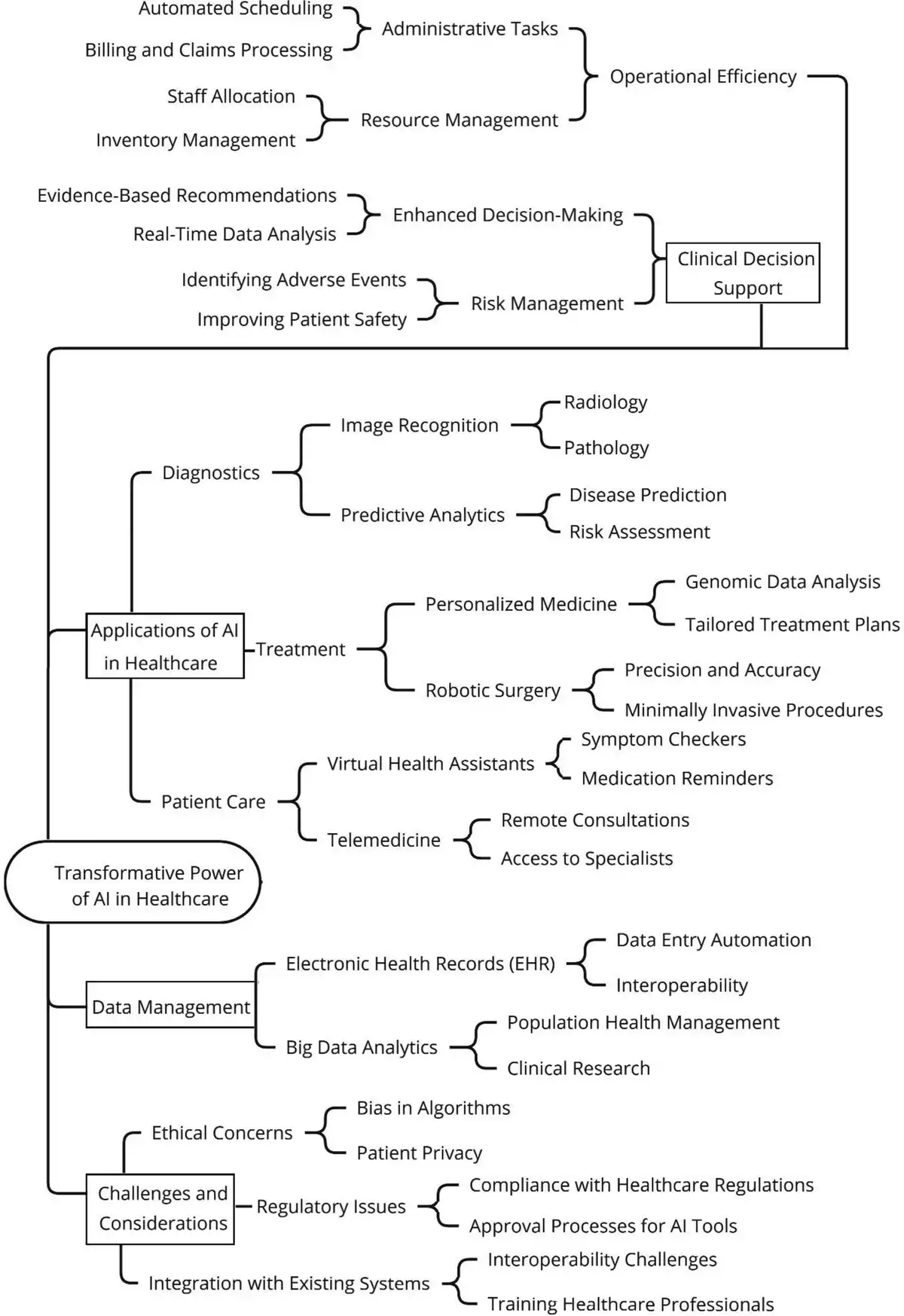
In the relentless march of scientific progress, few fields have seen a more profound and disruptive transformation than healthcare. A silent revolution, powered by the alchemical marriage of data and algorithms, is underway. Artificial intelligence (AI), once confined to science fiction novels and futuristic dreams, now stands at the forefront of healthcare innovation. Its integration into the medical realm holds the promise of a healthcare landscape unlike any seen before. The modern healthcare landscape stands at the precipice of a profound transformation, one that promises to redefine the very essence of medical practice. At the heart of this transformation lies a technological revolution driven by AI. In the blink of an eye, AI has transitioned from a speculative notion to a tangible and powerful force, reshaping the way we approach healthcare. The rapid advancements in AI have opened doors to a future where the boundaries of diagnostics, treatment, and patient care are expanded beyond imagination.[1–2–3]Figure 1 provides a comprehensive visualization of AI’s multifaceted impact on healthcare, illustrating its diverse applications, operational efficiencies, and future potential, while also acknowledging associated ethical and regulatory challenges. This structured diagram highlights how AI is reshaping healthcare across key domains, including diagnostics, treatment, patient care, data management, and clinical decision support. The key components of Figure 1 represent the applications of AI in healthcare. AI enhances diagnostics (image recognition, predictive analytics), treatment (personalized medicine, robotic surgery), and patient care (telemedicine, virtual assistants). AI optimizes administrative tasks, resource management, and risk management by providing evidence-based recommendations and real-time analysis. AI streamlines electronic health records (EHR) automation, big data analytics, and population health management, with natural language processing and wearable devices offering promising future capabilities. The diagram also acknowledges ethical concerns (bias, privacy issues), regulatory hurdles (AI approval processes, compliance issues), and integration challenges (healthcare interoperability, workforce training).
Figure 1.
The transformative power of AI in healthcare.
AI, a field rooted in the quest to replicate human intelligence within machines, has found an ideal application in healthcare. Its integration into the medical domain has been marked by an acceleration of progress that has left even the most optimistic observers astounded.[1,4] Traditionally, medical diagnosis and treatment planning have relied heavily on the expertise of highly trained professionals, often guided by a vast body of medical knowledge. While this human touch has been indispensable, it is not without its limitations. The sheer volume of medical data generated daily is overwhelming, and the complexities of diseases and their manifestations often exceed human capacity for analysis. This is where AI has stepped in with transformative potential.[5,6] The AI revolution in healthcare can be likened to the invention of the microscope in the 17th century, which unveiled a previously unseen world of microorganisms. AI has given healthcare professionals a digital microscope, enabling them to peer into the intricacies of diseases, treatments, and patient outcomes with unparalleled clarity and precision.[6,7]
One of the most captivating facets of AI in healthcare is its ability to redefine diagnostics. Rapid and accurate diagnosis is the cornerstone of effective medical intervention, and AI has shown remarkable promise in this domain.[8] Traditionally, medical diagnosis has often been characterized by the potential for human error, influenced by factors such as fatigue, cognitive biases, and variations in expertise among practitioners. AI-driven diagnostic tools, however, operate tirelessly, free from the constraints of human physiology. They can sift through vast datasets at lightning speed, detecting patterns, anomalies, and subtle indicators that might elude even the keenest human eye.[9,10] Imagine a scenario where a patient presents with an array of symptoms that defy easy categorization. AI, drawing from an extensive database of medical knowledge, can swiftly generate a list of potential diagnoses ranked by probability, aiding clinicians in making quicker and more accurate decisions. Furthermore, AI systems can analyze medical images, such as x-ray, magnetic resonance imaging, and computed tomography scans, with remarkable precision, enhancing the detection of conditions ranging from cancerous tumors to fractures.[11,12] The potential benefits of AI in diagnostics are not confined to merely improving accuracy; they extend to the realm of early disease detection. AI algorithms can continuously monitor patient data, detecting subtle deviations from baseline health parameters long before clinical symptoms manifest. This heralds a shift towards proactive and preventive healthcare, where interventions can be initiated at the earliest stages of disease progression, often resulting in more successful outcomes.[13,14]
While accurate diagnosis is a crucial first step, the true impact of AI in healthcare is fully realized in treatment planning and delivery. AI has the capacity to individualize treatment plans with an unprecedented level of granularity, tailoring interventions to the unique genetic, physiological, and lifestyle characteristics of each patient.[15] Traditional treatment planning, while effective, often follows generalized protocols that may not fully account for individual variations. AI, on the other hand, synthesizes a multitude of patient-specific data points to devise personalized treatment regimens. This can lead to more effective treatments with fewer side effects, reducing the burden on patients and the healthcare system as a whole.[4,16] Moreover, AI’s ability to continuously monitor patient responses to treatment allows for real-time adjustments. If a particular treatment is proving ineffective or causing adverse reactions, AI can swiftly recommend alternative approaches, ensuring that patients receive the most suitable care throughout their healthcare journey.[17,18] In the field of drug discovery, AI-driven algorithms are expediting the identification of novel compounds with therapeutic potential. By analyzing vast chemical databases and simulating the behavior of molecules, AI can significantly accelerate the drug discovery process. This holds particular promise in addressing diseases for which treatment options are limited or nonexistent.
Beyond the realms of diagnostics and treatment planning, AI is reshaping the very essence of patient care. The patient experience, often marred by inefficiencies and communication gaps in healthcare systems, stands to benefit immensely from AI-driven improvements.[19] Healthcare institutions are increasingly leveraging AI-powered chatbots and virtual assistants to enhance patient engagement and streamline administrative processes. Patients can receive real-time responses to queries, schedule appointments, and access medical records with ease. Moreover, AI-driven predictive analytics can help healthcare providers anticipate patient needs, ensuring a more proactive and patient-centric approach to care.[20,21] AI also plays a vital role in remote patient monitoring, particularly relevant in an era where telemedicine and remote healthcare have gained prominence. Patients with chronic conditions can be equipped with wearable devices that continuously transmit data to healthcare providers. AI algorithms can analyze this data, alerting providers to deviations from baseline health parameters and facilitating early interventions.[22,23] Perhaps one of the most significant strides in patient-centric care is the application of AI in predictive medicine. By analyzing a patient’s genetic makeup, lifestyle factors, and medical history, AI can forecast an individual’s susceptibility to specific diseases. Armed with this information, healthcare providers can design personalized prevention plans that empower patients to take control of their health proactively.
The integration of AI into healthcare is a journey marked by unprecedented possibilities and ethical considerations. While the transformative power of AI holds immense promise, it is not without its challenges and complexities. As AI continues to redefine the boundaries of diagnostics, treatment, and patient care, it also beckons us to navigate the ethical dimensions that accompany these groundbreaking technologies.[24] In the subsequent sections of this article, we embark on an exploration of the ethical implications of emerging AI technologies in healthcare. We delve into the profound questions of privacy, transparency, accountability, and the delicate balance between human judgment and machine decision-making. Through real-world case studies and examples, we illuminate the ethical dimensions of AI-powered medical diagnoses and treatment recommendations.[25,26] In a world where the potential benefits of AI in healthcare are boundless, we must tread carefully, ensuring that our embrace of innovation is paralleled by a commitment to ethical responsibility. As we navigate the intricate intersection of innovation and ethics, we seek to shape a future where AI in healthcare not only transforms patient outcomes but also upholds the highest ethical standards. Our journey begins with a deep dive into the ethical challenges posed by AI technologies, for it is through understanding these challenges that we can forge a path towards a healthcare landscape that is both technologically advanced and ethically sound.
The integration of AI into healthcare brings with it a wave of unprecedented possibilities, but it also unfurls a tapestry of intricate ethical dilemmas. As we venture deeper into the digital age of medicine, we find ourselves grappling with profound questions surrounding patient data privacy, algorithmic bias, transparency, accountability, and the ever-pressing issue of human versus machine decision-making.[27,28]Table 1 presents case studies that exemplify ethical dilemmas. In the case of International Business Machines Corporation (IBM) Watson for Oncology, AI recommendations conflicting with human oncologists raise questions about balancing AI recommendations with human expertise. Predictive policing in healthcare highlights the challenge of balancing predictive capabilities with patient privacy concerns. Algorithmic bias in mortality prediction showcases the importance of addressing bias in AI algorithms and its potential life-altering consequences. In robot-assisted surgery, the overreliance on AI during surgery emphasizes the need to strike a balance between AI assistance and surgeon expertise.
Table 1
Case studies of ethical dilemmas in AI healthcare.
| Case study | Description | Ethical dilemma | Considerations |
|---|---|---|---|
| IBM Watson for Oncology | AI analyzes patient data and suggests treatment options, which sometimes differ from human oncologists’ recommendations | Balancing AI recommendations with human expertise. Should AI influence treatment decisions, or simply offer suggestions? | - Transparency in AI reasoning - Human oversight and final decision-making - Continuous evaluation and improvement of AI algorithms |
| Predictive policing in healthcare | AI analyzes patient data to predict potential health risks or nonadherence to treatment plans | Balancing predictive capabilities with patient privacy. Can AI predict health issues without infringing on privacy? | - Defining the scope of data collection and analysis - Clear patient consent and data anonymization - Limiting the use of predictions for nonmedical purposes |
| Algorithmic bias in mortality prediction | AI algorithm trained on historical data unintentionally perpetuates biases, underestimating mortality risk for certain demographics | Addressing algorithmic bias and its consequences. How can we ensure fairness and accuracy in AI healthcare tools? | - Diverse and representative training data sets - Regular bias audits and mitigation strategies - Human review of high-risk predictions |
| Robot-assisted surgery | Surgeons rely heavily on AI guidance during surgery, potentially diminishing their own skills and decision-making | Balancing AI assistance with surgeon expertise. How can AI enhance surgery without replacing human judgment? | - Clear roles and responsibilities for surgeons and AI systems - Surgeon training on effective use of AI tools - Maintaining surgeon autonomy and critical thinking |
| New case study | AI-powered Mental Health Chatbots | Balancing automation with human connection. Can AI chatbots effectively meet the needs of patients with mental health challenges? | - Limitations of AI in emotional intelligence and empathy - Integration of human support mechanisms - Clear guidelines for when to escalate to human therapists |
In the era of AI-driven healthcare, data is the lifeblood of progress. The vast troves of patient data, encompassing medical records, diagnostic images, and personal health information, are invaluable resources that fuel AI algorithms. However, the very collection and utilization of this data cast a long shadow over the realm of patient privacy and data security.[29] The ethical dilemma here lies in the fine balance between leveraging patient data for medical advancement and respecting individuals’ rights to privacy. Patient data is inherently sensitive and personal, and its mishandling can have far-reaching consequences. Unauthorized access, data breaches, and the misuse of healthcare information pose tangible threats to patient privacy.[30] Real-world cases underscore the gravity of these concerns. In 2015, Anthem, one of the largest health insurers in the United States, fell victim to a massive data breach, compromising the personal information of nearly 80 million individuals. Such breaches not only expose patients to identity theft but also erode trust in healthcare institutions and the AI systems they employ.[31,32] As AI systems continue to rely on vast datasets, the risk of data breaches and unauthorized access remains ever-present. Ensuring robust data security measures and stringent privacy protections is an ethical imperative as we forge ahead into an era of data-driven medicine. AI algorithms, despite their computational prowess, are not immune to human imperfections. In fact, they can inherit and perpetuate biases present in the data they are trained on. This insidious phenomenon poses a significant ethical challenge in the realm of healthcare, where unbiased and equitable decision-making is paramount.[33,34] Consider, for instance, an AI algorithm designed to assist in medical diagnosis. If the training data predominantly comprises cases from a specific demographic group, the algorithm may develop a skewed understanding of diseases, leading to diagnostic inaccuracies for underrepresented groups. This bias can perpetuate health disparities, potentially disadvantaging marginalized communities.[35]
A study published in the journal “Science” in 2019 highlighted the racial bias present in a widely used commercial algorithm for predicting which patients should receive additional healthcare resources. The algorithm consistently underestimated the healthcare needs of Black patients compared to White patients, raising concerns about the equitable distribution of healthcare resources.[36] Algorithmic bias is not confined to ethnicity; it can extend to gender, age, socioeconomic status, and other variables. Ethical questions surrounding fairness, equity, and accountability come to the forefront as we grapple with the repercussions of biased AI in healthcare. AI, particularly deep learning algorithms, often operate as “black boxes.” They generate results and recommendations based on complex calculations that can be challenging to interpret, even for experts. This opacity poses a considerable ethical challenge in healthcare, where the ability to explain and understand decision-making processes is vital.[37] The demand for transparency in AI algorithms is not merely an ethical aspiration; it is a practical necessity. Patients and healthcare providers must have confidence in the decisions made by AI systems. Without transparency, it becomes challenging to validate the accuracy of AI recommendations or to hold algorithms accountable for errors.[38] Accountability, too, is a central ethical concern. Who bears responsibility when an AI-driven diagnosis goes awry? How do we assign liability in cases where AI recommendations conflict with human judgment? These questions underscore the urgency of establishing clear lines of accountability in the era of AI-driven healthcare.
As AI technologies continue to advance, a fundamental ethical question emerges: to what extent should we rely on machines to make critical healthcare decisions? The allure of AI lies in its ability to process vast amounts of data rapidly and objectively. However, the very act of delegating decision-making to machines raises profound ethical concerns.[39]
In 2020, during the early stages of the COVID-19 pandemic, AI algorithms were deployed to triage patients and allocate resources in overwhelmed healthcare systems. In some instances, these algorithms recommended withdrawing life-sustaining treatments from elderly patients. Such decisions, albeit driven by data and algorithms, led to ethical and moral dilemmas, with human clinicians often opting to override AI recommendations.[40] The conflict between AI recommendations and human judgment underscores the complex interplay between technology and human values in healthcare. While AI can process data objectively, it lacks the nuanced understanding, empathy, and ethical reasoning that human clinicians bring to the table.[41] As we navigate this ethical tightrope of human versus machine decision-making, we must consider not only the clinical efficacy of AI but also the moral and ethical dimensions of its role in healthcare.[42] In conclusion, the ethical dilemmas surrounding AI in healthcare are profound and multifaceted. Patient data privacy and security, algorithmic bias, transparency, accountability, and the balance between human and machine decision-making are all integral aspects of this complex terrain.[43] Addressing these ethical challenges is not an option; it is a moral imperative. As AI technologies continue to reshape the healthcare landscape, it is incumbent upon us to forge a path that upholds the principles of fairness, transparency, accountability, and patient-centered care. Ethical considerations must guide the development and deployment of AI in healthcare, ensuring that the promise of technological advancement aligns harmoniously with the fundamental values of medicine and human well-being.[44]
2. Case studies and real-world examples: AI’s triumphs and ethical ponderings in healthcare
Predictive medicine, powered by AI, is reshaping healthcare by allowing physicians to anticipate diseases before they manifest. By analyzing vast datasets that include genetic, physiological, and behavioral factors, AI can help in risk assessment and proactive intervention. The integration of AI into healthcare has ushered in a new era of innovation and promise. AI’s capabilities have been put to the test in various domains, with medical diagnosis and treatment recommendations standing as 2 prominent areas where AI has demonstrated remarkable proficiency. The use of AI in medical diagnosis has proven transformative, with its ability to process vast datasets and identify subtle patterns unlocking new frontiers in early disease detection and diagnostic accuracy. One notable case is the early detection of diabetic retinopathy, a leading cause of blindness. In a landmark study published in JAMA, researchers demonstrated that an AI system could detect diabetic retinopathy from retinal images with sensitivity and specificity comparable to human ophthalmologists. This breakthrough raised hopes for timely interventions to prevent vision loss in diabetic patients. However, ethical concerns arise regarding the potential overreliance on AI, which might diminish the role of human clinicians and erode trust in the doctor-patient relationship, emphasizing the continued need for human judgment in healthcare decisions.[45–46–47] Another notable example is the AI-enhanced detection of breast cancer. Mammography, while valuable, often yields false-positive results, leading to unnecessary stress for patients. A study in Nature revealed how an AI model outperformed radiologists in detecting breast cancer, reducing false positives and negatives. This advancement underscores AI’s ability to improve diagnostic accuracy and alleviate patient anxiety. Yet, it brings ethical questions about resource allocation and patient management. With fewer follow-up tests required due to increased accuracy, healthcare systems must consider how resources are redistributed equitably, ensuring that no patient demographic is disadvantaged by these technological improvements.[48,49] AI’s influence extends beyond diagnosis into treatment recommendations, where it promises individualized regimens tailored to each patient. In oncology, AI has been used to enhance chemotherapy planning. By analyzing patient data, genetic markers, and treatment responses, AI systems recommend personalized chemotherapy plans that maximize efficacy while minimizing adverse effects. These advancements in treatment planning highlight AI’s capacity to revolutionize care, yet ethical concerns persist regarding patient consent and trust. Patients must be confident that AI systems prioritize their well-being comprehensively, and transparent algorithms are essential to ensure that patients understand and trust the recommendations being made.[50,51]
AI has significantly enhanced medical diagnostics by analyzing vast datasets and identifying patterns that may elude human clinicians. AI-driven diagnostic tools have demonstrated remarkable accuracy in detecting diseases at early stages, enabling timely intervention and improving patient outcomes. Within the realm of diagnostics, predictive medicine plays a crucial role, leveraging AI to assess risk factors and anticipate potential health conditions before they manifest clinically. By processing genetic, physiological, and lifestyle data, AI-powered predictive models help clinicians identify individuals at high risk for diseases such as diabetes, cardiovascular disorders, and cancer. These capabilities allow for proactive medical strategies, personalized prevention plans, and optimized patient management, reinforcing the essential function of AI in early disease detection and risk stratification. By integrating predictive analytics into diagnostics, AI not only improves accuracy but also aids in personalized early interventions, reducing the long-term burden on healthcare systems. However, despite its advantages, the ethical concerns associated with predictive medicine, such as data privacy, algorithmic bias, and the psychological impact of risk prediction on patients, must be carefully managed to ensure responsible and equitable AI-driven healthcare.
AI has also made significant strides in surgical decision support, particularly in robot-assisted surgeries. During these procedures, AI systems analyze surgical data in real-time, such as imaging and vital signs, to assist surgeons in critical decision-making. While these tools aim to enhance precision and outcomes, they raise concerns about the overreliance on AI. Surgeons must remain in control of procedures, and AI systems must augment rather than replace human expertise. Balancing this collaboration is vital to ensure safety and uphold ethical standards in surgical practice.[52,53] The achievements of AI in medical diagnosis and treatment are undeniably impressive, but they also bring ethical questions to the forefront. Trust is a fundamental ethical consideration; patients must have confidence in AI-driven decisions. Transparent algorithms, explainability, and active patient participation in healthcare decisions are critical to fostering trust and preserving autonomy. Moreover, the evolving role of clinicians in an AI-driven healthcare landscape presents unique challenges. Striking a balance between leveraging AI’s capabilities and preserving the indispensable attributes of human judgment, empathy, and ethical reasoning is crucial.[54–55–56] Fairness and accountability are also paramount. AI algorithms must be rigorously audited for biases, and robust mechanisms for addressing and rectifying these biases must be established to ensure equitable outcomes. Additionally, as AI reduces the need for follow-up tests, questions about resource allocation arise. Ensuring equitable access to AI-driven healthcare while managing costs becomes an ethical imperative that healthcare systems must address.[57,58] In conclusion, the case studies and real-world examples presented in the domains of AI-driven medical diagnosis and treatment recommendations illuminate the immense promise and ethical complexities of AI in healthcare. As we navigate this transformative landscape, a commitment to transparency, fairness, patient-centered care, and the preservation of human judgment is essential. These ethical considerations must guide the responsible development and integration of AI technologies, ensuring that they enhance healthcare outcomes while upholding the fundamental principles of ethics and humanity in medicine.
AI-driven predictive medicine enables early disease detection by analyzing genetic, physiological, and behavioral data for risk assessment and intervention.
AI has demonstrated remarkable advancements in healthcare, but real-world applications reveal critical ethical dilemmas that must be addressed. Below are specific case studies that illustrate how AI’s ethical challenges—privacy, bias, transparency, and accountability—manifest in healthcare settings.
2.1 Case study 1: algorithmic bias in AI-based healthcare decisions (Optum controversy, 2019)
One of the most well-documented cases of algorithmic bias in healthcare AI involves Optum’s AI risk prediction algorithm, which was widely used in hospitals across the United States. A 2019 study published in Science revealed that the algorithm systematically discriminated against Black patients, underestimating their health risks compared to white patients. The algorithm relied on historical healthcare spending as a proxy for patient health needs. Since Black patients had historically received less medical care due to systemic healthcare disparities, the AI incorrectly assumed they had fewer healthcare needs. This led to fewer Black patients being referred for high-risk care programs, despite having similar or worse health conditions than white patients.[59]
Critical evaluation and outcomes: This case exemplifies the risks of AI reinforcing existing biases rather than eliminating them. The reliance on biased training data led to discriminatory patient outcomes, proving that AI does not inherently neutralize racial disparities—it can actually magnify them. Following the exposure of this issue, Optum faced widespread criticism, prompting policy discussions on AI bias audits and fairness testing in healthcare algorithms.
Implications for AI governance: This case underscores the urgent need for fairness audits and bias-mitigation strategies in AI model development. Regulatory oversight, including mandates for diverse and representative datasets, must be prioritized to prevent biased decision-making. Additionally, AI models must undergo continuous validation and recalibration to account for demographic shifts and avoid perpetuating systemic disparities.
2.2 Case study 2: privacy violations and data misuse (Google DeepMind and United Kingdom’s National Health Service, 2016)
In 2016, Google DeepMind partnered with the United Kingdom’s National Health Service to develop AI-powered predictive models for acute kidney injury detection. However, an investigation by the United Kingdom Information Commissioner’s Office revealed that 1.6 million patient records were shared without patient consent. These records contained sensitive medical data that DeepMind used to train its AI system without proper transparency regarding data handling practices. While the AI model successfully identified patients at risk, the unauthorized data sharing led to significant public backlash over privacy concerns.[60]
Critical evaluation and outcomes: Although DeepMind’s AI system demonstrated clinical utility, its implementation violated patient data privacy laws and ethical consent principles. The controversy resulted in heightened regulatory scrutiny over AI-driven healthcare data collection, compelling organizations to prioritize explicit patient consent and data governance protocols. Following the controversy, Google pledged to improve transparency in its AI healthcare initiatives, but public trust in AI’s ethical handling of patient data was significantly damaged.
Implications for AI governance: This case highlights the necessity for stringent AI data privacy regulations. AI developers must align with patient consent laws, such as the General Data Protection Regulation (GDPR) or Health Insurance Portability and Accountability Act (HIPAA), to ensure ethical AI deployment. Future AI collaborations between private tech firms and public healthcare institutions must implement clear data-sharing policies, guaranteeing transparency and protecting patient autonomy.
2.3 Case study 3: lack of transparency in AI-based medical decisions (IBM Watson for Oncology, 2017–2018)
IBM Watson for Oncology was marketed as an AI-powered decision-support tool designed to assist oncologists in recommending cancer treatments. However, reports from multiple hospitals, including those in the United States and South Korea, revealed that Watson frequently made unsafe or incorrect treatment recommendations. Investigations revealed that Watson had been trained primarily on synthetic patient data rather than real-world clinical cases, leading to unreliable and inconsistent outputs. Additionally, IBM failed to provide transparency regarding Watson’s decision-making process, making it difficult for oncologists to trust its recommendations.[61]
Critical evaluation and outcomes: This case demonstrates the risks of deploying AI healthcare tools without rigorous clinical validation. Watson’s lack of transparency eroded physician trust, proving that “black box” AI models are incompatible with high-stakes medical decision-making. Many hospitals discontinued Watson for Oncology, and IBM faced reputational damage and financial losses due to misleading claims about AI’s capabilities.
Implications for AI governance: This case highlights the importance of explainable AI (XAI) in healthcare. AI developers must prioritize interpretability and clinician oversight to ensure that AI-generated recommendations can be critically evaluated rather than blindly accepted. Regulatory frameworks should require AI developers to provide clear documentation detailing how AI models reach their conclusions before they are deployed in clinical settings.
2.4 Case study 4: overreliance on AI in diagnostic decision-making (Zebra Medical Vision, 2021)
Zebra Medical Vision, an AI company specializing in radiology AI, developed a deep-learning model for automated chest x-ray analysis. The system demonstrated high accuracy in detecting pneumonia and lung abnormalities. However, in certain hospitals where diagnostic decisions were fully automated without physician oversight, an increase in false negatives was reported. Early signs of lung cancer were overlooked, as the AI model was not optimized to detect subtle, rare anomalies. In some cases, clinicians felt pressured to defer to AI-generated diagnoses, leading to delayed treatments for patients with early-stage lung cancer.[61]
Critical evaluation and outcomes: This case highlights the risks of overreliance on AI in clinical decision-making. While AI can enhance efficiency, it is not infallible—errors occur, especially in edge cases or rare medical conditions. Fully automated diagnostic workflows reduce human oversight, increasing the likelihood of misdiagnosis. Following this incident, hospitals reinstated mandatory human review of AI-generated diagnoses to ensure clinical validation and patient safety.
Implications for AI governance: This case reinforces the need for “human-in-the-loop” AI models where clinicians remain actively involved in AI-assisted decision-making. Regulations should mandate AI-human collaboration frameworks, ensuring that AI recommendations are used as supportive tools rather than autonomous decision-makers. Additionally, AI models must be rigorously validated across diverse patient populations before being deployed in real-world clinical settings.
3. Balancing act: navigating the ethical tightrope of AI in healthcare
AI has emerged as a transformative force in healthcare, promising to revolutionize diagnostics, treatment, and patient care. Yet, amidst the excitement and potential of AI, a complex ethical landscape unfolds, necessitating a delicate balance between the benefits AI brings and the ethical challenges it presents. This balancing act is not merely a theoretical exercise but a practical necessity to ensure that AI enhances healthcare outcomes while adhering to the principles of fairness, privacy, transparency, and accountability. The benefits of AI in healthcare are immense, ranging from improved diagnostic accuracy to personalized treatments, proactive healthcare approaches, and optimized resource allocation.[62] AI’s ability to process vast datasets and identify subtle patterns translates into higher diagnostic accuracy and early disease detection, improving patient outcomes significantly. For example, personalized treatments based on genetic, physiological, and lifestyle characteristics maximize efficacy while minimizing adverse effects, ushering in a new era of precision medicine. Furthermore, AI’s capability to detect deviations from baseline health parameters through continuous monitoring enables proactive healthcare interventions, often resulting in better outcomes. Finally, by reducing diagnostic errors, AI facilitates more efficient resource allocation, ensuring that resources are directed where they are most needed, improving cost-effectiveness and system efficiency.[63]
However, alongside these benefits come critical ethical challenges that must be addressed to fully harness AI’s potential responsibly. AI systems rely heavily on patient data, and the collection, storage, and sharing of this data raise significant privacy concerns. Unauthorized access, data breaches, and the misuse of sensitive information pose threats to patient trust and confidentiality. Moreover, AI algorithms can inherit biases present in training data, leading to diagnostic and treatment inaccuracies that disproportionately affect marginalized communities. Such algorithmic bias exacerbates healthcare disparities, undermining the promise of equitable healthcare access. Transparency and accountability are also critical concerns, as the “black box” nature of AI often obscures how decisions are made. Without explainability and clear mechanisms of accountability, it becomes challenging for patients and clinicians to trust AI-driven decisions. Furthermore, the increasing reliance on AI for critical healthcare decisions raises questions about the evolving role of human clinicians. The potential overreliance on AI may diminish the importance of human judgment, empathy, and ethical reasoning in healthcare, eroding the doctor-patient relationship that is central to patient care.[64–65–66–67] The ethical challenges associated with AI can be categorized into 5 primary areas: fairness, privacy, transparency, responsibility, and safety. Key ethical challenges in AI healthcare as in Figure 2 provides a structured overview of the primary ethical concerns associated with AI integration in healthcare, categorizing them into fairness, privacy, transparency, responsibility, and safety. While these challenges may appear distinct, they are deeply interconnected and influence 1 another in complex ways, affecting healthcare policies, patient trust, and clinical decision-making. Fairness remains a cornerstone of ethical AI deployment, ensuring equitable access to healthcare services and preventing algorithmic biases that may disproportionately impact marginalized communities. However, fairness cannot be achieved in isolation; it is closely linked to privacy concerns, as biased datasets often stem from inadequate data collection practices that fail to represent diverse populations. Ensuring fairness requires robust data protection regulations to prevent misuse and ensure that AI training datasets are truly representative of the populations they serve. Privacy, another critical challenge, is fundamental to maintaining patient trust. AI-driven healthcare systems rely heavily on large-scale patient data, raising concerns about unauthorized access, data breaches, and the ethical implications of AI using personal medical histories for predictive analytics. The lack of clear transparency and accountability in AI decision-making exacerbates these concerns. Patients and healthcare professionals often struggle to understand how AI systems arrive at their recommendations, leading to a trust deficit. Without transparency, even a well-functioning AI system may face skepticism and resistance from clinicians and patients who are uncomfortable with opaque decision-making processes. The responsibility for AI-driven decisions further complicates matters. In cases where AI-generated recommendations result in misdiagnosis or inappropriate treatments, determining liability becomes challenging. Should responsibility lie with the developers who trained the AI, the healthcare providers who implemented the recommendations, or the institutions that deployed the technology? This lack of clear accountability introduces legal and ethical dilemmas that must be addressed through well-defined regulations and governance frameworks. Lastly, safety is a paramount concern that ties all these ethical challenges together. AI systems in healthcare must be rigorously tested, continuously monitored, and periodically audited to ensure they function reliably in real-world medical settings. A failure in safety protocols—whether due to biased algorithms, privacy breaches, or misinterpretation of AI recommendations—can have severe consequences for patient health. The need for a human-AI collaboration framework becomes crucial, where AI augments rather than replaces human judgment, ensuring that clinicians remain involved in critical decision-making. Thus, Figure 2 serves as more than just a categorical breakdown of ethical challenges—it highlights the need for a holistic, integrative approach to AI governance in healthcare. Rather than treating these challenges in isolation, regulatory frameworks, AI developers, and healthcare institutions must acknowledge their interdependencies. Addressing privacy concerns strengthens fairness, improving transparency fosters accountability, and ensuring patient safety necessitates responsibility at every stage of AI development. Without such a coordinated ethical strategy, AI may struggle to gain widespread acceptance and trust within the healthcare community.[2,64–65–66–67–68]
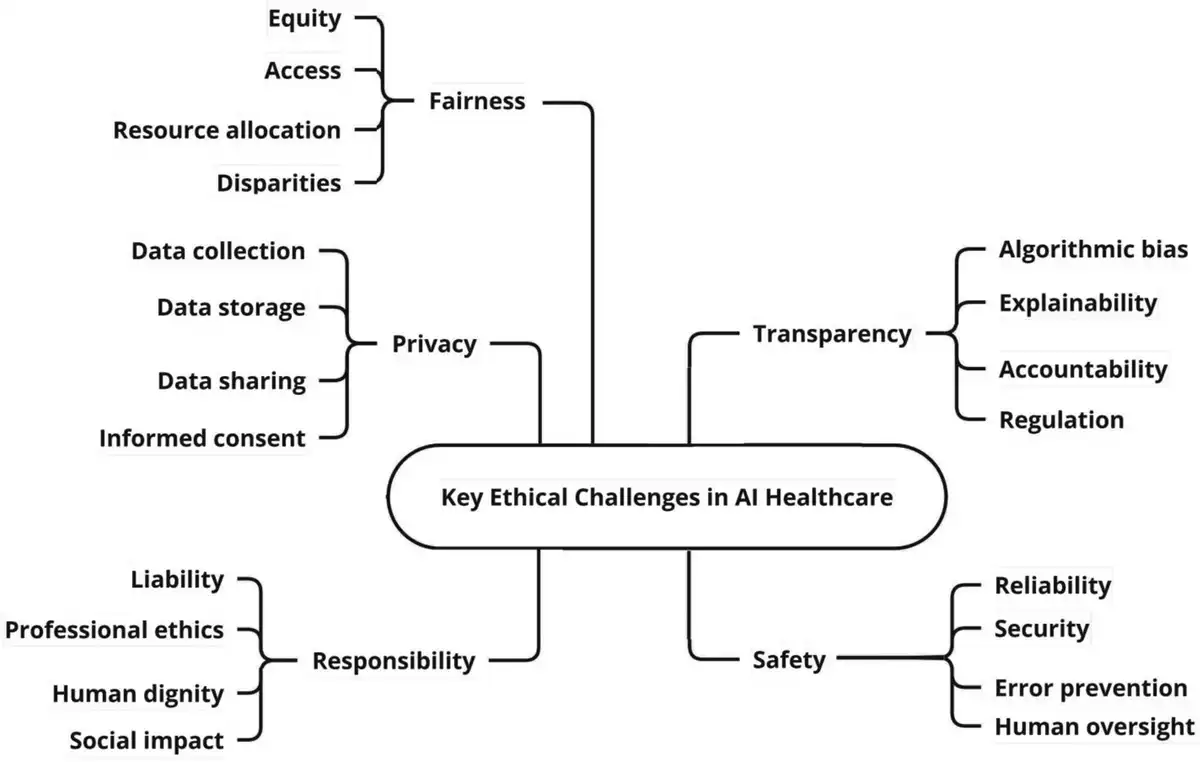
Figure 2.
Key ethical challenges in AI healthcare.
Maintaining a balance between the benefits of AI and its ethical concerns is critical to preserving patient trust, equity, and autonomy in healthcare systems. Trust is foundational to healthcare; patients must have confidence in the technologies and systems that guide their care. Transparent algorithms, explainable recommendations, and patient involvement in healthcare decisions are essential to fostering this trust. Equally important is ensuring equity and fairness, as ethical AI development must prioritize the mitigation of bias and the prevention of disparities, ensuring that all populations benefit from AI’s advancements. Balancing benefits with ethical principles also means upholding patient autonomy, allowing individuals to make informed decisions about their care, guided by AI rather than dictated by it. Moreover, avoiding overreliance on AI for critical decisions ensures that human judgment, empathy, and ethical reasoning remain integral to healthcare. These attributes, irreplaceable by technology, safeguard the human-centered nature of healthcare.[68–69–70–71] The path forward lies in responsible AI development, guided by ethical principles and practices. This includes the establishment of clear ethical guidelines and oversight bodies to ensure that AI aligns with patient-centered values. Rigorous testing and auditing of AI algorithms are essential to mitigate bias, while the use of diverse and representative datasets helps reduce inequities. Transparent and XAI systems enable healthcare providers and patients to understand and trust AI decisions. AI must also be designed to complement, rather than replace, human clinicians, ensuring that human oversight remains central to decision-making. Finally, continuous evaluation and improvement of AI systems ensure that they remain aligned with evolving ethical standards and patient needs.[64,71–72–73] As we look toward the future, it is clear that AI will play an increasingly significant role in healthcare. Its potential to enhance accuracy, personalize treatments, and enable proactive care is immense. However, these benefits must be tempered with a commitment to addressing ethical challenges and preserving patient trust, autonomy, and fairness. The balancing act between technology and ethics is complex but essential to creating a healthcare landscape where AI augments human expertise while upholding the highest ethical standards. By navigating this tightrope responsibly, we can ensure that healthcare remains a compassionate and ethical endeavor, enriched by the transformative potential of AI.[74–75–76]
4. The broader implications: nurturing patient trust and ethical governance in AI healthcare
As AI continues to reshape healthcare, its ethical implications extend beyond individual applications to influence societal trust, policy frameworks, and regulatory oversight. Ensuring that AI technologies enhance rather than undermine healthcare requires robust governance structures, clear accountability mechanisms, and dynamic ethical guidelines. Patient trust is central to AI adoption in healthcare. Without trust, even the most advanced AI-driven innovations will face resistance from patients and healthcare professionals alike. Ethical lapses—such as algorithmic bias, lack of transparency, and overreliance on AI—risk undermining confidence in AI-driven |healthcare systems.[77–78–79] To maintain trust, governments, regulatory bodies, and industry leaders must collaborate to establish standards that guarantee fairness, reliability, and accountability in AI-powered decision-making. Regulatory frameworks play a pivotal role in addressing these ethical concerns. Governments worldwide have implemented laws to safeguard patient rights, enforce data privacy, and ensure AI accountability. In the United States, the HIPAA establishes stringent privacy protections, while the Food and Drug Administration (FDA)’s AI/machine learning (ML) action plan outlines regulatory pathways for AI-driven medical devices. In the European Union, the GDPR and the Artificial Intelligence Act aim to enforce AI transparency and user control. Meanwhile, countries like Canada, China, and Singapore have developed frameworks addressing AI in healthcare, balancing innovation with ethical responsibility.[80–81–82] These regulations create accountability mechanisms that define legal responsibilities for AI developers, healthcare institutions, and policymakers. However, regulations alone are not enough. The dynamic nature of AI requires adaptive ethical guidelines that evolve alongside technological advancements. Unlike rigid legal frameworks, ethical guidelines provide flexibility in addressing emerging AI challenges. These guidelines should be developed collaboratively by healthcare providers, AI developers, ethicists, and patient advocacy groups to ensure that AI-driven healthcare remains aligned with core ethical values. Industry standards also play a crucial role in shaping ethical AI practices. Many organizations are establishing bias audits, fairness assessments, and explainability protocols to ensure AI models perform equitably across diverse populations. Ethical AI certification programs and compliance assessments help standardize best practices in AI deployment.[83–84–85] These initiatives complement legal regulations, providing an additional layer of accountability and trust-building. To illustrate the core ethical principles that should guide AI in healthcare, Table 2 summarizes the fundamental ethical values that must be upheld, alongside considerations for implementation.
Table 2
Ethical principles in AI healthcare.
| Ethical principle | Description | Implementation considerations |
|---|---|---|
| Privacy | Protecting patient data and confidentiality | Data encryption, controlled access, anonymization techniques |
| Transparency | Ensuring AI decision-making is understandable | Explainable AI (XAI), clear documentation, regulatory reporting |
| Fairness | Mitigating bias and ensuring equitable healthcare. | Inclusive datasets, bias audits, fairness testing protocols. |
| Accountability | Holding developers and institutions responsible | Defined liability frameworks, compliance with legal and ethical standards |
| Patient autonomy | Respecting patient choices and informed consent | Clear AI disclosures, patient rights protections, ability to opt out of AI decisions |
| Human oversight | Maintaining human control over AI decisions | Human-in-the-loop AI models, physician collaboration, ongoing evaluation |
Preserving trust and upholding ethical governance are essential to AI’s long-term success in healthcare. Ethical lapses not only erode trust but also risk exacerbating inequities in healthcare access and treatment. While regulations provide a structured foundation for AI accountability, ethical guidelines, and industry standards offer adaptability, ensuring that AI remains patient-centered and aligned with evolving societal expectations.[86–87–88] As healthcare stands at a critical crossroads, the commitment to ethical governance will shape the future of AI-driven medicine. AI’s true promise lies not just in technological advancement, but in its ability to enhance patient dignity, safety, and well-being while maintaining trust in the healthcare system. Moving forward, a collaborative effort is necessary to ensure that AI in healthcare serves humanity responsibly and ethically.[89–90–91]
5. A call for responsible AI in healthcare: navigating the ethical challenges
AI’s ability to process vast datasets and identify subtle patterns has unlocked new frontiers in early disease detection and diagnostic accuracy. However, despite these advancements, there remain significant ethical concerns regarding patient data privacy, the risk of algorithmic bias, and the transparency of AI-driven decision-making processes. As AI technologies continue their rapid ascent in healthcare, we find ourselves at a critical juncture. While the promise of AI to revolutionize diagnostics, treatment, and patient care is undeniable, so too are the ethical challenges that loom large on the horizon. A call for responsible AI in healthcare is not just a moral imperative but a practical necessity.[92] Addressing these challenges requires a multidimensional approach, encompassing robust ethical guidelines, targeted regulations, and focused research priorities. The ethical challenges associated with AI in healthcare are multifaceted and include issues such as patient data privacy, algorithmic bias, transparency, accountability, and the role of human versus machine decision-making. The collection and use of patient data, which underpin the functioning of AI systems, raise significant concerns about privacy and security.[93,94] Unauthorized access, data breaches, and the misuse of sensitive healthcare information remain persistent ethical dilemmas. Moreover, AI algorithms often inherit biases present in their training datasets, leading to diagnostic inaccuracies and perpetuating inequities, particularly for marginalized communities. Transparency is another critical issue; AI’s often opaque decision-making processes make it difficult for patients and clinicians to understand and trust its recommendations. Additionally, the increasing reliance on AI for critical healthcare decisions raises fundamental questions about the diminishing role of human clinicians, the need for human judgment, and the preservation of patient trust in healthcare systems.[95–96–97–98–99] Addressing these ethical challenges requires proactive and thoughtful interventions. For instance, robust data privacy protections must be implemented, ensuring that healthcare institutions and AI developers prioritize encryption, access controls, and regular security audits. Compliance with privacy regulations such as the GDPR in Europe and the HIPAA in the United States is essential. Bias mitigation is equally important. AI algorithms should undergo rigorous audits and utilize diverse, representative datasets to minimize bias. Fairness audits and ongoing evaluations can help identify and rectify discriminatory practices embedded in AI systems. Transparency is another cornerstone of responsible AI development. AI systems should provide clear, explainable outputs, enabling healthcare providers and patients to understand how decisions are made. The principle of human-AI collaboration must also be upheld, ensuring that AI serves to complement rather than replace human clinicians. Maintaining human oversight in critical healthcare decisions safeguards against overreliance on AI and preserves the essential elements of human judgment, empathy, and ethical reasoning.[100–101–102] To illustrate the gravity of these ethical concerns, Table 3 examples of Bias in AI algorithms in healthcare outlines several types of bias and their potential consequences. Racial bias, for example, has been observed in AI systems for skin cancer detection, which are less accurate for individuals with darker skin tones, leading to delayed or inaccurate diagnoses. Gender bias manifests in AI tools that fail to account for gender-specific health issues, potentially resulting in inadequate treatment for women. Socioeconomic and age biases also persist, with AI tools favoring wealthier or younger patients, potentially exacerbating health disparities. These examples highlight the critical need for targeted interventions to ensure fairness in AI applications in healthcare.
Table 3
Examples of bias in AI algorithms in healthcare.
| Type of bias | Examples | Potential consequences | Considerations for mitigation |
|---|---|---|---|
| Racial bias | - Skin cancer detection AI less accurate for dark skin tones https://www.americanbar.org/groups/crsj/publications/human_rights_magazine_home/the-state-of-healthcare-in-the-united-states/racial-disparities-in-health-care/ - Facial recognition software used for pain assessment less accurate for people of color https://www.americanbar.org/groups/crsj/publications/human_rights_magazine_home/the-state-of-healthcare-in-the-united-states/racial-disparities-in-health-care/ | - Delayed diagnosis, misdiagnosis, and unequal quality of care for patients with darker skin tones | - Include diverse datasets in training AI models, focusing on skin tones across races - Validate AI performance on representative patient populations |
| Gender bias | - Gender-neutral AI chatbots failing to recognize symptoms specific to women’s health issues. https://www.ncbi.nlm.nih.gov/pmc/articles/PMC7510055/ - AI algorithms prescribing medications differently for men and women with similar symptoms | - Gender disparities in healthcare outcomes, with women potentially receiving inadequate or inappropriate treatment | - Train AI models with gender-disaggregated data to account for biological and social factors affecting health - Integrate gender-specific algorithms when appropriate |
| Socioeconomic bias | - AI algorithms used for insurance coverage approval favoring patients in higher income brackets - AI-powered appointment scheduling systems prioritizing patients with private insurance over those with public options | - Inequitable access to healthcare resources, potentially worsening health outcomes for low-income patients | - Deidentify socioeconomic data when training AI models for healthcare applications - Develop fairness checks to ensure algorithms do not discriminate based on socioeconomic factors |
| Age bias | - AI algorithms underestimating mortality risk for younger patients, leading to overtreatment - AI used for triage prioritizing younger patients for specialist care, potentially delaying care for older patients with similar needs | - Overtreatment of younger patients and under-treatment of elderly patients, leading to unnecessary healthcare costs and poorer health outcomes | - Include age data in training datasets but avoid using it as the sole factor for decision-making - Develop AI models that consider age alongside other relevant health factors |
| New type of bias | Disability bias | - AI chatbots for mental health screening failing to recognize symptoms presented by people with disabilities - AI-powered diagnostic tools overlooking conditions more common in certain disabilities | - Delayed diagnosis, misdiagnosis, and inadequate care for patients with disabilities |
Another critical component of responsible AI development involves regulatory oversight and ethical guidelines. Governments and industry stakeholders must work together to establish comprehensive regulations that address data privacy, bias auditing, and accountability. Table 4 highlights how regulatory frameworks vary across regions. For instance, while the United States relies on HIPAA and the FDA’s AI/ML action plan to safeguard patient data and AI device safety, the European Union’s GDPR and medical device regulation emphasize user consent and algorithm transparency. Canada’s Personal Information Protection and Electronic Documents Act focuses on data protection, while China’s cybersecurity law and AI ethics guidelines stress national security and social well-being. These diverse approaches reflect regional priorities and underscore the need for international collaboration to harmonize AI regulations in healthcare.[103–104–105]
Table 4
Regulatory frameworks in AI healthcare.
| Country/Region | Key regulations | Focus | Considerations |
|---|---|---|---|
| United States | - HIPAA (Health Insurance Portability and Accountability Act): protects patient privacy and data security - FDA (Food and Drug Administration) AI/ML Action Plan: Provides a framework for regulating AI-based medical devices | Data privacy, AI safety, and effectiveness | - Focus on balancing innovation with patient safety - Regulatory approach may not fully address broader ethical considerations |
| European Union | - GDPR (General Data Protection Regulation): Sets high standards for data privacy and user control - MDR (Medical Device Regulation): Establishes safety and quality requirements for medical devices, including AI-powered tools | Data privacy, device safety, and transparency | - Strong emphasis on user consent and explainability of AI algorithms - Regulatory landscape is still evolving for AI in healthcare |
| Canada | - PIPEDA (Personal Information Protection and Electronic Documents Act): Governs the collection, use, and disclosure of personal information, including health data | Data privacy and accountability | - Focus on protecting patient privacy and ensuring responsible data practices - Regulations may need to adapt to address the specific challenges of AI in healthcare |
| China | - Cybersecurity law: sets forth requirements for data security and protection of critical infrastructure - AI ethics guidelines: provide nonbinding principles for the development and use of AI | Data security, ethical considerations | - Focus on national security and social well-being - Regulations may lack transparency and enforceability |
| Australia | - APP (Australian Privacy Principles): outlines privacy obligations for organizations handling personal information - TGA (Therapeutic Goods Administration): regulates medical devices, including those incorporating AI | Data privacy, device safety, and responsible innovation | - Focus on balancing innovation with consumer protection - Regulatory framework is still under development for AI in healthcare |
| Singapore | - PDPA (Personal Data Protection Act): Protects personal data and governs its collection, use, and disclosure - Healthcare services bill (draft): aims to regulate the use of AI and other technologies in healthcare | Data privacy, responsible use of AI in healthcare | - Emerging regulations focused on patient privacy and ethical considerations - Specific details and enforcement mechanisms of the Healthcare Services Bill are yet to be determined |
In addition to regulatory oversight, there is a pressing need for ongoing research into ethical AI algorithms. Developing AI systems that are inherently ethical and bias-resistant should be a research priority, focusing on improving algorithmic fairness, transparency, and accountability. Institutions deploying AI systems should conduct mandatory ethical impact assessments to evaluate potential risks and mitigate them proactively. Figure 3 provides a visual overview of key milestones, regulatory developments, and challenges in the ethical evolution of AI applications in healthcare. This timeline contextualizes how ethical concerns have emerged and evolved, emphasizing the dynamic interplay between technological advancement and ethical governance.[106–107–108] Efforts to raise public awareness and foster international collaboration are equally crucial. Educating patients about AI-driven healthcare and its implications empowers them to make informed decisions and actively participate in their care. Meanwhile, global collaboration can help harmonize ethical standards and regulations, ensuring responsible AI use across borders. As AI technologies advance, ethical stewardship becomes paramount. By adhering to the recommendations outlined—spanning privacy protections, bias mitigation, transparency, regulatory oversight, and patient education—we can navigate the complexities of AI in healthcare while upholding privacy, fairness, and accountability. In doing so, AI can remain a force for good, enhancing patient outcomes while adhering to the highest ethical standards of patient-centered care.
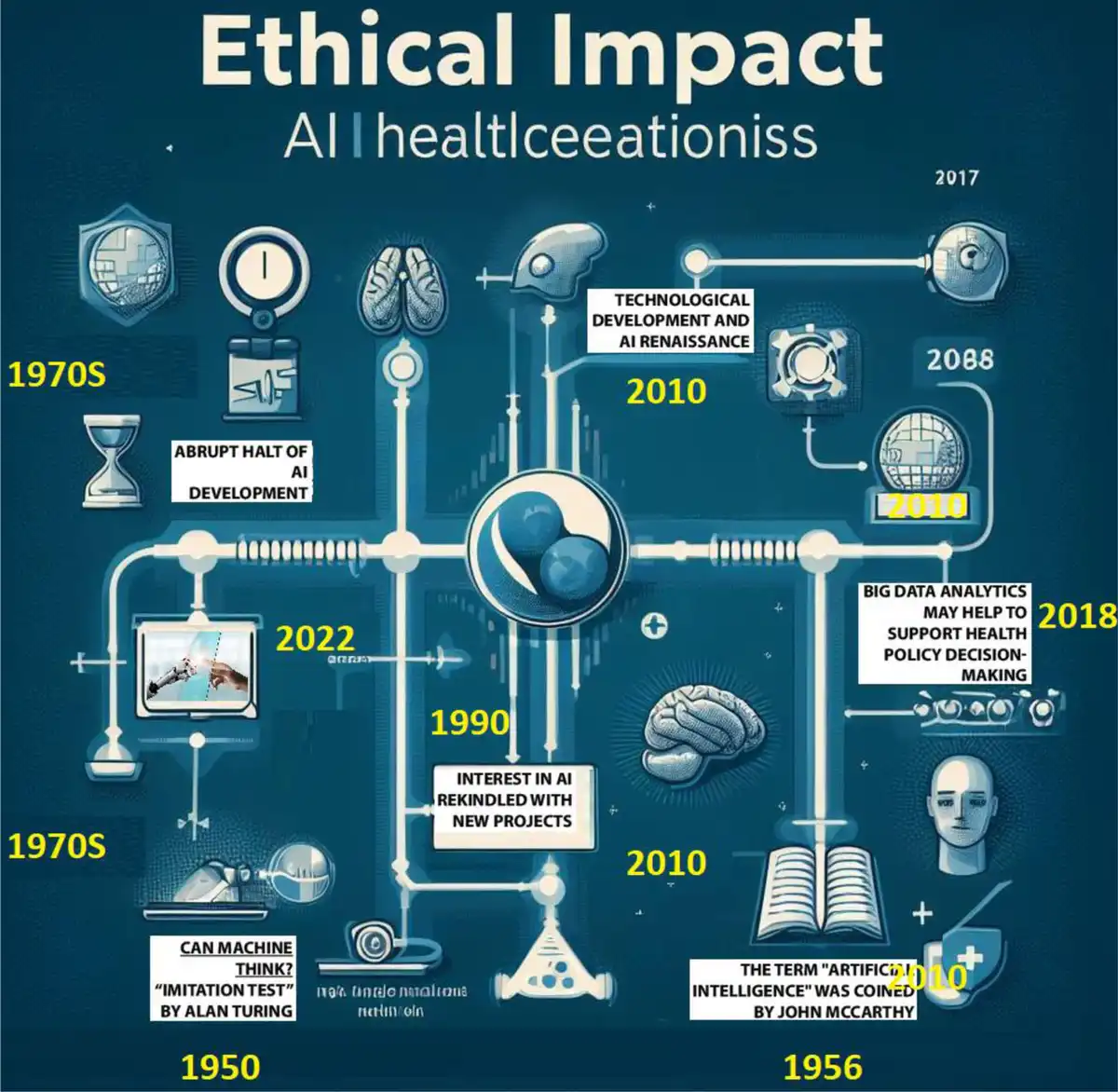
Figure 3.
Ethical impact timeline in AI healthcare.
AI enhances early disease detection and diagnostic accuracy. However, ethical concerns persist, including data privacy risks, algorithmic bias, and transparency issues.
6. The transformative potential of AI in healthcare
The integration of AI in healthcare has revolutionized medical diagnostics, personalized treatment planning, and operational efficiency, making it one of the most significant technological advancements of the modern era. AI’s ability to process large-scale medical datasets, detect complex patterns, and generate predictive insights has led to unprecedented improvements in disease detection, patient care, and healthcare management.
6.1 AI in diagnostics: enhancing accuracy and early detection
One of AI’s most impactful contributions to healthcare is its ability to enhance diagnostic accuracy and facilitate early disease detection. AI-powered imaging analysis has demonstrated superior performance in detecting conditions such as breast cancer, diabetic retinopathy, and lung abnormalities. For instance, AI models trained on radiology data have outperformed human radiologists in identifying subtle malignancies in mammograms with greater speed and consistency. Early detection not only improves patient prognosis but also reduces the burden on healthcare systems by enabling timely intervention and preventing disease progression. Additionally, AI-driven predictive analytics allows clinicians to assess patient risk factors and take preemptive measures before symptoms manifest. Machine learning models analyzing EHRs can identify patients at high risk for cardiovascular disease, stroke, or sepsis, prompting early interventions that reduce hospitalizations and improve survival rates.
6.2 Personalized medicine: AI-driven tailored treatment plans
AI is transforming treatment protocols by enabling precision medicine, where therapies are customized based on an individual’s genetic profile, medical history, and lifestyle factors. Traditionally, treatments have followed a 1-size-fits-all approach, but AI facilitates the development of personalized regimens that optimize patient response and minimize adverse effects. For example, AI-driven pharmacogenomics analyzes genetic variations to determine how a patient will metabolize specific medications, ensuring optimal drug selection and dosage. This is particularly crucial in fields like oncology, where AI-powered models can recommend targeted therapies for cancer patients based on the molecular characteristics of their tumors. AI is also used to predict patient responses to immunotherapy, allowing oncologists to make data-driven treatment decisions that maximize therapeutic effectiveness.
6.3 Operational efficiency: optimizing healthcare workflows
Beyond clinical applications, AI is streamlining hospital operations and improving healthcare system efficiency. AI-powered scheduling algorithms are reducing patient wait times by optimizing appointment bookings and resource allocation, ensuring that medical staff and facilities are utilized effectively. Additionally, AI-driven automated documentation tools are alleviating the administrative burden on healthcare providers by generating medical reports, transcribing physician notes, and coding insurance claims, allowing clinicians to focus more on direct patient care rather than bureaucratic tasks. In emergency care settings, AI-powered triage systems prioritize patients based on real-time assessments of their vital signs and medical history, ensuring that critical cases receive immediate attention while preventing system overload.
6.4 AI’s role in advancing medical research and drug discovery
AI is also accelerating drug discovery and medical research, reducing the time and cost required to develop new therapies. Traditional drug development is a lengthy and expensive process, often taking over a decade to bring a new drug to market. AI, however, is expediting this process by analyzing vast biomedical datasets, predicting drug-target interactions, and identifying potential compounds for testing. For example, AI-driven models were instrumental in the rapid identification of potential treatments during the COVID-19 pandemic, where machine learning algorithms analyzed millions of molecular structures to identify antiviral compounds. AI also aids in clinical trial optimization, helping researchers identify suitable participants, predict treatment responses, and analyze trial data with greater precision.
6.5 Balancing AI’s benefits with ethical considerations
While AI’s contributions to healthcare are undeniable, its rapid expansion presents ethical challenges that must be carefully managed. Issues such as algorithmic bias, data privacy, lack of transparency, and accountability pose significant risks if AI is not developed and implemented responsibly. However, these challenges should not overshadow AI’s vast potential to improve patient outcomes, enhance clinical decision-making, and optimize healthcare systems. To ensure a balanced approach, AI developers, healthcare institutions, and policymakers must work together to maximize AI’s benefits while addressing its ethical concerns through robust regulatory frameworks, bias mitigation strategies, and transparent AI governance.
7. Discussion
The manuscript highlights the ethical challenges of AI, such as privacy concerns, bias, and the need for accountability. These challenges, while significant, are not insurmountable. Addressing them requires responsible AI development, which includes ensuring fairness, transparency, and human oversight.
As AI continues to integrate into healthcare, it is essential to distinguish between ethical principles, which serve as foundational moral guidelines, and ethical challenges, which are practical dilemmas that arise from AI’s implementation. Ethical principles establish the fundamental values that AI systems should uphold, ensuring that technology is developed and deployed in a manner that aligns with medical ethics and patient rights. Conversely, ethical challenges are real-world obstacles that may prevent AI from fully adhering to these principles, requiring governance, regulation, and oversight to mitigate risks.
7.1 Ethical principles in AI healthcare
Ethical principles in healthcare AI align with established medical ethics and human rights, guiding the responsible development and deployment of AI-driven technologies:
Autonomy: AI should respect patient decision-making and ensure informed consent when utilized in healthcare. Patients should be aware of AI’s role in their diagnosis or treatment.
Beneficence: AI systems should be designed to maximize patient well-being by improving healthcare outcomes and minimizing harm.
Nonmaleficence: AI must not introduce risks that could negatively impact patient health due to errors, biases, or unintended consequences.
Justice: AI must promote fairness by ensuring equitable access to healthcare resources, and preventing discrimination against marginalized populations.
Transparency and accountability: AI must function in a way that is understandable, interpretable, and subject to ethical oversight.
7.2 Ethical challenges in AI healthcare
Despite the importance of adhering to ethical principles, AI in healthcare faces several challenges that threaten its ethical integrity:
Data privacy and security: AI systems rely on vast amounts of patient data, raising concerns over data protection, breaches, and unauthorized access, thus challenging the principle of nonmaleficence.
Algorithmic bias: Bias in AI decision-making disproportionately affects underrepresented populations, violating the principles of fairness and justice.
Lack of transparency (black box AI): Many AI systems operate as “black boxes,” meaning their decision-making processes are not easily interpretable by clinicians or patients, challenging the principle of transparency.
Accountability in AI decision-making: If AI makes an incorrect diagnosis or treatment recommendation, the question of liability remains unresolved, posing a challenge to accountability and trust in AI-driven systems.
The integration of AI in healthcare represents a paradigm shift, offering transformative opportunities to enhance diagnostics, treatment, and patient care. However, as this article highlights, these advancements come with significant ethical challenges that must be carefully addressed to ensure that AI technologies are used responsibly and equitably. This discussion synthesizes the potential benefits, ethical concerns, and the pathways forward that have been explored throughout the article, providing a roadmap for navigating the complexities of AI in healthcare. One of the key themes of this article is the profound potential of AI to revolutionize healthcare. AI’s ability to process vast amounts of data and identify subtle patterns has already demonstrated remarkable diagnostic accuracy, enabling early disease detection and improved patient outcomes. Real-world examples, such as AI systems detecting diabetic retinopathy and enhancing breast cancer screening, underscore the practical benefits of this technology. Similarly, the promise of personalized treatment plans tailored to individual patient profiles offers a glimpse into the future of precision medicine. AI’s ability to enable proactive healthcare through continuous monitoring and to optimize resource allocation further reinforces its transformative potential. Despite these benefits, the article emphasizes that the ethical challenges posed by AI cannot be overlooked. The reliance on patient data to power AI systems raises significant concerns about privacy and data security. Unauthorized access, breaches, and the misuse of sensitive healthcare information threaten to undermine patient trust and confidence in AI-driven systems. Algorithmic bias, another pressing concern, highlights the unintended consequences of AI models trained on incomplete or unrepresentative datasets, potentially leading to disparities in care for marginalized populations. Transparency and accountability are critical challenges as well, with the “black box” nature of many AI systems making it difficult for patients and clinicians to understand or scrutinize AI-driven recommendations. Furthermore, the increasing reliance on AI for critical healthcare decisions raises questions about the role of human clinicians and the preservation of trust in the doctor-patient relationship. The ethical challenges outlined in this article call for proactive measures to ensure responsible AI development and deployment. Rigorous data privacy protections, including compliance with regulations like the GDPR and HIPAA, are essential to safeguard patient information. Bias mitigation strategies, such as using diverse and representative datasets and conducting regular fairness audits, are critical to addressing disparities in AI-driven care. Transparency must be prioritized by designing XAI systems that provide clear, understandable recommendations for both clinicians and patients. Additionally, maintaining human oversight and ensuring that AI complements, rather than replaces, human expertise is vital to preserving trust, empathy, and ethical reasoning in healthcare.
This article also underscores the importance of regulatory frameworks and ethical guidelines in addressing the complexities of AI in healthcare. Government regulations and industry standards play a pivotal role in ensuring data privacy, accountability, and fairness. However, the dynamic nature of AI necessitates the development of flexible and adaptive ethical guidelines that can address emerging challenges. These guidelines should be collaboratively developed by governments, regulatory bodies, healthcare institutions, and AI developers to ensure a comprehensive and balanced approach. The examples provided in this article, such as Table 3’s exploration of biases and Table 4’s comparison of global regulatory frameworks, emphasize the need for harmonized standards and international collaboration to address the global nature of AI’s impact on healthcare. The discussion also highlights the importance of ongoing research and education to foster ethical AI development. Developing inherently ethical and bias-resistant AI models should be a priority for researchers. Ethical impact assessments, as well as public education campaigns, are critical to empowering patients to understand and engage with AI-driven healthcare decisions. By fostering awareness and collaboration among stakeholders, we can ensure that AI technologies are not only effective but also aligned with the highest ethical standards. In conclusion, this article provides a comprehensive exploration of the transformative potential of AI in healthcare and the ethical challenges it presents. The discussion reiterates the importance of striking a balance between the benefits of AI and the ethical responsibilities that accompany its integration into healthcare systems. As AI technologies continue to evolve, the commitment to ethical excellence must remain steadfast, guided by principles of privacy, fairness, transparency, and accountability. By addressing these challenges through responsible AI development, regulatory oversight, and collaborative efforts, we can ensure that AI remains a force for good, enhancing healthcare outcomes while upholding the dignity and trust of every patient. This discussion calls for ongoing dialogue, action, and vigilance to navigate the complexities of AI in healthcare, ensuring its transformative power is harnessed ethically and responsibly. AI’s ethical challenges—privacy, bias, and accountability—demand responsible development with fairness, transparency, and human oversight.
8. Conclusion
The landscape of healthcare is undergoing a profound transformation, propelled by the rapid advancements in AI technologies. AI holds immense promise in revolutionizing diagnostics, treatment, and patient care, offering enhanced precision, personalized treatment plans, proactive health monitoring, and optimized resource allocation. The ability of AI to process vast datasets and identify subtle patterns unlocks unprecedented levels of diagnostic accuracy and enables early disease detection, ultimately improving patient outcomes. Furthermore, AI’s capacity to tailor treatment plans to each patient’s genetic, physiological, and lifestyle characteristics introduces a new era of precision medicine. Its proactive capabilities, such as monitoring deviations in health parameters before symptoms appear, allow for earlier interventions and better disease management. Additionally, by reducing diagnostic errors, AI can facilitate the efficient allocation of healthcare resources, directing them to areas of greatest need and improving overall cost-effectiveness. These benefits highlight the transformative potential of AI in addressing some of the most pressing challenges in healthcare.
However, the remarkable capabilities of AI are accompanied by an array of ethical concerns that demand attention. The collection and utilization of patient data raise significant concerns about privacy and security, with unauthorized access, data breaches, and the misuse of sensitive information threatening to undermine patient trust. Algorithmic bias is another critical challenge, as AI systems trained on incomplete or skewed datasets may inadvertently perpetuate inequities, leading to diagnostic and treatment inaccuracies that disproportionately affect marginalized communities. The opacity of AI-driven decision-making processes further complicates matters, as patients and clinicians often struggle to understand or scrutinize AI recommendations, making transparency and accountability essential pillars of ethical AI deployment. Finally, the increasing reliance on AI for critical healthcare decisions raises fundamental questions about the role of human clinicians, the preservation of human judgment, and the safeguarding of trust in patient-clinician relationships. In light of these benefits and challenges, it is clear that we are at a pivotal moment in the development of AI in healthcare. The imperative for responsible AI stewardship has never been stronger, and ethical excellence must remain our guiding principle. Every decision and innovation in AI healthcare must be scrutinized through an ethical lens to ensure that patient well-being, dignity, and trust remain at the forefront. Striking a balance between the immense potential of AI and the ethical challenges it presents is non-negotiable. This requires ongoing vigilance, transparency, and a steadfast commitment to ethical principles.
Responsible AI development entails robust data privacy protections, rigorous bias mitigation strategies, and clear guidelines for the complementary collaboration between AI systems and human clinicians. Continuous evaluation and improvement of AI systems are essential to align them with ethical standards and evolving healthcare needs. Government regulations and industry standards play a pivotal role in shaping the ethical boundaries of AI in healthcare, addressing concerns such as data privacy, transparency, bias, and accountability. Furthermore, the development of comprehensive ethical guidelines must involve collaboration among governments, regulatory bodies, healthcare institutions, and AI developers to ensure that these frameworks remain adaptable and responsive to emerging challenges. Research into ethical AI algorithms must be prioritized, with a focus on developing models that are inherently bias-resistant, transparent, and explainable. Equally important is the need for public education and awareness campaigns that empower patients to engage with AI-driven healthcare decisions. Patients must be informed about the role of AI in their care and given the opportunity to actively participate in decisions that affect their well-being. International collaboration is also essential to harmonize ethical standards and regulations, ensuring that the benefits of AI in healthcare are distributed equitably across global healthcare systems. In conclusion, the journey of AI in healthcare is a collective endeavor that demands vigilance, proactive measures, and collaboration among all stakeholders. The potential of AI to transform healthcare is vast, but so too are the ethical responsibilities that accompany it. As we navigate this complex terrain, we must foster an environment where AI technologies enhance healthcare outcomes while upholding the highest ethical standards of patient-centered care. The call for responsible AI in healthcare is not merely an echo in the corridors of progress; it is a clarion call that resonates with the essence of healthcare itself—the well-being, dignity, and humanity of every patient. Let this call guide us as we shape the future of AI in healthcare, ensuring that its transformative power is harnessed ethically and responsibly to improve lives.
Acknowledgments
The English language of the article was improved with ChatGPT. The author generated this text in part with GPT-3, OpenAI’s large-scale language-generation model. Upon generating draft language, the author reviewed, edited, and revised the language to their own liking and takes ultimate responsibility for the content of this publication.
Conflicts of interests
The authors declare that they have no conflicts of interest.
Funding
This research was conducted under Al-Ayen University (AUIQ) titled “Enhancing Vision Comfort and Accessibility: Innovations in Contact Lens Technology,” funded by grant code TT-2023-018.
References
- [1] Mahajan A, Vaidya T, Gupta A, et al. Artificial intelligence in healthcare in developing nations: the beginning of a transformative journey. Cancer Res Stat Treat. 2019;2(2):182.
- [2] Mbunge E, Muchemwa B, Jiyane S, et al. Sensors and healthcare 5.0: transformative shift in virtual care through emerging digital health technologies. Glob Health J. 2021;5(4):169–177.
- [3] Soferman R. The transformative impact of artificial intelligence on healthcare outcomes. J Clin Eng. 2019;44(3):E1–E3.
- [4] Sharma R. The transformative power of AI as future GPTs in propelling society into a new era of advancement. IEEE Eng Manag Rev. 2023;51(4):215–224.
- [5] Bernard M. Artificial Intelligence in Practice: How 50 Successful Companies Used AI and Machine Learning to Solve Problems. Hoboken, NJ: John Wiley & Sons; 2019.
- [6] Pal S, Kumari K, Kadam S, Saha A. The AI Revolution. Ghaziabad, India: IARA Publication; 2023.
- [7] Milson S, Oroy K. Big Data Revolution: Transforming Information into Knowledge. Stockport, United Kingdom: EasyChair; 2023.
- [8] Padhi A, Agarwal A, Saxena SK, et al. Transforming clinical virology with AI, machine learning and deep learning: a comprehensive review and outlook. Virus Dis. 2023;34(3):345–355.
- [9] Mandal S, Greenblatt AB, An J. Imaging intelligence: AI is transforming medical imaging across the imaging spectrum. IEEE Pulse. 2018;9(5):16–24.
- [10] Patil S, Shankar H. Transforming healthcare: harnessing the power of AI in the modern era. Int J Multidisciplin Sci Arts. 2023;2(2):60–70.
- [11] Harry A. AI’s healing touch: examining machine learning’s transformative effects on healthcare. BULLET: Jurnal Multidisiplin Ilmu. 2023;2(4):1134–1145.
- [12] Yilmaz A. Deep Learning and Cardiology: Revolutionizing Diagnosis, Management, and Prognosis in Cardiovascular Medicine CardioBot: Harnessing Deep Learning for Groundbreaking Innovations in Cardiac Care. All Rights Reserved It may not be reproduced in any way without the written permission of the publisher and the editor, except for short excerpts for promotion by reference. ISBN: 978-625-6925-25-0 1st Edition.:252.
- [13] Anil S, Porwal P, Porwal A. Transforming dental caries diagnosis through artificial intelligence-based techniques. Cureus. 2023;15(7):e41694.
- [14] Aung YY, Wong DC, Ting DS. The promise of artificial intelligence: a review of the opportunities and challenges of artificial intelligence in healthcare. Br Med Bull. 2021;139(1):4–15.
- [15] Dubrovina A, Nikishyna О, Pryshchepa T. Revolutionizing healthcare: the transformative power of AI in medicine. Recommended for publication by the Academic Council of the Faculty of Ukrainian and Foreign Philology and Study of Arts, Oles Honchar Dnipro National University (protocol № 9 of 25.04. 2023).
- [16] Megha Manjula G, James A. Revolutionizing mental health care: the transformative power of telehealth in nursing. EPRA Int J Multidisciplin Res. 2023;9(9):260–262.
- [17] Odiljonov U. The transformative power of machine learning: unlocking the potential across industries. O’zbekistonda Fanlararo Innovatsiyalar Va Ilmiy Tadqiqotlar Jurnali. 2023;21(2133):133–139.
- [18] Khayru RK. Transforming healthcare: the power of artificial intelligence. Bull Sci Technol Soc. 2022;1(3):15–19.
- [19] Jabarulla MY, Lee HN. A blockchain and artificial intelligence-based, patient-centric healthcare system for combating the COVID-19 pandemic: opportunities and applications. Healthcare (Basel). 2021;9(8):1019.
- [20] Red S. Healthcare technology: enhancing medical services and patient outcomes. Int Multidisciplin J Sci Tech Bus. 2023;2(2):18–21.
- [21] Pathak YJ, Greenleaf W, Verhagen Metman L, et al. Digital health integration with neuromodulation therapies: the future of patient-centric innovation in neuromodulation. Front Digit Health. 2021;3:618959.
- [22] Barbazzeni B. Value propositions for future health developments: digital, portable, connected, experience-enhancing, supportive, patient-centric, and affordable. In Novel Innovation Design for the Future of Health: Entrepreneurial Concepts for Patient Empowerment and Health Democratization. Cham: Springer International Publishing; 2022:161–168.
- [23] Papanastasiou G, Drigas A, Skianis C, et al. Patient-centric ICTs based healthcare for students with learning, physical and/or sensory disabilities. Telemat Inform. 2018;35(4654):654–664.
- [24] Tambe P, Cappelli P, Yakubovich V. Artificial intelligence in human resources management: challenges and a path forward. Calif Manage Rev. 2019;61(4):15–42.
- [25] Lämmerhirt D, Schubert C. Old data in new media? problematic popularity of digital health data and consumer devices. Info Comm Soc. 2025;28:1–16.
- [26] Titus AJ, Russell AH. The promise and peril of artificial intelligence--violet teaming offers a balanced path forward. arXiv. 2023;2308:1.
- [27] Mohammad Amini M, Jesus M, Fanaei Sheikholeslami D, et al. Artificial intelligence ethics and challenges in healthcare applications: a comprehensive review in the context of the European GDPR mandate. Mach Learn Knowl Extr. 2023;5(3):1023–1035.
- [28] Katznelson G, Gerke S. The need for health AI ethics in medical school education. Adv Health Sci Educ Theory Pract. 2021;26(4):1447–1458.
- [29] Yang Y, Venkatachalam I, Low CT, et al. Transforming healthcare system: outcomes of Healthier-SG from a large tertiary-care hospital in Singapore. Health Policy Technol. 2025;14(1):100968.
- [30] Ramachander A, Gowri DP. The future of digital health in transforming healthcare. In Digital Technology in Public Health and Rehabilitation Care. Cambridge, MA: Academic Press; 2025:363–385.
- [31] Miran S, Siraj M, Mumtaz M, et al. Transforming healthcare security and sustainability through pioneering generative AI solutions. In Generative AI Techniques for Sustainability in Healthcare Security; 2025:331–348.
- [32] Khoiro RA, Nurhikmah N, Dewi S. Transforming healthcare delivery: strengthening nurse engagement in patient-centered care practice. J Acad Sci. 2025;2(1):392–397.
- [33] Vettriselvan R. Harnessing innovation and digital marketing in the era of industry 5.0: resilient healthcare SMEs. In The Future of Small Business in Industry 5.0. Hershey, PA: IGI Global Scientific Publishing; 2025:163–186.
- [34] Al-Dmour R, Al-Dmour H, Basheer Amin E, et al. Impact of AI and big data analytics on healthcare outcomes: an empirical study in Jordanian healthcare institutions. Dig Heal. 2025;11:20552076241311051.
- [35] Maguluri KK. Natural language processing in healthcare: unlocking insights from clinical data. In How Artificial Intelligence is Transforming Healthcare IT: Applications in Diagnostics, Treatment Planning, and Patient Monitoring. Vol. 72. Delft, Netherlands: AUTOREA; 2025.
- [36] van Genderen ME, Kant IM, Tacchetti C, et al. Moving toward implementation of responsible artificial intelligence in health care: the European TRAIN initiative. JAMA. 2025;333:1483.
- [37] Suvvari TK, Gurav JS, Kaushal Y, Shyadligeri A, Kuppili S. Artificial intelligence–based seizure detection systems in electroencephalography: transforming healthcare for accurate diagnosis and treatment. In Artificial Intelligence in Biomedical and Modern Healthcare Informatics. Cambridge, MA: Academic Press; 2025:277–288.
- [38] Moumtzoglou AS. Transforming healthcare with patient-centric and AI-powered personalized medicine. In Convergence of Population Health Management, Pharmacogenomics, and Patient-Centered Care. Hershey, PA: IGI Global; 2025:375–402.
- [39] Singhal R, Jain V, Raj D. E-Health transforming healthcare delivery with AI, blockchain, and cloud. In Harnessing AI, Blockchain, and Cloud Computing for Enhanced e-Government Services. Hershey, PA: IGI Global Scientific Publishing; 2025:475–510.
- [40] Sharma P, Butwall M. Transforming healthcare with AI: an adequate method for diabetes prediction using machine learning techniques. In Data-Driven Analytics for Healthcare. Palm Bay, FL: Apple Academic Press; 2025:135–167.
- [41] Vasudevan V, Mohan US, Mohan SG. Transforming healthcare crowdfunding: integrating blockchain and IoT for transparency, trust, and accessibility. In Blockchain for IoT Systems. Boca Raton, FL: Chapman and Hall/CRC; 2025:23–38.
- [42] Soumya GD, Bhuvaneshwari PV, Josephine R, Vincent RR. Transforming healthcare with AIoT: the future of diagnostics and patient care. In Future Innovations in the Convergence of AI and Internet of Things in Medicine. Hershey, PA: IGI Global Scientific Publishing; 2025:159–220.
- [43] Trunk A, Birkel H, Hartmann E. On the current state of combining human and artificial intelligence for strategic organizational decision making. Busi Res. 2020;13(3):875–919.
- [44] Khair MA, Mahadasa R, Tuli FA, et al. Beyond human judgment: exploring the impact of artificial intelligence on HR decision-making efficiency and fairness. Glob Discl Econ Bus. 2020;9(2):163–176.
- [45] Grauslund J. Diabetic retinopathy screening in the emerging era of artificial intelligence. Diabetologia. 2022;65(9):1415–1423.
- [46] Saleh GA, Batouty NM, Haggag S, et al. The role of medical image modalities and AI in the early detection, diagnosis and grading of retinal diseases: a survey. Bioengineering (Basel). 2022;9(8):366.
- [47] Qureshi I, Ma J, Abbas Q. Recent development on detection methods for the diagnosis of diabetic retinopathy. Symmetry. 2019;11(6):749.
- [48] McKinney SM, Sieniek M, Godbole V, et al. International evaluation of an AI system for breast cancer screening. Nature. 2020;577(7788):89–94.
- [49] Ahmed RA, Al-Bagoury HY. Artificial intelligence in healthcare enhancements in diagnosis, telemedicine, education, and resource management. J Contemporary Healthcare Analyt. 2022;6(12):1–2.
- [50] Khan M, Shiwlani A, Qayyum MU, et al. AI-powered healthcare revolution: an extensive examination of innovative methods in cancer treatment. BULLET: Jurnal Multidisiplin Ilmu. 2024;3(1):87–98.
- [51] Williamson SM, Prybutok V. Balancing privacy and progress: a review of privacy challenges, systemic oversight, and patient perceptions in AI-Driven healthcare. App Scie. 2024;14(2675):675.
- [52] Varghese C, Harrison EM, O’Grady G, et al. Artificial intelligence in surgery. Nat Med. 2024;30:1257–1268.
- [53] Morris MX, Fiocco D, Caneva T, et al. Current and future applications of artificial intelligence in surgery: implications for clinical practice and research. Front Surg. 2024;11:1393898.
- [54] Kalli VD. Advancements in deep learning for minimally invasive surgery: a journey through surgical system evolution. JAIGS. 2024;4(1):111–120.
- [55] Khan MA. Ethical implications of AI (artificial intelligence) in healthcare mainly focus on surgical procedures: identification of ethical issues of AI in surgical procedures and ranking of ethical issues based on criticality.
- [56] Amiri Z. Ai-Driven Decision-Making in Healthcare Information Systems: A Comprehensive Review. Available at SSRN 4756316.
- [57] Kuo CL. Revolutionizing healthcare paradigms: the integral role of artificial intelligence in advancing diagnostic and treatment modalities. IMJ. 2023;7:4.
- [58] Rodler S, Ganjavi C, De Backer P, et al. Generative artificial intelligence in surgery. Surgery. 2024;175:1496.
- [59] Obermeyer Z, Powers B, Vogeli C, et al. Dissecting racial bias in an algorithm used to manage the health of populations. Science. 2019;366(6464):447–453.
- [60] Hern A. Royal Free breached UK data law in 1.6m patient deal with Google’s DeepMind. The Guardian; July 3, 2017.
- [61] Ross C, Swetlitz I, Herper M. IBM’s Watson recommended ‘unsafe and incorrect’ cancer treatments - internal documents. STAT News; September 5, 2017.
- [62] Pesapane F, Volonté C, Codari M, et al. Artificial intelligence in medical imaging: threat or opportunity? Radiologists again at the forefront of innovation in medicine. Eur Radiol Exp. 2018;2(1):35.
- [63] Schweitzer B. Artificial Intelligence (AI) ethics in accounting. J Acc, JAEPP. 2024;25(1):67.
- [64] Morley J, Machado CC, Burr C, et al. The ethics of AI in health care: a mapping review. Soc Sci Med. 2020;260:113172.
- [65] Floridi L, Cowls J, Beltrametti M, et al. AI4People—an ethical framework for a good AI society: opportunities, risks, principles, and recommendations. Minds Mach. 2018;28:689–707.
- [66] Lee D, Yoon SN. Application of artificial intelligence-based technologies in the healthcare industry: Opportunities and challenges. Int J Environ Res Public Health. 2021;18(1):271.
- [67] Mittelstadt B. Principles alone cannot guarantee ethical AI. Nat Mach Intell. 2019;1(11):501–507.
- [68] Prakash S, Balaji JN, Joshi A, et al. Ethical conundrums in the application of artificial intelligence (AI) in healthcare—a scoping review of reviews. J Personalized Med. 2022;12(11):1914.
- [69] Ishengoma FR. Artificial intelligence in digital health: issues and dimensions of ethical concerns. Innovación y Software. 2022;3(1):81–108.
- [70] Guan J. Artificial intelligence in healthcare and medicine: promises, ethical challenges and governance. Chin Med Sci J. 2019;34(2):76–83.
- [71] Li F, Ruijs N, Lu Y. Ethics & AI: A systematic review on ethical concerns and related strategies for designing with AI in healthcare. AI. 2022;4(1):28–53.
- [72] Lehmann LS. Ethical challenges of integrating AI into healthcare. In Artificial Intelligence in Medicine. Cham: Springer International Publishing; 2021:1–6.
- [73] Char DS, Abràmoff MD, Feudtner C. Identifying ethical considerations for machine learning healthcare applications. Am J Bioeth. 2020;20(11):7–17.
- [74] Katirai A. The ethics of advancing artificial intelligence in healthcare: analyzing ethical considerations for Japan’s innovative AI hospital system. Front Public Health. 2023;11:1142062.
- [75] Amedior NC. Ethical implications of artificial intelligence in the healthcare sector. Adv Multidiscip Sci Res J Publ. 2023;36:1–2.
- [76] Kasula BY. Ethical and regulatory considerations in AI-Driven healthcare solutions. Int Meridian J. 2021;33:1–8.
- [77] Kerasidou A. Artificial intelligence and the ongoing need for empathy, compassion and trust in healthcare. Bull World Health Organ. 2020;98(4):245–250.
- [78] Segers S, Mertes H. The curious case of “trust” in the light of changing doctor–patient relationships. Bioethics. 2022;36(8):849–857.
- [79] Siala H, Wang Y. SHIFTing artificial intelligence to be responsible in healthcare: a systematic review. Soc Sci Med. 2022;296:114782.
- [80] Sauerbrei A, Kerasidou A, Lucivero F, et al. The impact of artificial intelligence on the person-centred, doctor-patient relationship: some problems and solutions. BMC Med Inform Decis Mak. 2023;23(1):73.
- [81] Wang W, Wang Y, Chen L, et al. Justice at the Forefront: cultivating felt accountability towards Artificial Intelligence among healthcare professionals. Soc Sci Med. 2024;347:116717.
- [82] Ennis-O’Connor M, O’Connor WT. Charting the future of patient care: a strategic leadership guide to harnessing the potential of artificial intelligence. In Healthcare Management Forum. Sage CA: Los Angeles, CA: SAGE Publications; 2024:08404704241235893.
- [83] Esmaeilzadeh P. Challenges and strategies for wide-scale artificial intelligence (AI) deployment in healthcare practices: a perspective for healthcare organizations. Artif Intell Med. 2024;151:102861.
- [84] Mennella C, Maniscalco U, De Pietro G, Esposito M. Ethical and regulatory challenges of AI technologies in healthcare: A narrative review. Heliyon. 2024;10(4):e26297.
- [85] Amugongo LM, Bidwell NJ, Corrigan CC. Invigorating Ubuntu Ethics in AI for healthcare: enabling equitable care. In: Proceedings of the 2023 ACM Conference on Fairness, Accountability, and Transparency; June 12, 2023:583–592.
- [86] Čartolovni A, Tomičić A, Mosler EL. Ethical, legal, and social considerations of AI-based medical decision-support tools: a scoping review. Int J Med Inform. 2022;161:104738.
- [87] Evans BJ, Bihorac A. Co-creating consent for data use—AI-powered ethics for biomedical AI. NEJM AI. 2024;1:AIpc2400237.
- [88] Jones C, Thornton J, Wyatt JC. Enhancing trust in clinical decision support systems: a framework for developers. BMJ Heal Care Info. 2021;28(1):e100247.
- [89] Hasani N, Morris MA, Rahmim A, et al. Trustworthy artificial intelligence in medical imaging. PET Clini. 2022;17(1):1–12.
- [90] Smallman M. Multi scale ethics—why we need to consider the ethics of AI in Healthcare at different scales. Sci Eng Ethics. 2022;28(6):63.
- [91] Hashiguchi TC, Oderkirk J, Slawomirski L. Fulfilling the promise of artificial intelligence in the health sector: let’s get real. Value Health. 2022;25(3):368–373.
- [92] Khan F. Regulating the revolution: a legal roadmap to optimizing AI in healthcare. Minn JL Sci Tech. 2023;25:49.
- [93] Lekadir K, Osuala R, Gallin C, et al. FUTURE-AI: guiding principles and consensus recommendations for trustworthy artificial intelligence in medical imaging. arXiv. 2021;2109:1.
- [94] van de Hoven J, Comandé G, Ruggieri S, et al. Towards a digital ecosystem of trust: Ethical, legal and societal implications. Opinio Juris In Comparatione. 2021;2021(1/2021):131–156.
- [95] Hemachandran K, Rodriguez RV, Subramaniam U, Balas VE, eds. Artificial Intelligence and Knowledge Processing: Improved Decision-Making and Prediction. Boca Raton, FL: CRC Press; 2023.
- [96] Perlas N. Humanity’s Last Stand: The Challenge of Artificial Intelligence: A Spiritual-Scientific Response. Forest Row , United Kingdom: Temple Lodge Publishing; 2018.
- [97] Sandua D. Artificial Intelligence, Blockchain & Quantum Computing. Chicago, MI: Independently Published; 2023.
- [98] Koulopoulos T. Reimagining Healthcare: How the Smartsourcing Revolution Will Drive the Future of Healthcare and Refocus it on What Matters Most, the Patient. NY: Post Hill Press; 2020.
- [99] Haque A, Chowdhury MN. The Future of Medicine: Large Language Models Redefining Healthcare Dynamics. Authorea Preprints. 2023.
- [100] Brynjolfsson E, McAfee A. The Second Machine Age: Work, Progress, and Prosperity in a Time of Brilliant Technologies. New York, NY: WW Norton & Company; 2014.
- [101] Nasila M. African Artificial Intelligence: Discovering Africa’s AI Identity. Johannesburg, South Africa: Jonathan Ball Publishers; 2024.
- [102] Chandak T, Jayashree J, Vijayashree J. 14 Trends and Advancements of Al and XAI in Drug Discovery. Explainable AI (XAI) for Sustainable Development: Trends and Applications. Vol. 233. Oxfordshire, United Kingdom: Taylor & Francis; 2024.
- [103] Mallisetty MS. Digital Transformation: Advancements in Business. Maharashtra, India: Book Saga Publications; 2023.
- [104] Singh B, Kaunert C. Future of Digital marketing: hyper-personalized customer dynamic experience with AI-based predictive models. In Revolutionizing the AI-Digital Landscape. NY: Productivity Press; 2024:189–203.
- [105] Rane NL, Tawde A, Choudhary SP, et al. Contribution and performance of ChatGPT and other Large Language Models (LLM) for scientific and research advancements: a double-edged sword. Int Res J Mod Eng Technol Sci. 2023;5(10):875–899.
- [106] Gautam P, Sharma R. Legal and ethical concerns in AI driven healthcare-a study of legal approaches. Edu Administ: Pract. 2024;30(5):11781–11788.
- [107] Klimova B, Pikhart M, Kacetl J. Ethical issues of the use of AI-driven mobile apps for education. Front Public Health. 2023;10:1118116.
- [108] Bekbolatova M, Mayer J, Ong CW, et al. Transformative potential of AI in healthcare: definitions, applications, and navigating the ethical landscape and public perspectives. Healthcare (Basel). 2024;12(2):125.
This article is available under Open Access.
© 2025 The Authors